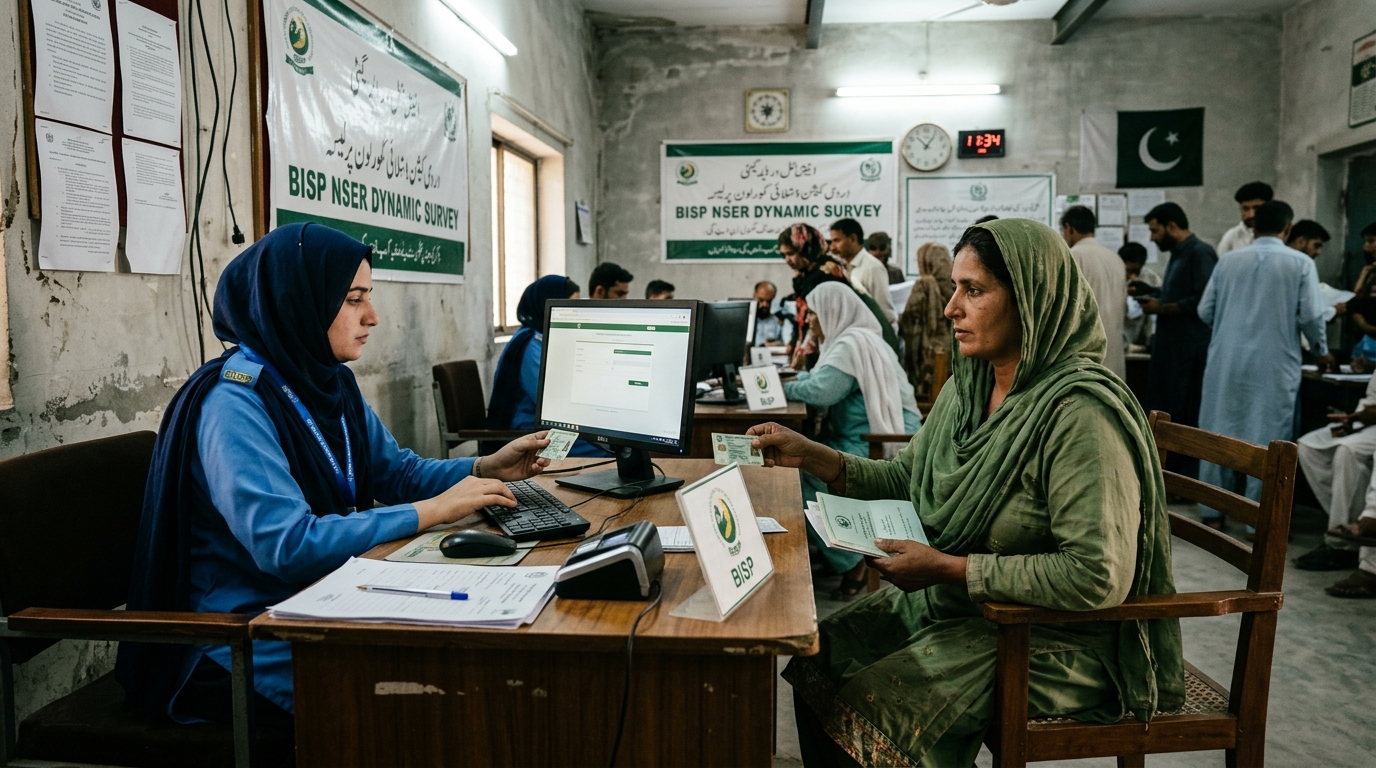
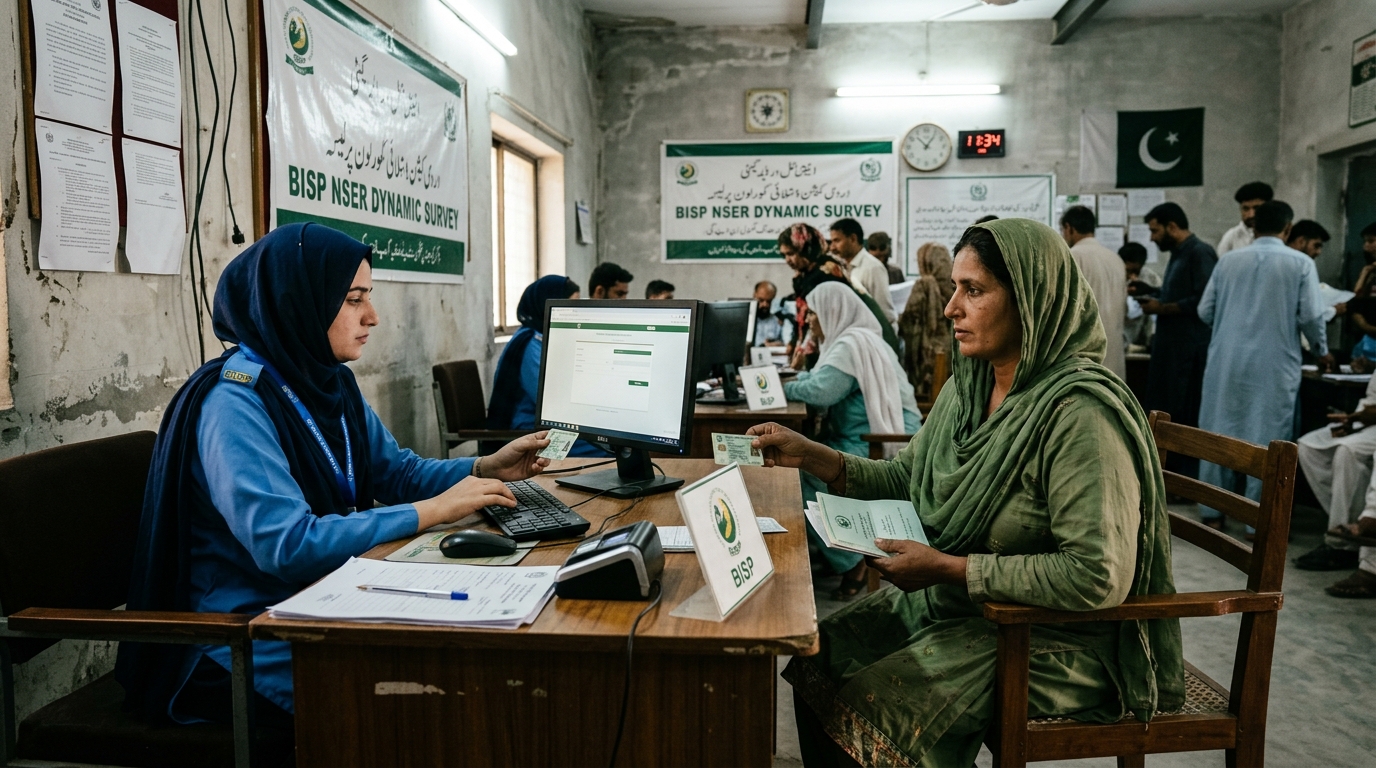
Understanding household records and eligibility
NSER and PMT are two terms families often meet when reading a BISP message. NSER is the National Socio-Economic Registry, a record of household circumstances. PMT means Proxy Means Test, an assessment based on information held about a household. A record, an assessment and a decision to pay assistance are related, but they answer different questions.
This page helps you choose the right explanation for your situation. It brings together guides about eligibility, identity records and changes in household circumstances. For the actual checking process and questions to take to an office, open the detailed PMT score check guide below. Keeping those instructions together makes it easier to follow one complete route.
Choose the guide that answers your question
If you want to understand the term itself, start with our PMT definition. It explains why an assessment is different from a monthly income figure and why a private calculator cannot reproduce an official decision. If you already understand the terminology but need to ask about your own record, use the checking guide instead.
An identity problem belongs to a different process. A valid CNIC identifies a person; it does not confirm that a particular benefit has been approved. The CNIC verification hub explains which office handles identity corrections and which programme handles its own eligibility records. This distinction can save a family an unnecessary journey to the wrong desk.
How this topic connects to BISP support
BISP uses household information to help target assistance. Individual schemes also have their own conditions. An education stipend involves a child's school record, while Kafaalat concerns household cash support. A single status message therefore cannot answer every question about every member of a family.
The BISP overview introduces these services and the organizations involved. Our Kafaalat and Taleemi Wazaif hubs then explain each programme's purpose. Use those programme pages when your question concerns the kind of support available, rather than the meaning of a household assessment. Financial circumstances alone do not give an independent website enough information to decide whether somebody qualifies.
When family circumstances change
A birth, death, marriage, move or other change may make an older household record incomplete. The important issue is whether the underlying information is accurate. Asking an agent to reduce a number will not correct a missing family relationship or an outdated identity record.
Keep supporting documents organized and use the appropriate official office to ask which record needs attention. Our documents checklist explains the difference between records for adults, children and school enrollment. Avoid sending private paperwork to public comment sections when seeking general guidance; describe the problem without identifying the household.
Read dates and official decisions carefully
An explanation of eligibility is useful background, but it is not an approval letter. Programme thresholds, review arrangements and special provisions may change. A screenshot from another year or another household should not be treated as evidence that your own decision is incorrect.
Record the date and wording of the official instruction you receive. A result about missing information calls for a different follow-up from a payment collection message. If you need procedural help, continue to the detailed guide rather than combining fragments from unrelated videos. No private website can guarantee a revised score or a release of funds.
Frequently asked questions
What is the difference between NSER and PMT?
NSER holds household information. PMT is an assessment based on household indicators; it is not the household database itself.
Where should I read the PMT checking instructions?
Use our detailed PMT score check guide for the checking route, record questions and official follow-up.
Does a valid CNIC prove BISP eligibility?
No. Identity verification and programme eligibility are separate decisions.
Can PakBenefits change a household assessment?
No. Only the responsible official organization can review its records and make a programme decision.