
This article explains public information. It does not determine eligibility or replace an official notice.
What does BISP stand for?
BISP stands for Benazir Income Support Programme. It is a federal social-protection programme in Pakistan. Its services include household cash support and related education and nutrition programmes. The acronym identifies the public organization and its work; it does not refer to a private payment app or a single registration form.
This page explains the terms people encounter across PakBenefits guides. It is useful if a message mentions Kafaalat, NSER, Taleemi Wazaif or another service and you are unsure how they fit together. PakBenefits is an independent publisher. We explain public information and link to BISP, but we are not part of the programme.
History and purpose
BISP began in 2008 as a response to economic pressures affecting vulnerable households. Its official background describes cash transfers as a way to help families meet basic needs, with women central to the programme's approach. The BISP Act 2010 provides its statutory framework. These dates describe the institution's history, not an invitation to apply under an old scheme.
Over time, the programme has developed several services around household support. Understanding the purpose of each one is more useful than treating every announcement as the same cash payment. A school stipend seeks to support education participation, for example, while nutrition assistance involves a different set of services and conditions.
The programme's scope and payment arrangements can evolve. When reading an older announcement, keep its year visible and look for the latest official instructions relevant to the service. Historical information can explain why a name exists without proving that the same amount or application process applies today.
BISP versus Ehsaas: how the names relate
Ehsaas has been used as a wider social-protection initiative name, and many people still use it when searching for BISP household support. This explains phrases such as Ehsaas tracking and Ehsaas Kafalat. The current BISP website identifies its programmes and provides official routes for their services.
The names should not be treated as interchangeable across every product. An interest-free loan, a historical emergency package and a savings-wallet pilot can have different arrangements from regular BISP cash support. Check the specific programme and its responsible organization before interpreting an announcement or entering identity information.
Who runs BISP?
BISP is a Government of Pakistan institution with its own governance and administration. Its official website publishes organizational information, programme descriptions, notices and public-service contacts. Use those records to confirm the responsible office; a logo copied into a forwarded image is not enough to establish that an agent represents the institution.
Different organizations can take part in a service without making the same decisions. NADRA handles identity records. Schools can verify education information. Authorized financial providers handle their payment channels. Those roles do not turn every bank or school into a BISP registration office, and a provider cannot promise to reverse an eligibility decision.
Benazir Kafaalat: household cash support
Kafaalat is the regular cash-support programme focused on eligible women and households. A family's registration record, eligibility decision and individual installment are related stages. They should still be read separately when an official message arrives.
The Kafaalat hub introduces eligibility and collection questions. The payment guide explains how to ask about an amount and a covered period. Use the latter when a receipt or installment is unclear; a general explanation of BISP cannot establish the money due to a particular household.
Taleemi Wazaif and Nashonuma
Taleemi Wazaif concerns education support for eligible children. It involves individual school records and participation conditions. A household's cash-support record does not tell you whether each child has been enrolled correctly or whether the relevant attendance information has been recorded.
Nashonuma concerns maternal and child nutrition support. Its official programme information describes services through designated facilitation centres, with participation requirements for eligible mothers and young children. It is not simply an additional amount that any reader can claim through a household status form.
NSER, PMT and CNIC: a short glossary
NSER means National Socio-Economic Registry. It contains household information used in social-protection work. PMT means Proxy Means Test, an assessment based on household indicators. CNIC means Computerized National Identity Card, issued through NADRA. These terms describe a database, an assessment and an identity document respectively.
Confusing them can lead to the wrong next step. Renewing an identity document does not itself complete a household assessment. Similarly, a private estimate of a PMT score is not an official decision. If the issue is an inaccurate fact, ask which organization's record contains it and what evidence that organization needs.
How to access BISP services
Start from the official BISP website or the public 8171 portal, depending on your question. The portal provides household eligibility information. For new registration, record changes or a case requiring staff access, follow the relevant BISP office process. The registration guide explains those routes in order.
Before an office visit, write down the purpose of the inquiry and gather the documents requested for that purpose. A clear question such as a missing school entry is easier to direct than a general request to fix everything. Retain official references and ask what the next step is before leaving.
Complaints, corrections and provincial schemes
A BISP programme complaint belongs with BISP. A bank transaction issue may also require the authorized provider. If a guide on this website contains an error, our editorial desk can review the explanation using a public official source. We cannot see a reader's case file or amend a government decision.
Punjab and other provincial schemes have separate responsibilities and may use different eligibility systems. Do not assume BISP registration automatically enrolls a household in a farming card, student loan or local assistance scheme. Use the relevant provincial or programme guide to identify the correct authority.
Frequently asked questions
What does BISP stand for?
BISP stands for Benazir Income Support Programme.
Is PakBenefits an official BISP website?
No. PakBenefits is an independent information publisher and does not decide eligibility or process payments.
Is BISP the same as every Ehsaas initiative?
No. The names overlap in public usage, but individual initiatives can have different administrators and rules.
Does BISP registration enroll me in Punjab schemes?
No. Provincial schemes have their own requirements and application arrangements.
Sources and official links
Check the destination address before entering personal information.
Saad has covered BISP, Ehsaas, and provincial welfare schemes for Live Govt Schemes & Ehsaas Programs since 2024, cross-checking every guide against the current official portal before publication.
Ayesha reviews programme-eligibility and payment content for accuracy against BISP, NADRA NSER, and provincial notices, and flags any guide that needs an update after an official policy change.
Related guides
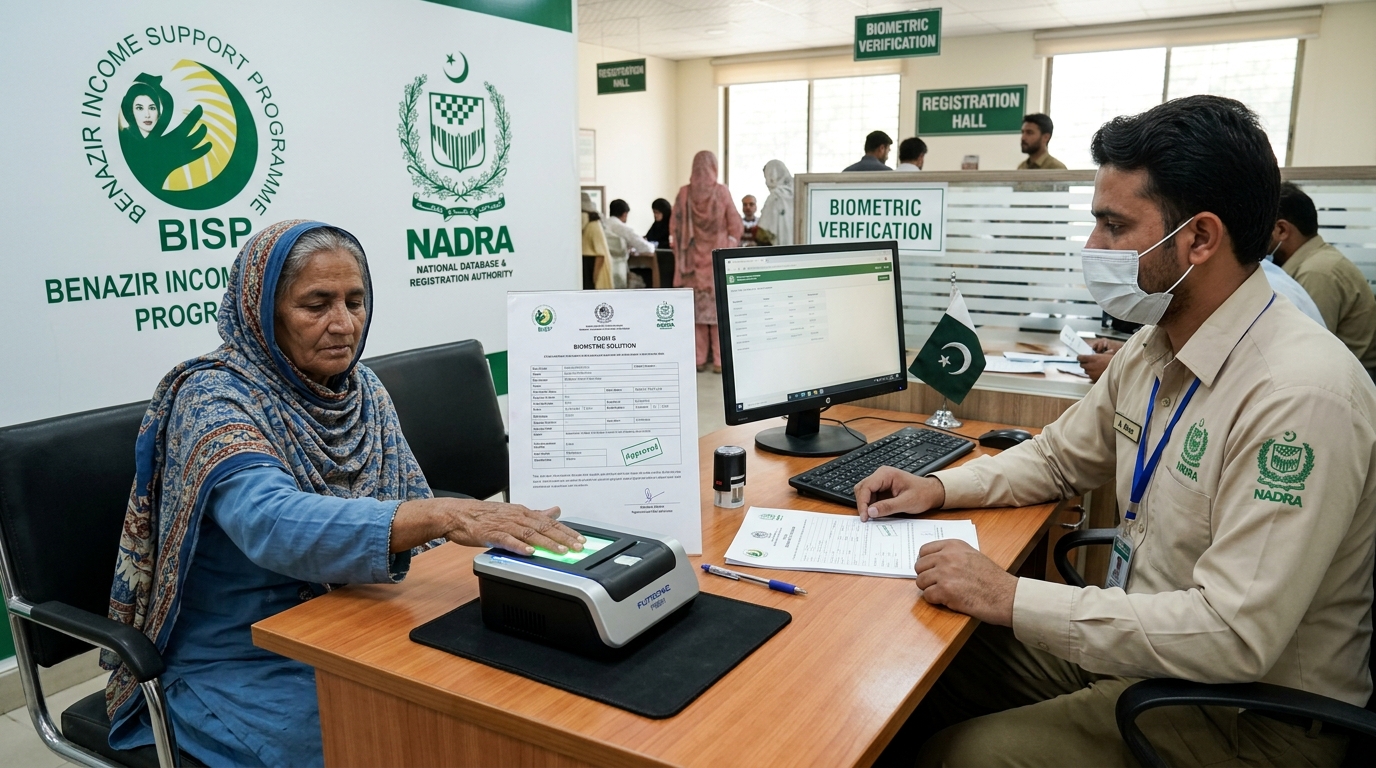
BISP Biometric Failed? Guaranteed Rs 13,500 Fix
POS machine ya ATM par fingerprints match na hone ki surat mein 13,500 Rs ki payment Form B aur NADRA verification ke zariye hasil karne ka mukammal tariqa.
Read guide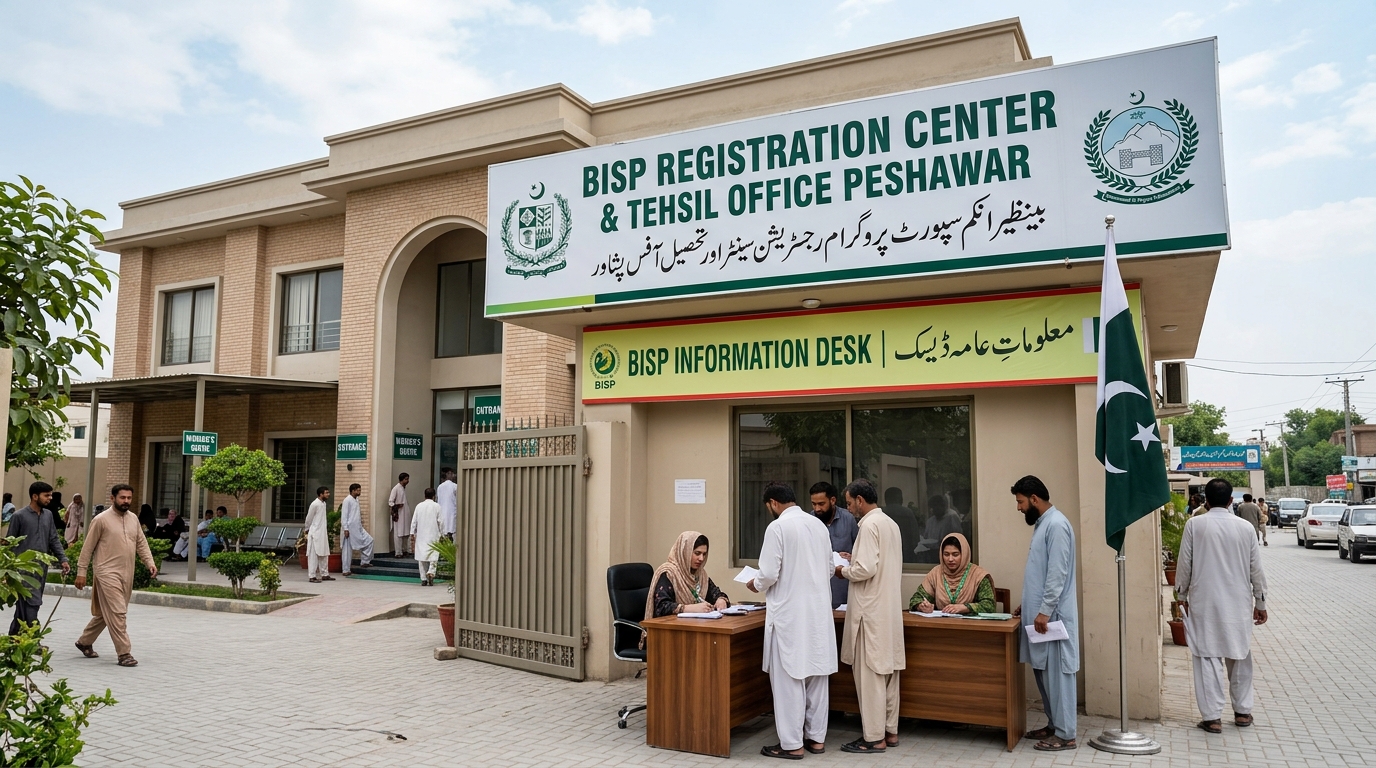
Verified BISP Tehsil Offices KPK & Peshawar List
Peshawar aur KPK ke tamam major districts ke BISP offices ke exact addresses, contact details aur timings ki mukammal master list.
Read guide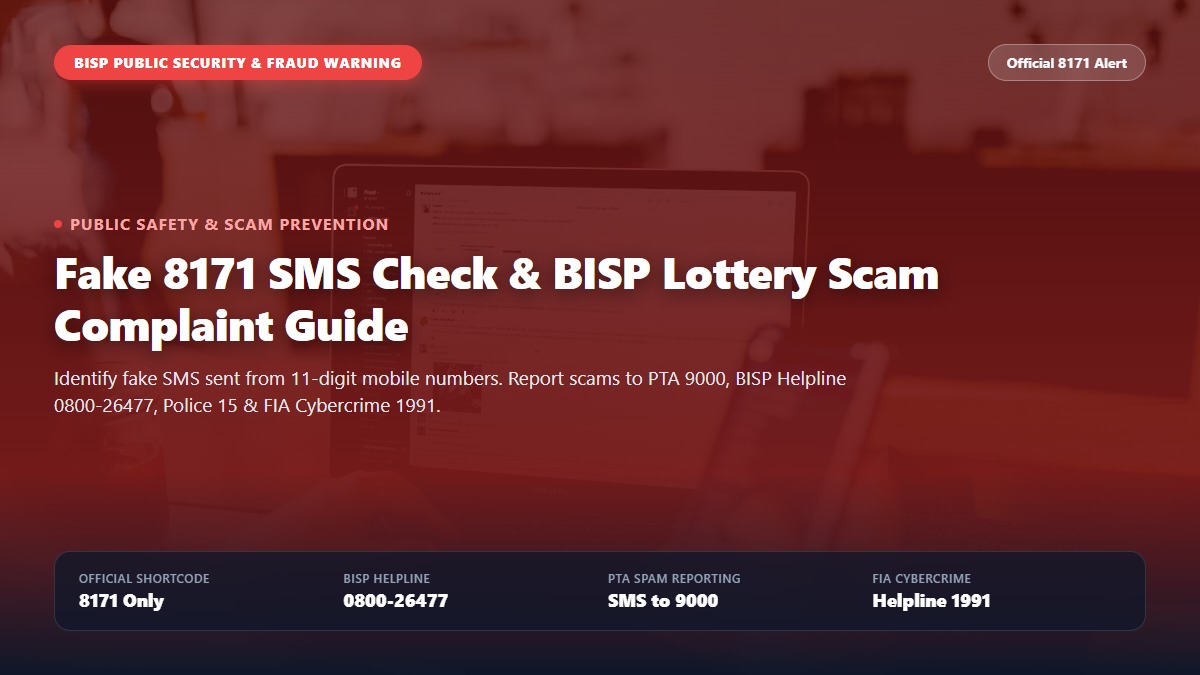
Fake 8171 SMS Check, Complaint & BISP Lottery Fraud Alert Guide
Spot fake 8171 SMS scams and report BISP lottery fraud. Step-by-step guide to reporting scammers on PTA 9000, BISP Helpline 0800-26477, Police 15, and FIA Cybercrime.
Read guide