What is Benazir Kafaalat?
Benazir Kafaalat is BISP's regular household cash-support programme, focused on eligible women. It is distinct from education stipends, nutrition support and provincial loan schemes. People may use the spellings Kafalat, Kafaalat or the older Ehsaas Kafalat name when looking for it. The responsible organization for the current BISP programme is the Benazir Income Support Programme.
Use this page to understand the service and choose the right detailed guide. It explains the difference between being recorded, being eligible and being told to collect an installment. Each of those stages answers a different practical question. A general explanation cannot establish your household's status, and PakBenefits does not hold beneficiary records.
Eligibility and household circumstances
BISP assesses households using its records and programme criteria. A valid identity document is necessary for identification, but it is not an approval certificate. Household circumstances, verification and the applicable rules all matter. If you need to understand the assessment terminology, our household eligibility hub explains how NSER and PMT fit into the wider process.
Avoid judging a case from a single asset, a neighbour's result or a private score estimate. If information in the household record is inaccurate, the useful question is which fact needs correction and which official office handles it. A person promising guaranteed approval in exchange for money cannot replace that process.
Registration, verification and payment are different
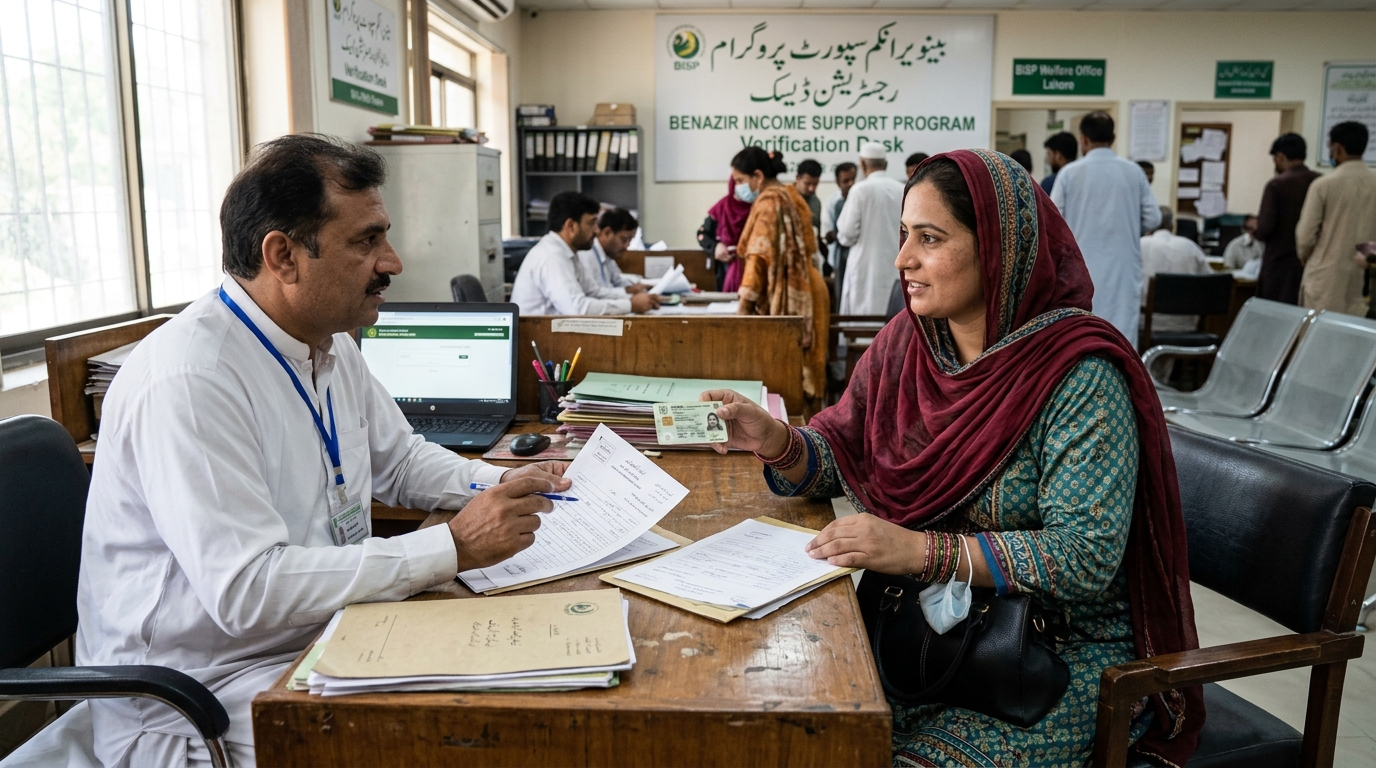
Registration concerns the household record. Verification checks information needed for the programme. Payment release concerns a particular installment. The stages are connected, but a message about one stage should not be read as confirmation that every other stage is complete.
For example, a household may be asked to provide information even though it has received support before. Another household may have an eligibility result while its collection instructions have not yet arrived. Read the message carefully and keep a dated note of what it actually requests. This is more useful at an office than an assumed interpretation based on an unrelated video.
Payment amounts and installment dates
Kafaalat payment amounts can change through official decisions. Historical figures should carry their announcement dates, and a seasonal or emergency package should not be confused with the regular installment. Confirm the current programme amount, covered period and collection instruction through BISP before making a journey.
A household total may also include a separate education payment or an earlier unpaid installment. Ask the payment desk to identify each component if the total seems different from the headline amount. Do not assume that another beneficiary's receipt proves the amount owed to your household. Keep your own receipt and record the date of collection.
How to verify registration safely
Use the official 8171 route for household eligibility information and BISP staff for questions requiring access to records. Our detailed Kafaalat guide explains the checking process and relevant follow-up. The public portal is not a service where a reader can alter a household record or book a guaranteed payment.
If a message asks you to attend an office, confirm the destination through BISP's own information. Avoid paying a person who offers to interpret the message privately or move your name to the front of a queue. A trusted family member can help you read instructions without keeping copies of your CNIC, passwords or account details.
Collection and deductions
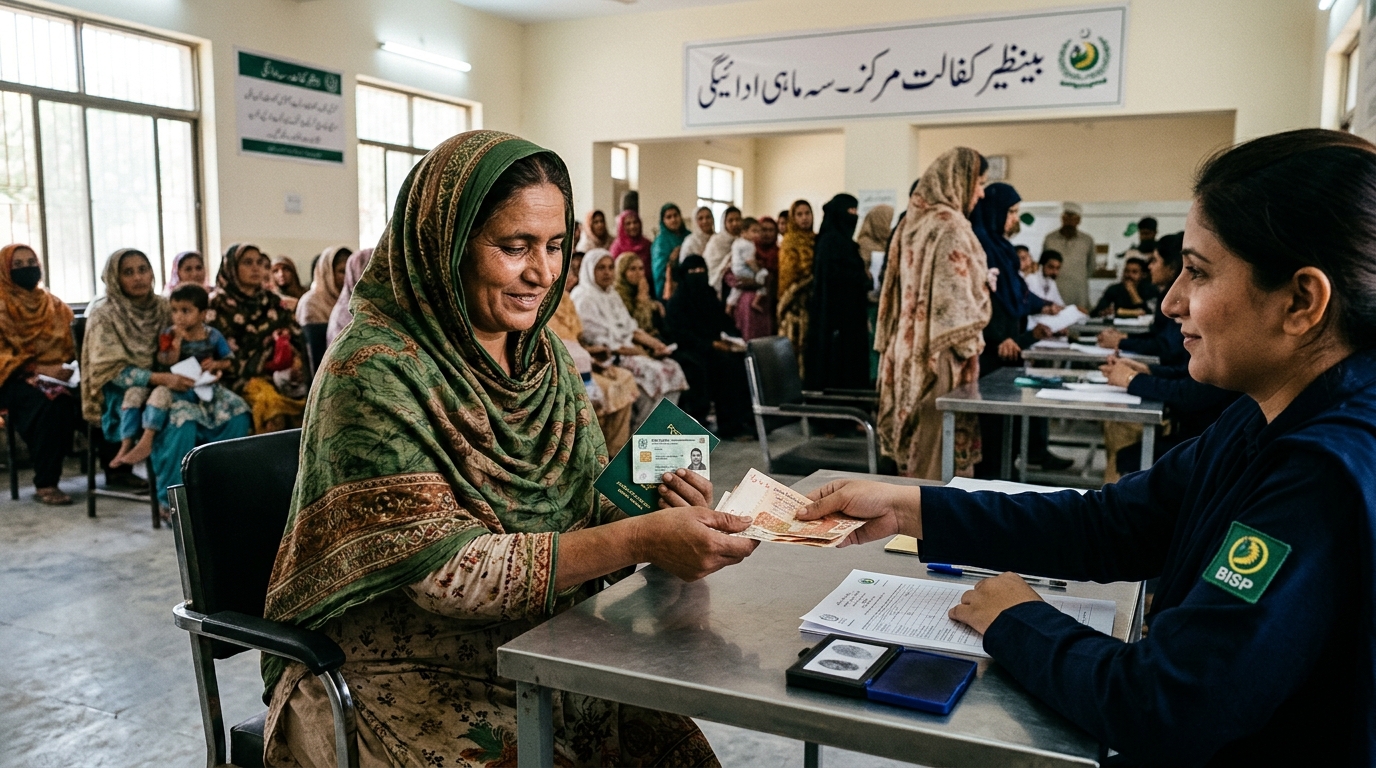
Follow the payment route assigned by BISP for your location and case. Collection arrangements can vary, so a bank or retailer mentioned in an older guide may not be your authorized destination. At the correct payment point, keep identity documents in sight and ask how the transaction will be confirmed.
Count the cash before leaving and request the available receipt or transaction confirmation. If someone demands a deduction, record the location, date and amount and contact BISP. If the problem is a wallet or bank transaction, the authorized provider may also need to investigate its own record. Never disclose a PIN or OTP to a caller promising to fix it.
Related support for children and mothers
Eligible households may also need information about Taleemi Wazaif for education or Nashonuma for maternal and child nutrition support. These programmes have their own enrollment and participation conditions. A Kafaalat record is not proof that every related benefit has already been arranged.
Use the relevant programme guide to prepare the right questions. A school attendance problem belongs with education records, while a nutrition-service visit belongs with the designated facilitation centre. Keeping the services separate helps families avoid repeated trips and makes follow-up clearer for the staff handling the case.
Frequently asked questions
What is Benazir Kafaalat?
It is BISP’s regular cash-support programme for eligible households, focused on women beneficiaries.
Does registration mean a payment is ready?
No. Registration, eligibility and release of a particular installment are separate stages.
How much will my household receive?
Ask BISP to confirm the applicable installment and any separate education or earlier unpaid amounts for your household.
What should I do about a payment deduction?
Keep the receipt and details of the location, date and amount, then report the issue through BISP’s official complaint channel.