
This article explains public information. It does not determine eligibility or replace an official notice.
What the NSER survey actually measures
The National Socio-Economic Registry (NSER) is the household database BISP uses to decide who qualifies for its programmes, including Kafaalat payments. An authorized enumerator records details about household composition, housing conditions, assets (like land, livestock, or vehicles), income sources, and dependents. None of this is guesswork on your side — accuracy matters because it directly feeds the score calculation.
How the PMT score works
PMT means Proxy Means Test. It estimates household welfare using recorded indicators rather than treating a single reported income as the full assessment. Eligibility also depends on the rules of the particular programme. For the statistical concept and terminology, read the separate PMT definition guide.
- The score is calculated centrally after the survey, not by the enumerator on the spot.
- Cut-off thresholds are set and periodically reviewed by BISP, not by this website.
- Two households with similar income can have different scores if their recorded assets or housing differ.
Checking whether you have a survey record
Use the official 8171 portal for available household eligibility information. The public form is not a guaranteed display of the full NSER record or an exact numeric PMT score. If the result does not answer your question, ask BISP to explain the relevant record and the official follow-up.
If you believe your score is wrong
If recorded circumstances appear inaccurate or have changed, explain the specific facts to the BISP tehsil office and ask what update or reassessment process applies. A review request does not guarantee a different score or decision. The useful starting point is accurate household information, not a promise to obtain a preferred number.
Start with the question you need answered
A PMT score check can mean asking whether a household has an assessment, understanding an eligibility result or correcting an inaccurate record. State which question applies to you. A portal result that addresses eligibility may not show the underlying details needed to answer a record-correction question.
Write down the wording of the official message and the date you received it. Keep the original privately. This creates a clear starting point for an office inquiry without relying on a remembered summary. If a message only asks you to attend a desk, do not assume that it confirms either a final rejection or an approved payment.
Step 1: use the official household status route
Open the official 8171 page and inspect the address before entering the identity details it requests. Complete the displayed verification and read the entire result. The public page checked for this guide asks for a CNIC and image code and describes a household eligibility check.
Do not enter a CNIC into a private calculator that promises an exact score from a few questions. A household assessment depends on official records and the programme's process. An online estimate cannot establish what BISP currently holds or what decision it will make. Save only the information you need for an authorized follow-up.
Step 2: distinguish the result from a technical error
If the page fails to load, first check the connection and try the official address in a current browser. A technical failure does not describe your household. An unreadable verification code or incomplete submission is also different from a returned eligibility message.
If a result is displayed, separate its actual wording from assumptions about the score behind it. Not seeing a number does not mean the number is zero, and a missing numeric display is not permission to use an unofficial lookup. For a specific assessment question, ask the responsible BISP office what information it can confirm.
Step 3: prepare an official record inquiry
Explain whether you need clarification, have been instructed to update information or believe a particular fact is wrong. Bring the documents requested for that purpose and any genuine reference already issued. The cross-programme documents guide helps organize the relevant identity and household records.
For example, a new child, a change in household composition or a correction to an identity record may require different evidence. Ask which fact is held in which system. A NADRA document correction and a change to BISP's household information are related tasks, but one should not be assumed to update the other automatically.
Step 4: explain the facts accurately
Describe what has changed and when. If a document and the household's circumstances differ, explain the discrepancy rather than hiding it. Ask staff to clarify unfamiliar terms so that the answer corresponds to the question actually being recorded.
Do not follow advice to omit assets, invent dependants or copy another household's answers. These actions can create an inaccurate record and undermine a legitimate inquiry. A private person cannot guarantee the outcome of an official assessment, even if that person claims to know which answers produce a lower score.
Step 5: keep the acknowledgment and next instruction
Before leaving, ask what stage has been completed and whether a reference or acknowledgment is available. Clarify whether the next action is to provide evidence, contact another office or wait for a programme message. Keep that instruction with the date of the visit.
An accepted inquiry is not the same as a revised eligibility decision. A record may still need review or verification. If you return for follow-up, use the existing reference and explain the outstanding issue. This is more useful than restarting the story as though no previous visit occurred.
What the dynamic registry means for a household
A dynamic registry allows household information to be updated through the programme's authorized arrangements. For a reader, the practical question is whether the recorded circumstances are current and what official process applies to a change. It is not a commercial service that sells a refreshed score.
Families can use a simple record of important changes to prepare an inquiry. Note the event, approximate date and supporting document available, without assuming every event changes eligibility. The programme decides how the information is assessed. Ask about your record rather than expecting the same treatment as a different household with a superficially similar situation.
Common reasons a record inquiry becomes confusing
People sometimes mix the identity document, household record, programme eligibility and payment account into one problem. Start by identifying the system involved. A bank balance, for example, is not a PMT score, and a payment-device error does not establish that a household assessment changed.
Another source of confusion is an old message being read as a current instruction. Keep dates visible and ask BISP which notice applies if you have conflicting instructions. A private website should not resolve that conflict by inventing a processing deadline or declaring that the most recent social-media post overrides an official record.
Why thresholds should be read by programme and date
Programme eligibility can involve published thresholds and additional conditions. A number quoted for one service or a particular group should not be generalized to every scheme. Provincial programmes can also use their own criteria and verification arrangements.
If a threshold is relevant to your inquiry, ask for the applicable rule and the period it covers. Do not compare a private screenshot from another year with your result without that context. A rule about eligibility is also different from an explanation of how the statistical assessment is calculated; knowing one does not let a reader reproduce the other.
When a recheck does not change the outcome
Repeating a portal check reads available information; it does not itself change the record. If the underlying inquiry is unresolved, ask the office what remains outstanding. Do not pay someone who promises that repeated submissions or a special browser will lower a score.
A record correction also does not guarantee eligibility. The corrected information still has to be considered under the programme's rules. If the outcome remains unclear, ask about any official explanation or review route available for the case. Keep the discussion focused on verifiable facts and the actual instruction given.
Keep household information private
A PMT inquiry can involve sensitive details about a family's living arrangements and circumstances. Share those details through the authorized programme process. An information website does not need a CNIC photograph, bank PIN or full family record to explain what the term PMT means.
If someone helps you read the portal or prepare documents, keep control of the device and original paperwork. Redact private details before requesting general advice publicly. If a person claims to sell access to the NSER database or a guaranteed score change, preserve the claim and verify it through BISP instead of testing the offer.
Choose the next guide after the inquiry
If BISP directs the household to registration or an update process, use the detailed registration guide for the sequence of preparation and follow-up. If the question concerns an already released installment, use the payment guide instead. Those tasks should not be folded into a PMT inquiry unless the official instruction connects them.
For general terminology, the household eligibility hub and PMT definition remain useful references. Keeping conceptual explanations, record checking and payment collection separate helps you bring a clear question to the correct office. It also prevents unrelated forms and messages from being treated as interchangeable evidence.
Example: the household result and a school payment disagree
Suppose a parent can read a household eligibility result but cannot confirm a child's education stipend. This does not automatically mean that the PMT assessment needs to be repeated. The unresolved issue could concern the child's separate enrollment or school record, which the public household result does not describe.
Ask BISP which programme record needs checking and use the child's relevant documents through the authorized desk. Keep the household result as background, without treating it as proof that an education payment must already exist. The same principle applies when an account shows no credit: identify the missing transaction or programme instruction before assuming a household-score issue.
Example: an old record no longer describes the family
Suppose a family has an older reference but its composition has changed. The useful inquiry is which facts should now be updated, what evidence is needed and which official process handles the change. It is not a request to choose a preferred assessment result.
Prepare a concise explanation of the change and retain any related official document. If the family has already asked another organization to correct an identity entry, bring the relevant acknowledgment when BISP requests it. Ask whether any additional household action is necessary rather than assuming every government system has received the correction.
Questions to ask at the end of a visit
Before leaving the desk, confirm which issue was recorded, whether supporting evidence is outstanding and how the next instruction will be communicated. If a return visit is required, ask what its purpose is. Keep any reference with the date so another staff member can understand the earlier inquiry.
These questions help organize a legitimate follow-up. They do not establish a processing deadline or guarantee that the outcome will change. Follow the official instructions for your case and keep private records out of public comments or unofficial status-check services.
If you need help interpreting an instruction, ask the official desk to explain it in plain language before leaving.
Frequently asked questions
How do I check my PMT score for BISP?
Use the official household-status route for available information and ask BISP about the assessment record when an exact score is not displayed.
Does the 8171 portal always show a numeric PMT score?
No numeric-score display is guaranteed by the public form. Ask BISP to clarify the relevant assessment information.
Can a private calculator reproduce my official result?
No. An estimate from a private website does not establish the official household record or programme decision.
Can an update change my assessment?
An official update or reassessment may affect the record, but it does not guarantee a different score or eligibility decision.
What is the dynamic registry?
It is an arrangement for keeping household information current through the programme’s authorized process.
Is a PMT score the same as a bank balance?
No. A PMT score concerns household assessment; a bank balance concerns funds in a financial account.
Sources and official links
Check the destination address before entering personal information.
Saad has covered BISP, Ehsaas, and provincial welfare schemes for Live Govt Schemes & Ehsaas Programs since 2024, cross-checking every guide against the current official portal before publication.
Ayesha reviews programme-eligibility and payment content for accuracy against BISP, NADRA NSER, and provincial notices, and flags any guide that needs an update after an official policy change.
Related guides
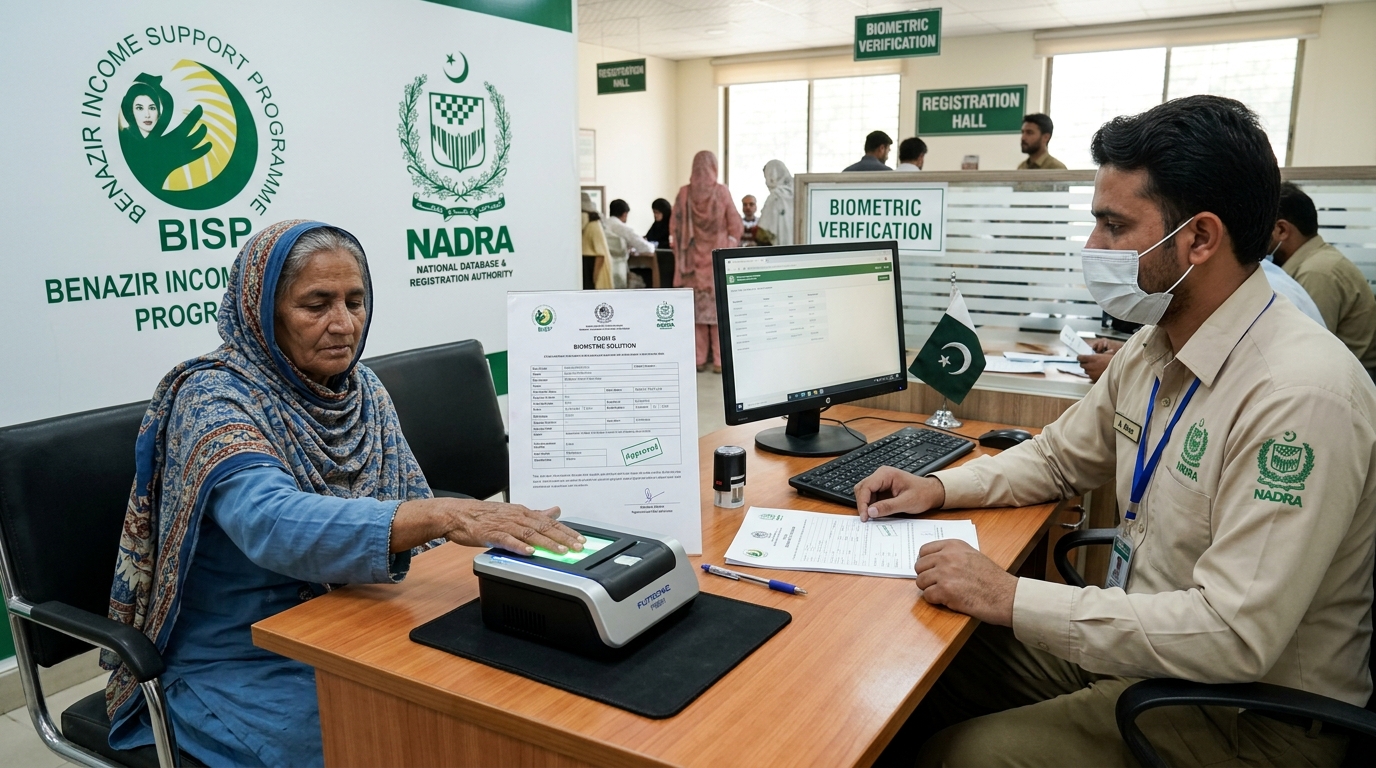
BISP Biometric Failed? Guaranteed Rs 13,500 Fix
POS machine ya ATM par fingerprints match na hone ki surat mein 13,500 Rs ki payment Form B aur NADRA verification ke zariye hasil karne ka mukammal tariqa.
Read guide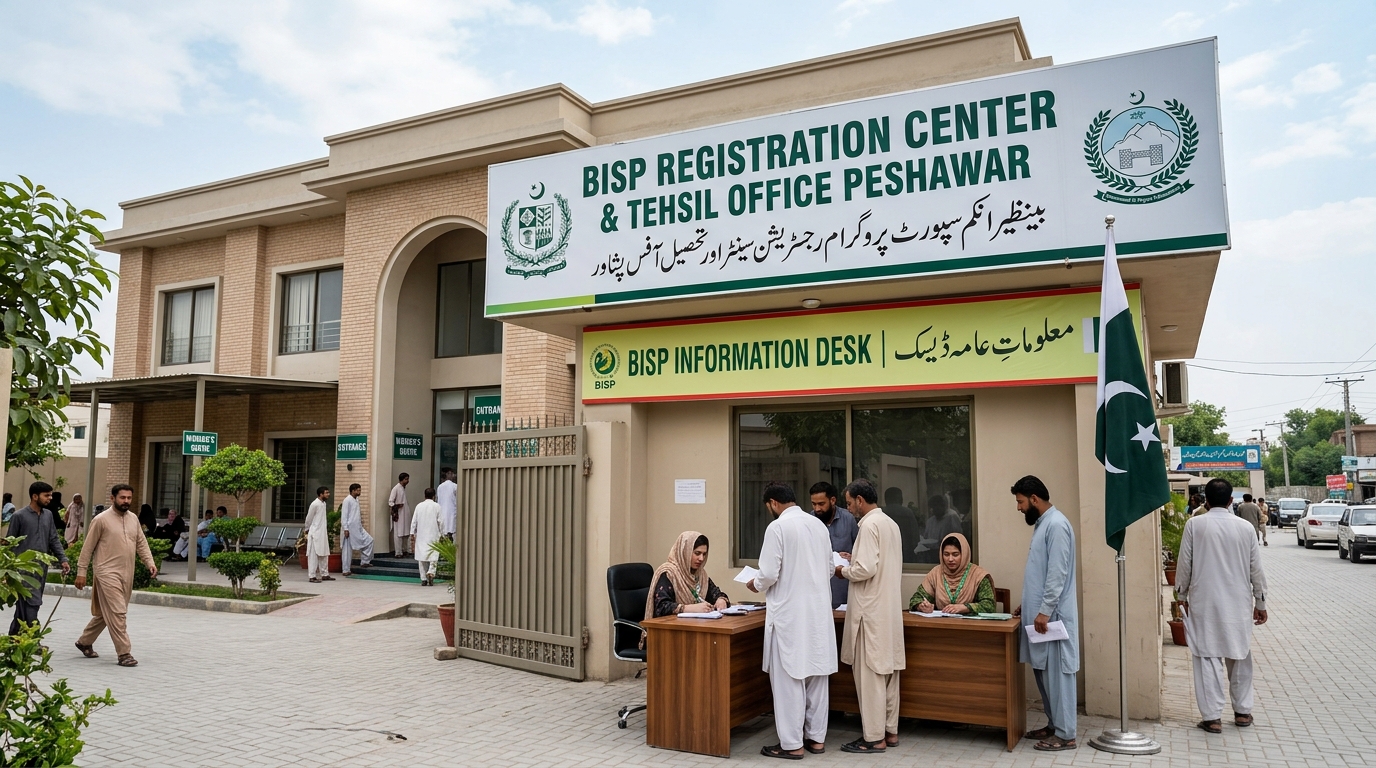
Verified BISP Tehsil Offices KPK & Peshawar List
Peshawar aur KPK ke tamam major districts ke BISP offices ke exact addresses, contact details aur timings ki mukammal master list.
Read guide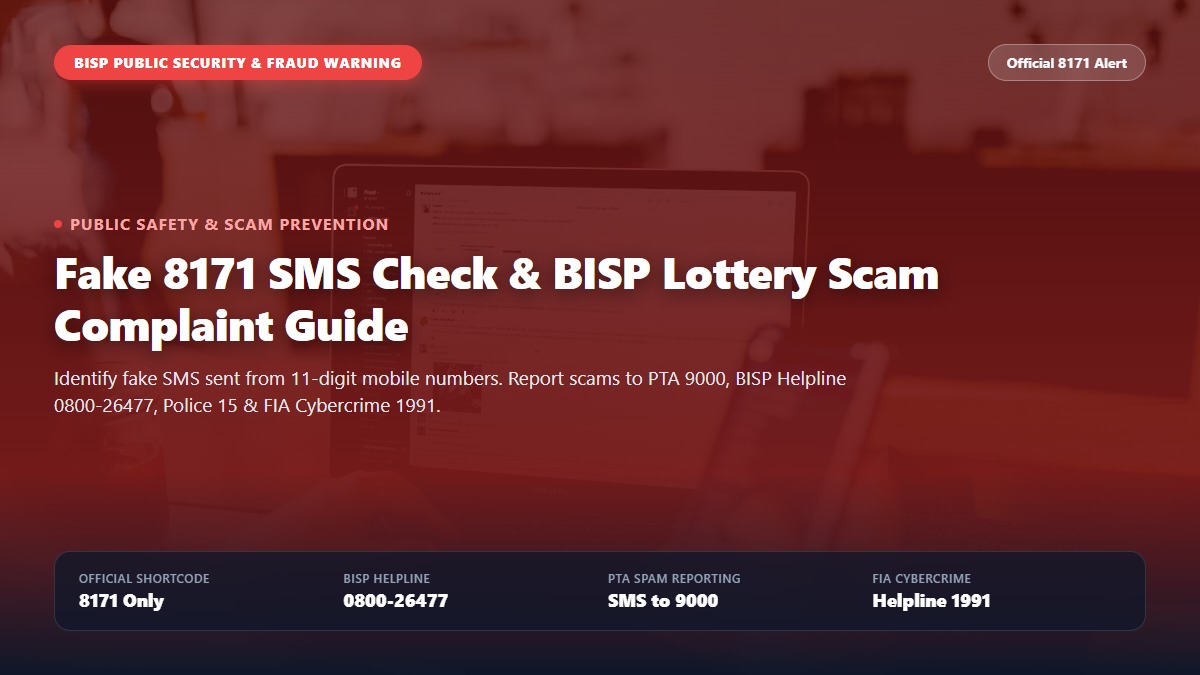
Fake 8171 SMS Check, Complaint & BISP Lottery Fraud Alert Guide
Spot fake 8171 SMS scams and report BISP lottery fraud. Step-by-step guide to reporting scammers on PTA 9000, BISP Helpline 0800-26477, Police 15, and FIA Cybercrime.
Read guide