
This article explains public information. It does not determine eligibility or replace an official notice.
What Is a PMT Score, and What Does It Measure?
A PMT score is a poverty estimate that BISP calculates for a household, not a monthly income figure. PMT stands for Proxy Means Test. Instead of asking a family to prove earnings, the assessment uses recorded indicators - housing condition, assets, family size, education and utility use - to estimate welfare.
The score sits on a 0 to 100 scale. A lower score indicates a household with fewer resources; a higher score suggests greater economic stability. Two families with similar daily earnings can receive different scores if their recorded assets, housing or dependants differ. That is the "proxy" part of the name: the number estimates circumstances indirectly.
How the NSER Survey Produces Your Score
The National Socio-Economic Registry (NSER) is the household database behind the score. An authorized enumerator records household details during the NSER survey, either at a BISP Tehsil Office registration desk or during an outreach visit. The recorded data is cross-checked against NADRA identity records before the PMT is calculated centrally.
BISP has maintained NSER since 2011. The 2010-11 nationwide survey covered about 27 million households, and the update completed between 2019 and 2021 brought the registry to roughly 35 million households. The registry now works as a dynamic registry, which means a household can register or update information through the authorized process instead of waiting years for the next door-to-door round.
Why a Lower PMT Score Means Stronger Eligibility
BISP targets assistance at the poorest households, so the eligibility rule works in the opposite direction to a school result. A lower PMT score is the better outcome for programme access. If a household genuinely has fewer assets and lower consumption, the recorded indicators should produce a lower number.
This is also why no legitimate agent can promise a specific score. The assessment is calculated from recorded household facts and programme rules. It is not negotiated at a counter, and it cannot be produced by an online calculator that never sees the NSER record.
What Counts as a "Good" PMT Score for BISP?
For BISP's core cash transfer, a good PMT score is 32 or below. Households scoring within that range fall inside the standard Benazir Kafaalat eligibility threshold, while higher scores are normally outside it. A separate relaxed threshold of 37 applies to households that include a certified differently-abled member.
The word "good" needs one clarification. In ordinary conversation people call a high score good. In BISP terms, "good" means "likely to qualify", and that is a lower number. If someone tells you a score of 45 is good because it is higher, they are describing financial stability, not eligibility.
The Standard BISP Cut-Off: 32 or Below
A PMT score of 32 or below is the standard working threshold for Benazir Kafaalat. It is a programme rule set and reviewed by BISP, not a fixed law of nature. The score itself is calculated centrally after the survey; the enumerator at the desk does not decide it.
Meeting the cut-off is necessary but not automatically sufficient. BISP also applies verification and exclusion checks, including cross-matching against other government databases. A household can score below the cut-off and still face a verification hold if recorded facts conflict with other official records.
The Relaxed 37 Cut-Off for Households With a Disability
Households that include a legally certified differently-abled member are assessed against a relaxed threshold of 37. The disability status must be recorded officially - typically through NADRA's special CNIC process or a recognised disability certificate - for the relaxed rule to apply.
If a household believes it qualifies for the relaxed threshold but the record does not reflect the disability, the correct step is to correct the identity or household record first. A registration desk cannot apply a rule that the database does not show.
PMT Score Bands and What Each Band Means
These bands are a reading aid, not an official table. BISP sets the applicable threshold and applies it to its own verified data. Treat the exact number and rule as programme information, and confirm your own case through an official channel.
| PMT score band | What it generally indicates | Practical meaning for BISP |
|---|---|---|
| 0-32 | Deepest recorded poverty | Within the standard Benazir Kafaalat threshold |
| 33-37 | Low income, above the standard cut-off | May qualify only under the relaxed disability rule |
| 38-50 | Moderate recorded stability | Normally outside Kafaalat; some provincial schemes use their own limits |
| 51-100 | Higher recorded stability | Generally outside core BISP cash support |
How to Check Your PMT Score Online by CNIC (8171)
You can check your household's available PMT and eligibility information by entering your 13-digit CNIC on the official 8171 web portal or by sending it by SMS to 8171. The public route shows what BISP has recorded for the household. It is free, and it is the only checking route this site recommends.
Method 1: The 8171 Web Portal, Step by Step
If the page fails to load, refresh it or try again later. A page error is not a statement about your household.
- Open the official portal at 8171.bisp.gov.pk and check the address before typing anything.
- Enter your 13-digit CNIC without dashes or spaces.
- Complete the image code (captcha) shown on the page.
- Submit the form and read the entire result, including any instruction it gives.
Method 2: SMS to 8171
Send your 13-digit CNIC by SMS to 8171 from a SIM registered in your own name. The reply usually states your recorded status - for example eligible, under process, or an instruction to complete a survey. Keep the reply. The exact wording and the date are useful if you later need to ask an office about the record.
What the 8171 Result Shows - and What It Does Not
The portal is an eligibility and status check. A numeric PMT score is not guaranteed to be displayed. Some results show a status message without the underlying number, and a missing number does not mean the score is zero.
This is the single biggest misunderstanding around PMT score checks. Several third-party sites claim the portal reveals an exact score, and some sell "calculators" that supposedly reproduce it. Neither is reliable. A private calculator has no access to NSER, so it cannot reproduce an official assessment. If you need the recorded detail behind your result, ask BISP through its official desk or helpline (0800-26477).
Is a "Good" Score the Same for Every Programme?
No. A PMT score of 32 or below is a BISP threshold, and other programmes can set different limits for their own schemes. Provincial programmes, utility subsidies and housing initiatives may use NSER data with their own eligibility rules.
BISP and Benazir Kafaalat
The core case is the one described above: 32 or below for the standard threshold, 37 for households with a certified differently-abled member. This is the threshold most readers mean when they search for a good PMT score.
Provincial Schemes and Utility Subsidies
Provincial governments in Punjab and other provinces use poverty data for their own programmes, including ration and subsidy schemes. Their thresholds, verification steps and review cycles are separate from BISP's, so a score that qualifies for one scheme may not qualify for another. Check the responsible department's current terms before applying.
Why Your PMT Score Is Missing or Looks Wrong
A missing result or an unexpectedly high score usually points to a record problem, not a final rejection. The 8171 message is only as accurate as the household information BISP holds, and that information can be incomplete, outdated or mismatched.
Common Causes of a Missing or Outdated Record
- No completed NSER survey for the household.
- A CNIC that is not linked to the household record.
- A recent marriage, move or family change that has not been recorded.
- An expired survey that needs recertification.
- A data entry or NADRA mismatch in a name, CNIC or family relationship.
How to Request a Correction or Re-Survey
Take the specific facts to a BISP Tehsil Office and ask what update process applies. Bring your original CNIC and any documents that support the correction, such as children's B-Forms or a utility bill. If the underlying identity record is wrong, correct it at NADRA first, because BISP validates household data against NADRA.
A correction request is not a guarantee of a different score. The corrected information still has to be assessed under the programme's rules. What you can control is whether the record is accurate and complete.
What Changed in 2026: A Dated Reference Table
PMT content ages badly. Many high-ranking pages still quote 2024 figures, and some describe a Rs 13,500 quarterly payment that has since been revised. Use the dated references below instead of undated screenshots.
Payment amounts and thresholds change. Before relying on any figure, confirm the current position through BISP, and treat a social media screenshot without a date as unverified.
| Item | Current reference | Date / source basis |
|---|---|---|
| Kafaalat quarterly payment | Rs 14,500 (raised from Rs 13,500) | Announced February 2026; PID briefing 22 June 2026 |
| Planned further increase | Announced for January 2027 | PID briefing 22 June 2026 |
| Standard PMT threshold | 32 or below | BISP programme practice |
| Relaxed threshold | 37 with certified disability | BISP programme practice |
| NSER registry size | About 35 million households | BISP NSER update completed 2019-2021 |
| Beneficiary recertification | After three years | BISP NSER dynamic registry cycle |
Can You Lower Your PMT Score?
You cannot legitimately lower a PMT score by hiding assets, copying another household's answers or paying an agent. NSER data is cross-checked against national databases, and deliberately false information can create an inaccurate record and expose a household to penalties.
What you can do is make sure the recorded facts are correct. If circumstances have genuinely worsened - a breadwinner lost work, a family member died, a household was affected by a disaster - the authorized process is to report the change through BISP so the record can be reviewed. That is a correction of facts, not manipulation of a score.
Beware of anyone promising a guaranteed score reduction for a fee. BISP services are free, and its helpline is 0800-26477.
Frequently asked questions
What is a good PMT score for BISP?
A good PMT score for BISP is 32 or below, because BISP assistance targets households with the lowest recorded welfare. Lower scores indicate greater financial need and a stronger position within the eligibility threshold.
What is the maximum PMT score to qualify for Benazir Kafaalat?
The standard threshold is 32. Households with a certified differently-abled member are assessed against a relaxed threshold of 37. Meeting the threshold is necessary, but BISP also applies its own verification checks.
Does the 8171 portal always show my exact PMT score?
No. The official route shows available household eligibility and status information, and a numeric score is not guaranteed to appear. If you need the recorded detail, ask BISP through its official desk or helpline.
How do I check my PMT score online by CNIC?
Enter your 13-digit CNIC on the official 8171 portal at 8171.bisp.gov.pk and complete the captcha, or send your CNIC by SMS to 8171 from a SIM registered in your name.
What does a PMT score between 33 and 37 mean?
It is above the standard cut-off but inside the relaxed disability threshold. A household in this band may qualify only if it includes a certified differently-abled member, and BISP decides each case on its verified record.
Can a PMT score change over time?
Yes. A score can change after an approved household update, after recertification, or when cross-checks against other official records reveal a change in recorded circumstances. Beneficiaries undergo recertification on BISP's cycle, which its NSER documentation describes as after three years.
Can I check my PMT score without a CNIC?
No. The household record is linked to a CNIC, so the 8171 check requires the applicant's 13-digit CNIC. A family member cannot check another adult's record without that person's identity number.
How do I fix a wrong PMT score?
Take the specific error to a BISP Tehsil Office with your original CNIC and supporting documents, and ask which correction or re-survey process applies. If the error is in your NADRA identity record, correct that first.
Can I lower my PMT score by hiding assets?
No. Deliberately false information is treated as fraud, and BISP cross-checks household data against national databases. Only genuine changes in circumstances should be reported through the authorized process.
Is a good PMT score the same for every government programme?
No. Other programmes, including provincial schemes and utility subsidies, can set their own thresholds even when they use the same NSER data. Confirm the current rule with the department responsible for that programme.
Sources and official links
Check the destination address before entering personal information.
Saad has covered BISP, Ehsaas, and provincial welfare schemes for Live Govt Schemes & Ehsaas Programs since 2024, cross-checking every guide against the current official portal before publication.
Ayesha reviews programme-eligibility and payment content for accuracy against BISP, NADRA NSER, and provincial notices, and flags any guide that needs an update after an official policy change.
Related guides
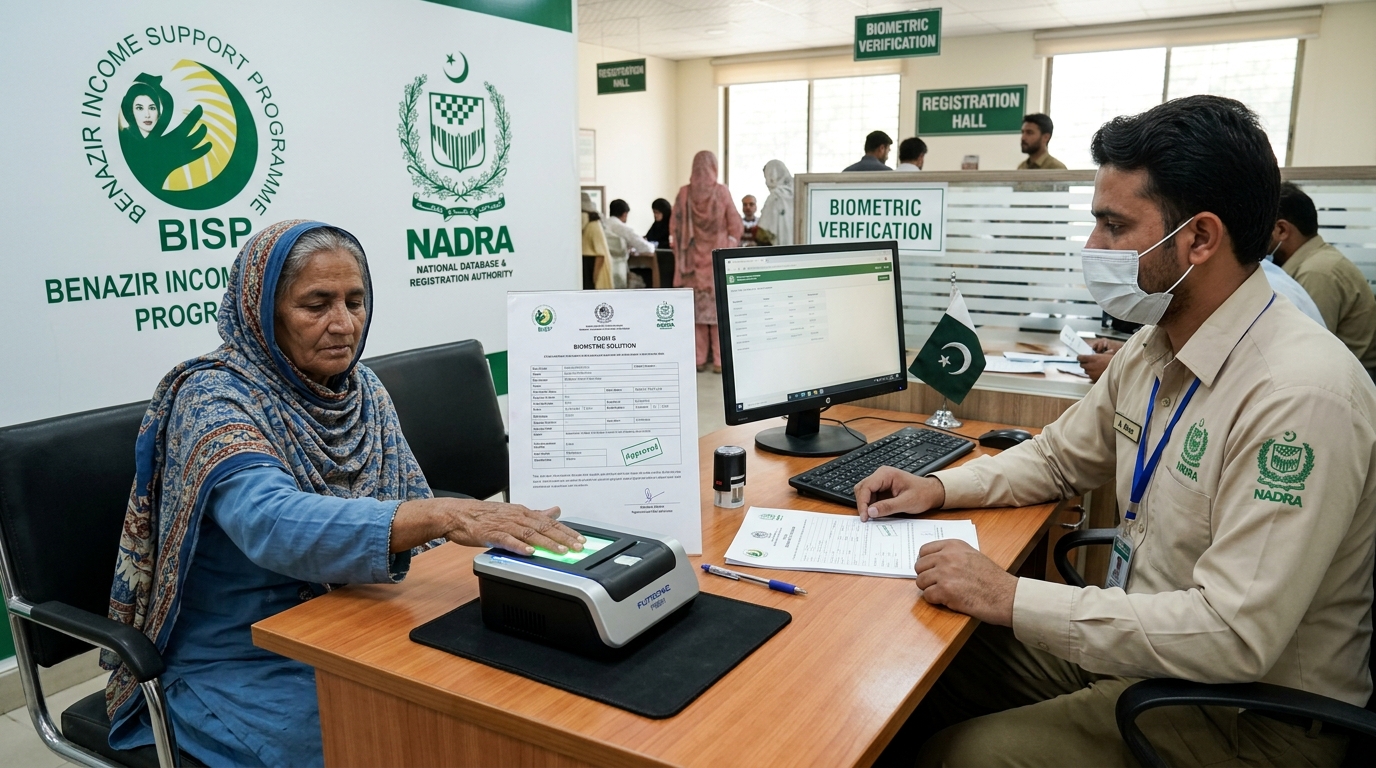
BISP Biometric Failed? Guaranteed Rs 13,500 Fix
POS machine ya ATM par fingerprints match na hone ki surat mein 13,500 Rs ki payment Form B aur NADRA verification ke zariye hasil karne ka mukammal tariqa.
Read guide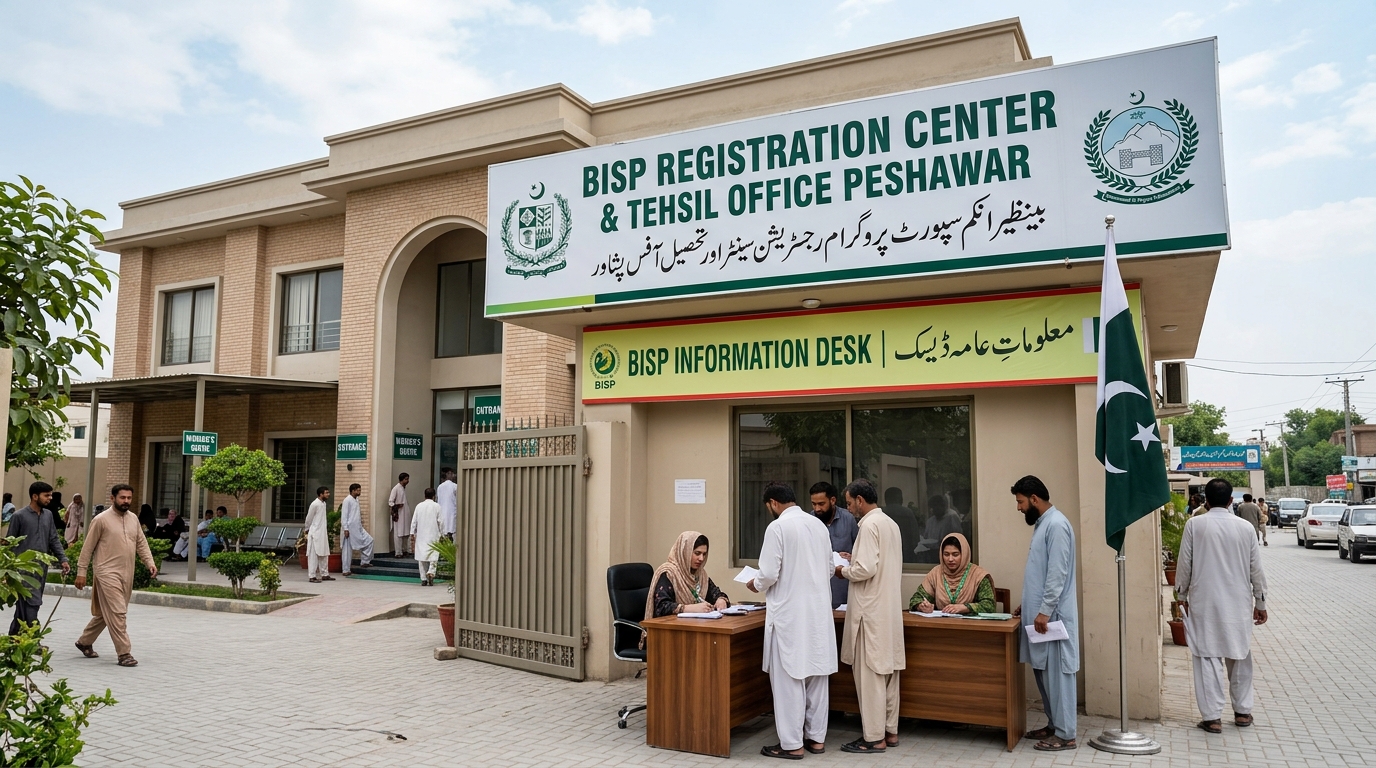
Verified BISP Tehsil Offices KPK & Peshawar List
Peshawar aur KPK ke tamam major districts ke BISP offices ke exact addresses, contact details aur timings ki mukammal master list.
Read guide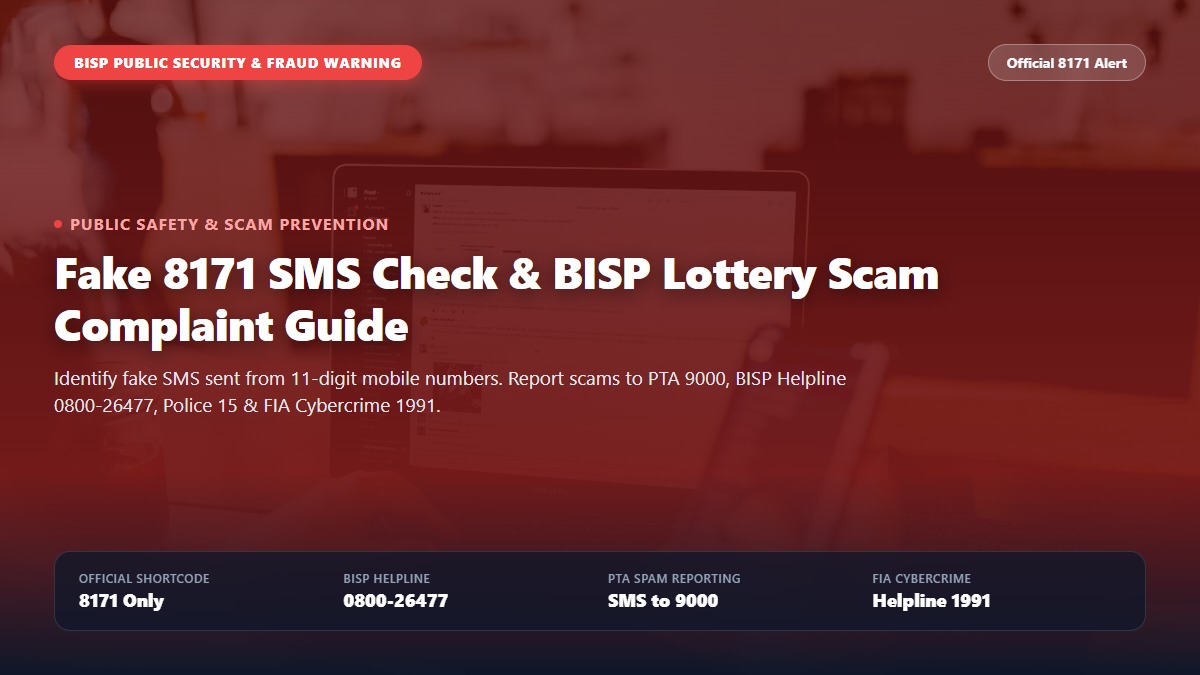
Fake 8171 SMS Check, Complaint & BISP Lottery Fraud Alert Guide
Spot fake 8171 SMS scams and report BISP lottery fraud. Step-by-step guide to reporting scammers on PTA 9000, BISP Helpline 0800-26477, Police 15, and FIA Cybercrime.
Read guide