This article explains public information. It does not determine eligibility or replace an official notice.
What changed on 10 November 2026?
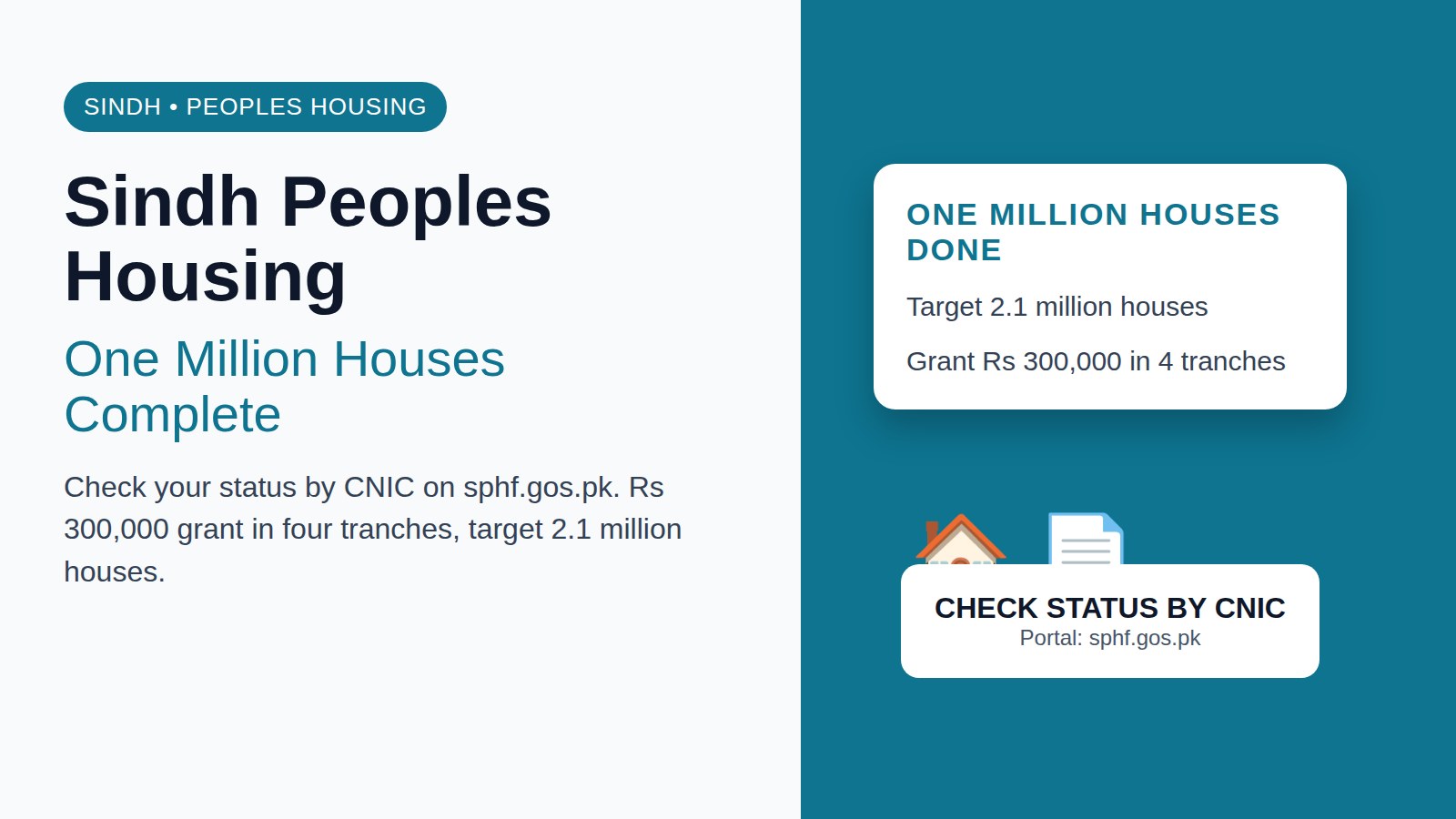
Sindh celebrated the completion of one million climate resilient houses on 10 November 2026. Chief Minister Syed Murad Ali Shah announced the milestone at a ceremony at the Chief Minister House in Karachi, and Pakistan Peoples Party Chairman Bilawal Bhutto Zardari attended the event. The ceremony marked the halfway point of a programme that aims to build 2.1 million houses across 23 districts.
The date matters because it is the first time the programme has passed the one million mark for completed houses. Earlier counts put the figure lower, so families who checked before November 2026 may see a different result now. A house counts as completed only after it has been geotagged and verified, so the figure refers to finished and checked houses, not houses still under construction.
The milestone does not change who can apply, because there is no open application. It also does not change the grant amount or the way payments are released. What it does change is the scale of what has been delivered so far, and it gives families a clear date to use when they ask officials about progress in their own district.
| What changed | Detail | Status on 11 November 2026 |
|---|---|---|
| Completed houses | One million houses finished and verified | Announced 10 November 2026 |
| Total target | 2.1 million climate resilient houses | Still in progress |
| Districts covered | 23 districts across Sindh | Programme wide |
| Verification method | Geotagging and digital monitoring | In use for completed houses |
| Who can join | Beneficiaries from the 2022 flood damage survey only | No new registration round |
| Status check | CNIC check on sphf.gos.pk | Live |
| Complaints helpline | 0800-90090 | Live |
What is Sindh Peoples Housing for Flood Affectees?
Sindh Peoples Housing for Flood Affectees, known as SPHF, is the Sindh government programme that rebuilds houses destroyed or badly damaged by the 2022 floods. It is run by a dedicated company set up by the Government of Sindh, and it works with funding from the World Bank and the provincial government. The World Bank contributed $500 million, and the Sindh government provided $179 million from its own funds.
The programme is described as the largest owner driven housing reconstruction effort of its kind. Families rebuild their own houses with grant money paid into their own bank accounts, rather than waiting for a contractor to hand them a finished house. Each house must meet a climate resilient standard, so it can stand up better to future floods. Engineers check each stage before the next payment is released.
The scale is what sets SPHF apart. The target of 2.1 million houses covers 23 districts, and the one million completed houses announced on 10 November 2026 show how far the work has come since the floods. The programme also issues land titles in women names at scale, which gives many women a formal ownership record for the first time.
SPHF is not a loan, and families do not repay the grant. It is also not the same as the Punjab housing schemes that run on a different model, such as the Apni Chhat Apna Ghar scheme. If you live in Sindh and your house was damaged in the 2022 floods, SPHF is the programme that applies to you.
How do I check my Sindh Peoples Housing status by CNIC?
You can check your status online in a few minutes, and you do not need to visit an office or pay any fee. The official check runs on the SPHF Beneficiary Platform at sphf.gos.pk, and it works with your CNIC number alone. Keep your CNIC card with you before you start, so you can copy the 13 digit number exactly.
- Go to sphf.gos.pk and open the Beneficiary Status section, listed as beneficiary status on the site.
- Enter your 13 digit CNIC number without dashes in the box provided.
- Press Enter or tap the check button to submit the number.
- Read the result on screen, which shows your eligibility, your bank account status, and your payment progress.
- Note down what it says, including which tranche you have reached, before you close the page.
The result is tied to the CNIC of the person recorded in the 2022 flood damage survey. If you enter a different family member CNIC, the system may show no record even when your household is in the programme. Use the CNIC that was recorded at the time of the survey, and check the number twice, because one wrong digit can return a blank result.
The platform is available in English, Urdu and Sindhi. No password or mobile number is needed for the check, and no fee is charged. If a website or agent asks you to pay for a status check, do not pay, and use the official sphf.gos.pk address instead. If you cannot get online, ask a trusted family member to run the check for you, but do not share your CNIC with strangers.
What does each status result mean?
The status check returns three pieces of information, and each one tells you something different about your case. Eligibility says whether your household is on the beneficiary list from the 2022 flood damage survey. Bank account status says whether your account has been opened for grant payments. Disbursement progress says how many tranches have been paid so far, and which stage your house has reached.
An eligible result means your household is in the programme, and you can then look at the payment stages to see what comes next. If the account status shows that no account is open yet, that is usually the next step to sort out, because grant money is paid into the beneficiary bank account and not handed over in cash. If the payment progress shows fewer tranches than the work you have finished, an engineer visit may still be pending, so the next tranche waits for that verification.
A result that says your case is not available, or that your CNIC is not in the system, does not always mean you are not eligible. It can mean a wrong CNIC was entered, or that the survey record sits under a different household member. Check the number again, try the CNIC of the head of household as recorded in the survey, and keep a note of the exact message shown. If the result still shows nothing, use the complaints helpline below rather than assuming your case has been dropped.
How is the Rs 300,000 grant paid in tranches?
The grant for a fully destroyed house is Rs 300,000, paid in four tranches into the beneficiary bank account. Each tranche is released only after an engineer has verified the construction stage it covers. That link between payment and verified work is the core of the programme, and it is why a house that has not been built to the resilient standard cannot draw the next payment.
| Tranche | Amount | Released after |
|---|---|---|
| Tranche 1 | Rs 75,000 | First stage verified, to start construction |
| Tranche 2 | Rs 100,000 | Second stage verified |
| Tranche 3 | Rs 100,000 | Third stage verified |
| Tranche 4 | Rs 25,000 | Final stage verified and house completed |
The four stages follow the build in order, from the early work up through the walls and roof to completion. Reports describe the stages in terms of the plinth, the walls and lintel, and the roof, with a final check at completion. The exact stage names used on the ground can vary between districts, so the status check and the engineer visit are the reliable guides to which stage your house has reached.
A partial damage grant of Rs 50,000 has also been reported for houses that were damaged but not fully destroyed. That figure is reported rather than confirmed on the SPHF site, so families with partial damage should confirm the amount with the programme office or helpline before they plan their repairs. The grant is paid in stages in the same way, with verification before each release.
No tranche is paid in cash, and no tranche is paid before its stage has been checked. If anyone offers to release your next payment early for a fee, that is not part of the programme. Keep your bank account in your own name, keep the receipts and photos from each stage, and ask the engineer to confirm in writing which stage has passed when they visit.
Who qualifies for Sindh Peoples Housing, and who does not?
Qualification starts with the 2022 floods. Your household qualifies if your house in Sindh was fully destroyed or badly damaged by those floods, and if the damage was recorded in the official flood damage survey. You must hold a valid CNIC, and the house must have been your home in one of the flood affected districts covered by the programme. The survey record is the basis for eligibility, not a new form or a fresh application.
Houses with only minor or non structural damage do not qualify for the full grant, and some reports say they do not qualify at all under the main grant component. Houses built in high flood risk zones, such as floodplains and stream beds, are also excluded, because rebuilding in the same risky spot would repeat the loss. Those exclusion rules come from the programme appraisal documents, and they explain why two neighbours with flood damage can get different results.
The programme covers owners of damaged houses, and land titles are issued in women names at scale as part of the rebuild. That means the ownership record for many completed houses now sits with the woman head of household, which is a deliberate part of the design. If your household record names a woman as the title holder, the bank account and the grant payments follow the record as set out in the survey and title process.
If you moved to Sindh after the 2022 floods, or your house was damaged by a later event rather than the 2022 floods, SPHF does not cover you. Other Sindh support may still apply, such as the Sindh Hari Card scheme for farmers or the Sindh Youth Card for young people, but those are separate programmes with their own rules.
Why is there no new registration for SPHF?
There is no open application for SPHF, and no new registration round has been announced. The beneficiary list comes from the 2022 flood damage survey, and only households recorded in that survey can draw the grant. That is why the status check asks for a CNIC rather than offering a registration form, and why no new form, SMS code or office intake has been set up for fresh applicants.
The reason is practical as well as administrative. The programme already has a target of 2.1 million houses from the survey, and new funding is directed to households already mapped in that list. A European funding tranche agreed in October 2026 funds mapped households rather than opening the list to new names.
That closed list is also why fake registration drives are a risk. Any person, page or WhatsApp group that offers SPHF registration for a fee, or asks you to send your CNIC and a payment to join, is not part of the programme. Do not pay, and do not share your CNIC with them. The only official route is the CNIC status check on sphf.gos.pk and the complaints helpline 0800-90090.
What should I do if the 2022 survey missed my house?
Being missed by the survey is the hardest case in this programme, because there is no new registration to join. The checklist below sets out the steps that give you the best chance of getting your case looked at, and it is honest about the limit: a complaint does not guarantee inclusion, but it creates a record that officials can act on.
- Run the CNIC status check first, using the CNIC of the head of household as recorded in 2022, and save a note of the exact result.
- Gather proof of the damage and your residence in 2022, such as photos of the damaged house, your CNIC, and any survey slip, union council record or utility bill that ties you to the address.
- Call the complaints helpline on 0800-90090, give your CNIC and address, and ask for your case to be recorded as a missed survey complaint, then note the reference number if one is given.
- Visit your union council or district office with the same documents, and ask in writing whether a re verification or a missed household list exists for your area.
- Keep copies of everything you submit, and follow up on the helpline if you hear nothing, rather than paying an agent to chase the case for you.
Do not pay anyone who promises to add your name to the list. No agent can add a household to the survey list, and paying one will not change your status on the official platform. If an official tells you that no re verification is running in your district, ask them to confirm that in writing.
How are completed houses verified, and who owns them?
Every completed house is geotagged and checked through a digital monitoring system before it counts towards the one million figure. Geotagging records the exact location of the house with a photo, so officials can confirm that the house exists, that it stands where the survey said it would, and that it meets the resilient standard. The Chief Minister said at the 10 November 2026 ceremony that all completed houses had been verified in this way, and that the digital system is what keeps the count honest.
The monitoring also covers the construction stages, with engineers verifying each stage before the next tranche is paid. A house that fails a stage check does not get the next payment until the work is fixed, which protects both the family and the public money behind the grant.
Ownership is recorded through land titles, and those titles are issued in women names at scale. That means the formal record for many of the one million houses now names a woman as the owner, which gives her a legal claim to the house and the land it stands on. If your house is complete, check that the title names the right person, and keep the title document with your CNIC and bank records.
What should I do if my payment or status looks wrong?
Start with the status check, and write down exactly what it shows. Then compare that with the work you have done and the money you have received in your bank account. If a tranche is missing after an engineer has passed your stage, or if the account status looks wrong, that gap is what you need to report, with dates if you have them.
Call the complaints helpline on 0800-90090 and explain the gap in plain terms: your CNIC, your district, which tranche is missing, and when the engineer visited. Ask for a reference number and note the date of the call. You can also email [email protected], but the helpline is the route given for complaints in the programme guidance. Keep your bank statements for the account that receives the grant, because they are the proof of what has actually arrived.
Watch out for scams while you wait. SPHF does not charge a fee for a status check, a complaint or a tranche, and it does not ask for your bank PIN, your mobile banking code or an advance payment to release money. A message that claims your grant is blocked until you pay a fee is a scam, and so is a call from someone who says they can speed up your engineer visit for cash. If you get such a message, do not reply, do not send money, and report the number on the helpline.
Frequently asked questions
How do I check my Sindh Peoples Housing status by CNIC?
Go to sphf.gos.pk, open the Beneficiary Status section, enter your 13 digit CNIC without dashes, and press Enter. The result shows your eligibility, your bank account status, and your grant payment progress.
How many houses has Sindh completed under SPHF?
Sindh has completed one million climate resilient houses, as announced on 10 November 2026. The total target is 2.1 million houses across 23 districts.
What is the SPHF grant amount?
The grant for a fully destroyed house is Rs 300,000, paid in four tranches of Rs 75,000, Rs 100,000, Rs 100,000 and Rs 25,000. A partial damage grant of Rs 50,000 has been reported, but it is not confirmed on the SPHF site.
Can I apply for Sindh Peoples Housing now?
No, there is no open application and no new registration round. Beneficiaries come from the 2022 flood damage survey only, and the status check is for households already on that list.
What is the SPHF complaints helpline number?
The complaints helpline is 0800-90090. Use it if your house was missed by the survey, a tranche is missing, or your status result looks wrong.
Why does the status check show no record for my CNIC?
It can mean the CNIC was typed wrong, the record sits under a different household member, or your household was not recorded in the 2022 survey. Check the number again, try the head of household CNIC, and call 0800-90090 if it still shows nothing.
How long does it take to get the next SPHF tranche?
There is no fixed number of days, because each tranche waits for an engineer to verify the construction stage it covers. Once the stage passes, the payment is released into your bank account.
Are SPHF houses given to women?
Land titles for SPHF houses are issued in women names at scale, so many completed houses are formally owned by the woman head of household. Check your own title document to confirm whose name it carries.
Who funds the Sindh Peoples Housing programme?
The World Bank contributed $500 million and the Sindh government provided $179 million from its own funds. Further funding from development partners supports later phases of the programme.
Is the SPHF status check free?
Yes, the CNIC status check on sphf.gos.pk is free, and no password or mobile number is needed. Anyone who asks you to pay for a check, a complaint or a tranche is not part of the programme.
Sources and official links
Check the destination address before entering personal information.
Related guides
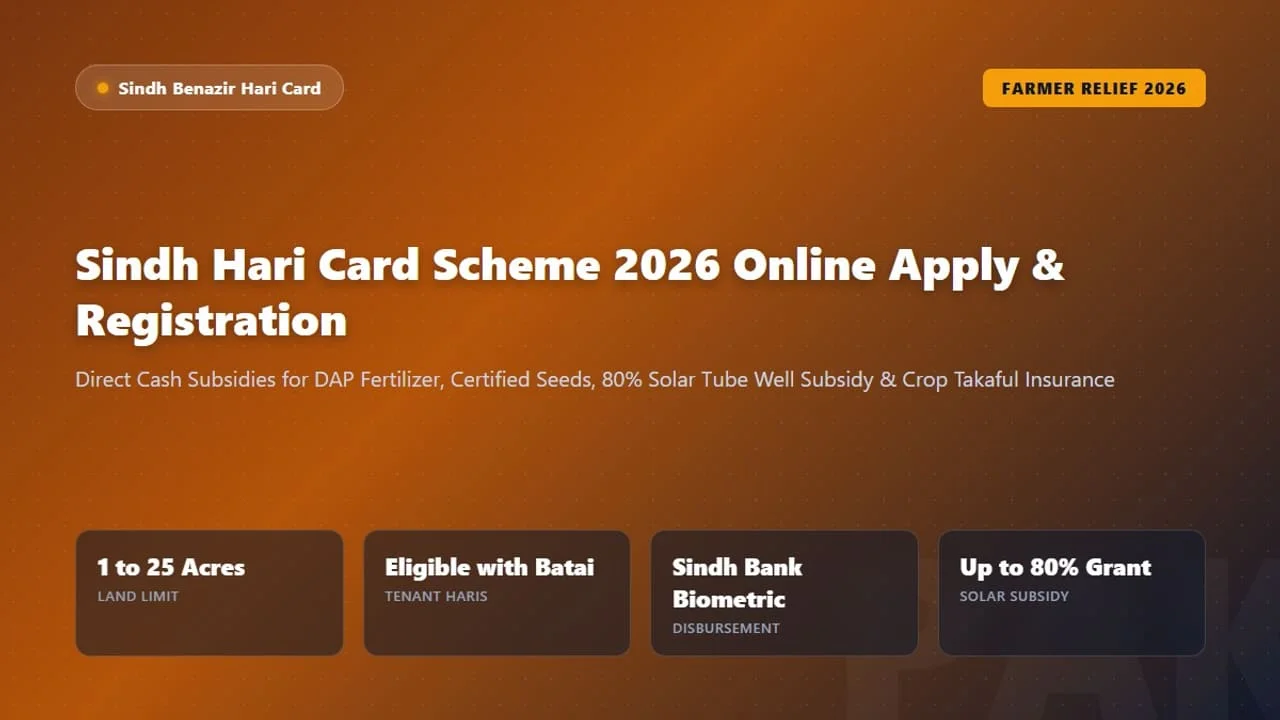
Sindh Hari Card Scheme 2026 Online Apply: Registration, Farmer Subsidies & Eligibility Guide
Apply for Sindh Hari Card 2026. Complete guide to registration, land eligibility criteria, Sindh Bank biometric card, fertilizer subsidies, and cash relief.
Read guide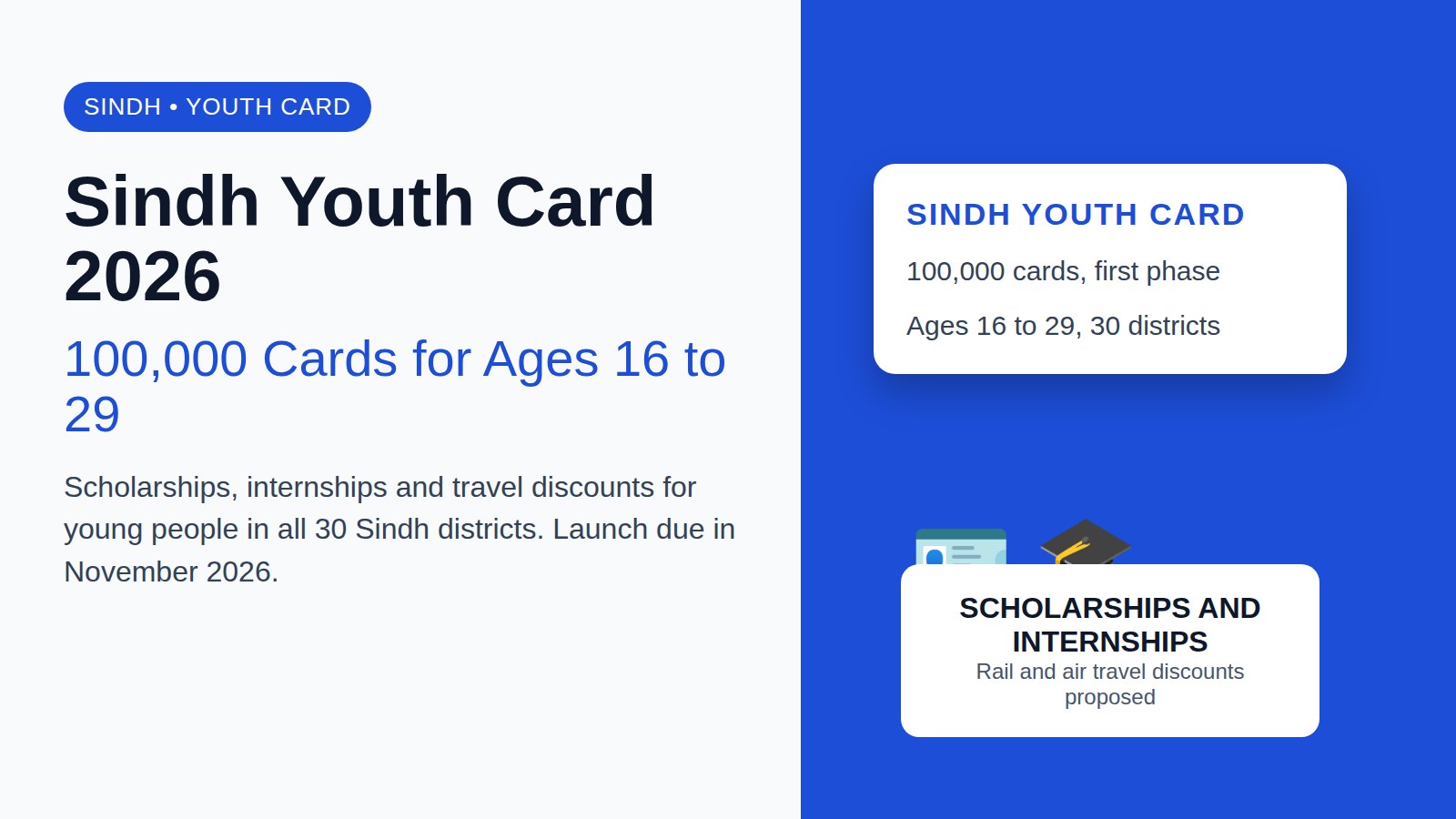
Sindh Youth Card 2026: Launch, Benefits, Eligibility and Registration
The Sindh Youth Card 2026 is a Sindh scheme for young people aged 16 to 29. It will bring scholarships, internships, skills training and services from 13 departments onto one digital platform. As of 8 November 2026 it has not launched yet, and registration will open after Bilawal Bhutto Zardari inaugurates it this month.
Read guide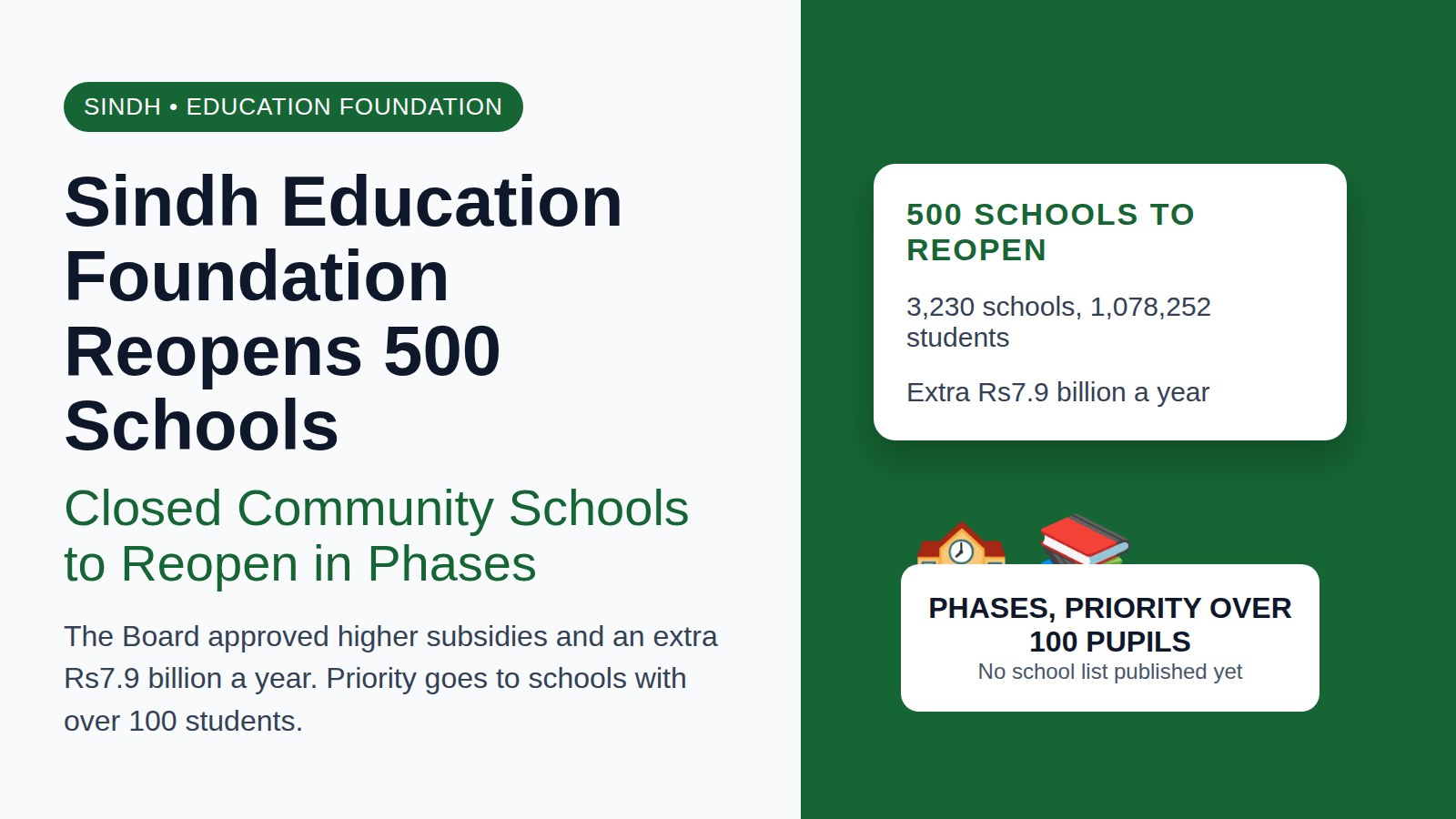
Sindh Education Foundation Reopens 500 Closed Schools: What the 2026 Expansion Means for Parents
The Sindh Education Foundation will reopen about 500 closed government community schools in phases, after Chief Minister Syed Murad Ali Shah approved the plan at the foundation's 14th Board of Governors meeting. Schools with more than 100 students get priority. No list of the 500 schools and no phase dates have been published yet.
Read guide
Benazir Kafaalat Registration & CNIC Check: A Complete Walkthrough
How Kafaalat differs from general BISP registration, how the CNIC check works, and what a positive result means next.
Read guide
Apni Chhat Apna Ghar Scheme Online Apply 2026: ACAG Portal Registration, Eligibility & Rs 15 Lakh Loan Guide
To apply online for the CM Punjab Apni Chhat Apna Ghar Scheme in 2026, register on the official portal at acag.punjab.gov.pk using your 13-digit CNIC and mobile number, upload your computerized land ownership title (Fard Malkiat or registered Sale Deed for plots up to 5 Marlas urban or 10 Marlas rural), and submit your household socio-economic profile. Eligible applicants receive an interest-free construction loan of up to Rs. 15 Lakh, disbursed in three phased tranches and repaid over seven years at approximately Rs. 14,000 per month.
Read guide