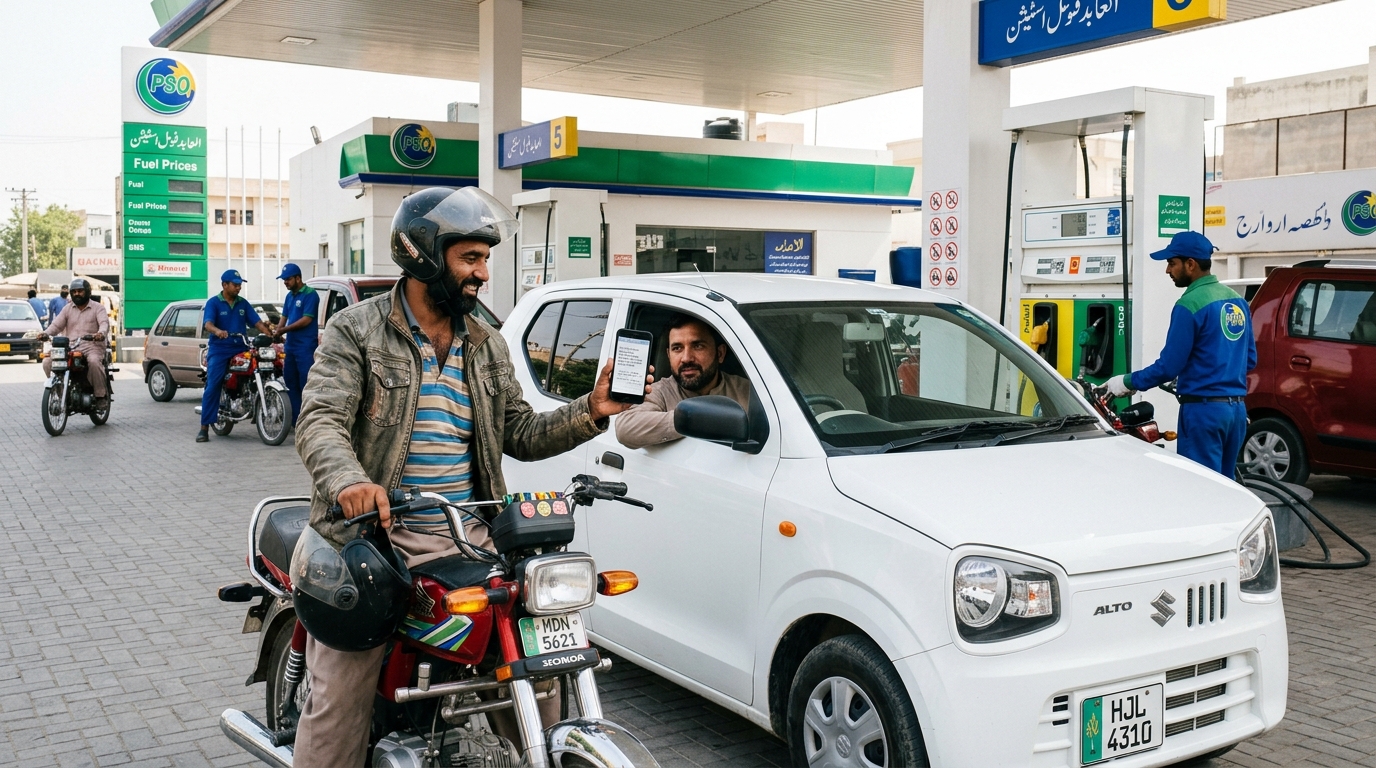
This article explains public information. It does not determine eligibility or replace an official notice.
What Is the Fuel Scheme Rs. 100 Per Litre Petrol Relief?
The Fuel Scheme Rs. 100 Per Litre Petrol Relief is a targeted federal energy subsidy providing direct price reductions at retail petrol pumps across Pakistan for small-vehicle owners. Administered directly by the Petroleum Division of the Ministry of Energy, the initiative offsets escalating global petroleum import costs for commuters, motorcycle delivery couriers, rickshaw operators, and families operating entry-level motor vehicles. Unlike traditional untargeted fuel subsidies that exhaust national treasury reserves on luxury automobiles and commercial fleets, this program uses digital identification to deliver relief exclusively at the point of sale.
The initiative operates without paper coupons, physical ration cards, or bureaucratic center visits. Beneficiaries interact directly with an automated telecommunications gateway to verify their vehicle credentials, receive encrypted transaction tokens, and redeem the Rs. 100 discount per litre on spot purchases. The system ensures that retail fuel stations sell subsidized petrol at the regulated consumer pump price minus exactly Rs. 100 per litre, with the federal government settling the difference directly into the dealer’s designated commercial bank account.
Program Governance, Approvals, and Funding Mechanism
The program is funded through a dedicated Technical Supplementary Grant of Rs. 76.73 billion sanctioned by the Economic Coordination Committee (ECC) of the Cabinet under Prime Minister Shehbaz Sharif. From this federal allocation, exactly Rs. 75 billion is ring-fenced exclusively for retail fuel price subsidy absorption, while Rs. 1.73 billion funds the telecommunications bandwidth, software architecture, and real-time database synchronization required to maintain national operational stability.
Executive governance is maintained jointly by the Petroleum Division, the Ministry of Information Technology and Telecommunication (MoITT), and the Oil and Gas Regulatory Authority (OGRA). By anchoring the fiscal disbursement in a pre-approved ECC supplementary grant, the federal government prevents budgetary delays, ensuring oil marketing companies (OMCs) and independent petroleum dealers maintain uninterrupted fuel inventory without liquidity crunches.
The Technology Behind the Scheme: MoITT’s Fuel Pass System
The digital architecture powering the scheme is the Fuel Pass System, an automated transaction and verification engine custom-engineered by the Ministry of Information Technology and Telecommunication. The system integrates national databases from the National Database and Registration Authority (NADRA), provincial excise and taxation vehicle registries, and cellular network operator databases in real time.
When a citizen sends an SMS to the designated 9771 shortcode, the Fuel Pass System queries the applicant's Computerized National Identity Card (CNIC) against provincial motor vehicle records to verify vehicle ownership, engine capacity, and registration dates. Once verified, the platform coordinates with cellular towers to transmit cryptographic alphanumeric fuel tokens directly back to the citizen's mobile handset via SMS, enabling instantaneous point-of-sale verification at retail petrol pumps nationwide.
How Does the Fuel Relief Scheme Compare to BISP and Other Welfare Programs?
The Fuel Relief Scheme differs fundamentally from cash welfare programs like the Benazir Income Support Programme (BISP) because it is an asset-linked subsidy rather than a poverty-score-tested welfare transfer. While BISP Kafaalat, the Punjab Nigehban Card, and the Ramzan Relief Package require applicants to undergo a National Socio-Economic Registry (NSER) or Punjab Socio-Economic Registry (PSER) survey to achieve a Poverty Means Test (PMT) score below designated cutoff thresholds, the Fuel Relief Scheme evaluates vehicle ownership alone.
A middle-income salaried employee, school teacher, or small shopkeeper whose household income exceeds BISP eligibility limits qualifies fully for the fuel subsidy provided they own a motorcycle, rickshaw, or car with an engine displacement not exceeding 800cc. Furthermore, participating in the Fuel Relief Scheme does not affect, reduce, or disqualify any beneficiary from receiving quarterly BISP Kafaalat cash payments, Taleemi Wazaif school stipends, or provincial utility discounts.
Who Is Eligible for the Rs. 100 Per Litre Petrol Subsidy?
Eligibility for the fuel relief subsidy requires applicants to be Pakistani citizens holding a valid Computerized National Identity Card who legally own a registered two-wheeler, three-wheeler, or passenger car with an engine capacity up to 800cc. The applicant’s mobile SIM card must be registered in their own name under the same CNIC entered during registration.
The scheme establishes a strict national ceiling of one registered vehicle per CNIC. If an individual owns both a motorcycle and an 800cc passenger vehicle, they must select one vehicle for registration. Registering multiple vehicles under a single identity card is automatically rejected by the Fuel Pass System. Commercial transport vehicles, taxis above 800cc, diesel tractors, and government-owned fleet vehicles are strictly barred from participating.
Eligible Vehicle Categories and Engine Capacity Limits
The program categorizes eligible vehicles into three distinct consumer segments, encompassing approximately 11.8 million registered vehicles across Pakistan. Two-wheelers include motorcycles and scooters (70cc, 100cc, 110cc, 125cc, and 150cc) like Honda CD70 and Yamaha YBR. Three-wheelers include roughly 800,000 passenger rickshaws and Qingqi delivery trikes.
Small passenger cars with engine displacement up to 800cc include the Suzuki Mehran (796cc), Suzuki Bolan (796cc), Suzuki Ravi (796cc), and imported 660cc Japanese Kei cars like the Suzuki Alto 660cc, Daihatsu Mira, and Daihatsu Move. Vehicles exceeding 800cc displacement do not qualify.
The 2006 Registration Date Cutoff Rule (Expanded Criteria)
Vehicles must be registered on or after January 1, 2006, in their respective provincial or federal excise and taxation databases to qualify for the subsidy. While initial government briefings proposed a narrower 2011 cutoff date, the Ministry of Energy officially broadened the eligibility window on September 18, 2026, extending relief to older vehicles up to 20 years of age.
This revision brings millions of aging commuter motorcycles and legacy Suzuki Mehrans into the national safety net. However, vehicles registered on December 31, 2005, or earlier remain excluded from the program to prevent ghost claims on decommissioned or scrapped chassis.
Strict Ownership Rules: CNIC and SIM Card Matching Requirement
The mobile phone number used to submit the registration SMS must be biometrically registered with the Pakistan Telecommunication Authority (PTA) under the exact same CNIC as the vehicle’s registered owner. If an individual attempts to register using a SIM registered under another person's CNIC, the system triggers an automated mismatch error.
Furthermore, the vehicle's registration book or smart card must show the applicant as the legal owner in the provincial excise database. If an applicant purchased a vehicle on an open transfer letter without officially transferring the title at the Excise Department, the registration will fail.
How to Register for the Fuel Relief Scheme via SMS to 9771?
Citizens register for the fuel relief scheme by sending a standardized text message containing their identification, vehicle plate number, province code, and registration date to the official federal shortcode 9771. The service is zero-rated across all four national mobile network operators (Jazz, Telenor, Zong, and Ufone), incurring no cellular balance deduction.
To ensure automated system ingestion, the SMS must follow an exact syntactical structure separated by standard single spaces: REG [CNIC] [Plate Number] [Province Code] [Registration Date DDMMYYYY].
Exact SMS Format and Province Codes Guide
The registration string sent to 9771 must strictly adhere to the template: REG [13-Digit CNIC] [Vehicle Registration Number] [Province Code] [Registration Date DDMMYYYY].
Province codes are single letters: P for Punjab, S for Sindh, K for Khyber Pakhtunkhwa, B for Balochistan, I for Islamabad Capital Territory, A for Azad Jammu & Kashmir, and G for Gilgit-Baltistan. The registration date must be entered as DDMMYYYY without dashes or slashes.
Step-by-Step Registration Walkthrough
1. Verify SIM ownership by texting your CNIC to 668. 2. Retrieve your vehicle registration card or smart card. 3. Draft the message to 9771 as REG [CNIC] [Plate] [Province] [Date]. 4. Send the message without needing mobile balance.
5. Await the confirmation SMS from 9771 indicating approval, vehicle record match, and instructions to text TOK to 9771 when seeking your discount voucher.
Troubleshooting Registration Errors and SIM Mismatches
If your registration is rejected due to a SIM mismatch, visit your mobile operator franchise to transfer the SIM biometrically to your CNIC before reapplying.
If the excise database indicates the vehicle is not found, verify that the vehicle title was officially transferred at the Excise office, and check that you formatted the date as DDMMYYYY rather than MMDDYYYY.
How to Request and Redeem Digital Fuel Tokens at Petrol Pumps?
To claim your Rs. 100 per litre discount at a retail fuel station, you must generate a one-time digital fuel token by sending the keyword TOK via SMS to 9771 prior to fueling your vehicle. The Fuel Pass System generates an encrypted, time-sensitive numeric token and transmits it to your phone within seconds.
Present the SMS token to the pump attendant before dispensing fuel. The attendant validates the token on the station terminal or merchant phone, instantly deducting Rs. 100 per litre from your final bill.
Generating Your Token via SMS (TOK to 9771)
Send TOK in capital letters to 9771 from your registered mobile number. Within 60 seconds, you receive an 8-digit token.
Each digital token remains valid for 24 hours from the moment of generation. Unused tokens expire harmlessly, returning the quota to your account balance.
Weekly Quota Rules for Motorcycles and Rickshaws (Rs. 500 Token)
Motorcycles and three-wheelers receive a monthly quota of 20 litres (up to Rs. 2,000 savings), distributed as four weekly tokens worth Rs. 500 each. The previous 5-litre minimum purchase rule has been eliminated.
Riders can request one Rs. 500 token every 7 days, applying the discount directly at the pump on any purchase volume.
Monthly Quota Rules for Small Cars Up to 800cc (3 Tokens per Month)
Passenger cars up to 800cc receive a monthly quota of 30 litres (up to Rs. 3,000 savings), issued as three tokens per month covering 10 litres each.
Car owners can request one token every 10 days, saving Rs. 1,000 on a 10-litre fuel purchase.
Offline SMS Token Redemption in Poor Connectivity Areas
In areas where petrol pump internet connectivity fails, the attendant uses the official Offline SMS Redemption Protocol. The attendant texts the customer's token and CNIC from a registered merchant SIM directly to 9771.
The central server authenticates the transaction and sends an instant approval SMS code back to the attendant, ensuring the discount is processed without delays.
Petrol Pump Settlement: How Dealers and Stations Are Reimbursed
Petrol dealers do not absorb the Rs. 100 per litre discount as a loss. Instead, the State Bank of Pakistan (SBP) executes automated daily T+1 interbank credit transfers directly into each dealer's verified commercial bank account.
OGRA verifies retail station licenses and linked IBAN credentials, monitoring compliance and resolving dealer concerns through dedicated technical dispute desks.
Resolving Dealer Resistance and PPDA Concerns
Formal consultations between the Petroleum Division, OGRA, and the Pakistan Petroleum Dealers Association (PPDA) established guaranteed 24-48 hour settlement windows, multi-channel token verification (POS and SMS), and 24/7 dispute resolution, securing complete dealer cooperation nationwide.
Scam Warning and Security: How to Protect Your CNIC and Funds
Registration for the Fuel Relief Scheme is conducted exclusively via SMS to 9771. The government operates no online registration website or mobile app.
Beware of fake clone websites such as pmfuelrelief.pk, fraudulent WhatsApp groups, or calls from 11-digit mobile numbers demanding processing fees or OTP codes. Authentic government communications come solely from 9771.
Frequently asked questions
What is the Fuel Scheme Rs. 100 Per Litre Petrol Relief?
The Fuel Scheme Rs. 100 Per Litre Petrol Relief is a targeted federal subsidy providing a direct discount of Rs. 100 per litre on petrol for eligible motorcycles, three-wheelers, and small cars up to 800cc. Funded by a Rs. 76.73 billion grant approved by the Economic Coordination Committee, the program is administered by the Petroleum Division using the digital Fuel Pass System.
How do I register for the Fuel Relief Scheme via SMS?
To register, send an SMS to 9771 formatted as REG [CNIC] [Vehicle Plate] [Province Code] [Registration Date DDMMYYYY] using a mobile SIM registered in your own name. For example, text REG 3520112345671 LEM9821 P 14052017 to 9771 to initiate automated verification against provincial excise records.
What is the exact SMS format to send to 9771?
The exact format is REG [13-Digit CNIC without dashes] [Plate Number without spaces] [Province Code] [Registration Date in DDMMYYYY format]. Ensure each parameter is separated by a single space and that province codes use standard initials: P for Punjab, S for Sindh, K for KPK, B for Balochistan, I for Islamabad, A for AJK, or G for Gilgit-Baltistan.
Which vehicles qualify for the Rs. 100/litre petrol subsidy?
The subsidy applies to motorcycles and scooters of all engine displacements (70cc to 150cc), three-wheelers and auto-rickshaws, and passenger cars with engine displacement up to 800cc (including Suzuki Mehran, Suzuki Bolan, and 660cc Japanese Kei cars). Vehicles exceeding 800cc displacement, diesel vehicles, commercial buses, and trucks are strictly excluded.
My motorcycle was registered in 2008 — do I qualify under the expanded rules?
Yes, your motorcycle qualifies because the Ministry of Energy officially relaxed the registration cutoff to January 1, 2006, on September 18, 2026. As long as your two-wheeler or three-wheeler was registered on or after January 1, 2006, and ownership is recorded under your CNIC in the excise database, your application will be approved.
How do I generate a digital fuel token using SMS?
To generate a digital fuel token, send the word TOK via SMS to 9771 from your registered mobile phone number. The Fuel Pass System will return an SMS containing an 8-digit digital token valid for 24 hours, which you present to the petrol pump attendant before refueling.
How many tokens can I receive in a month?
Motorcycle and rickshaw owners receive four weekly tokens per month, with each token worth a flat discount of Rs. 500 on petrol purchases (up to 20 litres total). Small car owners receive three tokens per month, with each token covering a discount on 10 litres of petrol (up to 30 litres total).
Is the Fuel Relief Scheme linked to BISP or the NSER poverty score?
No, the Fuel Relief Scheme is completely independent of BISP and requires no PMT poverty score or NSER survey. Eligibility is based entirely on registered vehicle ownership, meaning middle-income citizens who do not qualify for BISP cash assistance can freely receive the fuel subsidy.
Can I register more than one vehicle on a single CNIC?
No, the Fuel Pass System enforces a strict limit of one registered vehicle per CNIC. If you own both a motorcycle and an 800cc car, you must choose one vehicle to register under the scheme, as duplicate registrations under the same identity number are automatically rejected.
Does the subsidy apply to diesel vehicles?
No, the subsidy applies exclusively to petrol (motor gasoline) purchases and excludes high-speed diesel (HSD) entirely. Because eligible vehicle categories—motorcycles, rickshaws, and small cars up to 800cc—operate primarily on petrol, diesel is omitted from the federal relief grant.
What happens if a petrol station has no internet connection?
If a petrol pump experiences internet connectivity failure, the attendant can validate your token using the official Offline SMS Protocol. The attendant texts your token code and CNIC from their registered merchant SIM directly to 9771, receiving an instant validation approval code without requiring internet access.
Are there any registration fees or SMS charges for sending messages to 9771?
No, registration and token requests to 9771 are 100% free of charge. Under directives from the Pakistan Telecommunication Authority (PTA), all cellular operators have zero-rated the 9771 shortcode, ensuring no balance or tax is deducted from your mobile account.
Sources and official links
Check the destination address before entering personal information.
Muhammad Salman specializes in Pakistani public sector financing, youth entrepreneurship schemes, and government subsidy programmes, cross-referencing all data against official SBP circulars and ministry directives.
Related guides
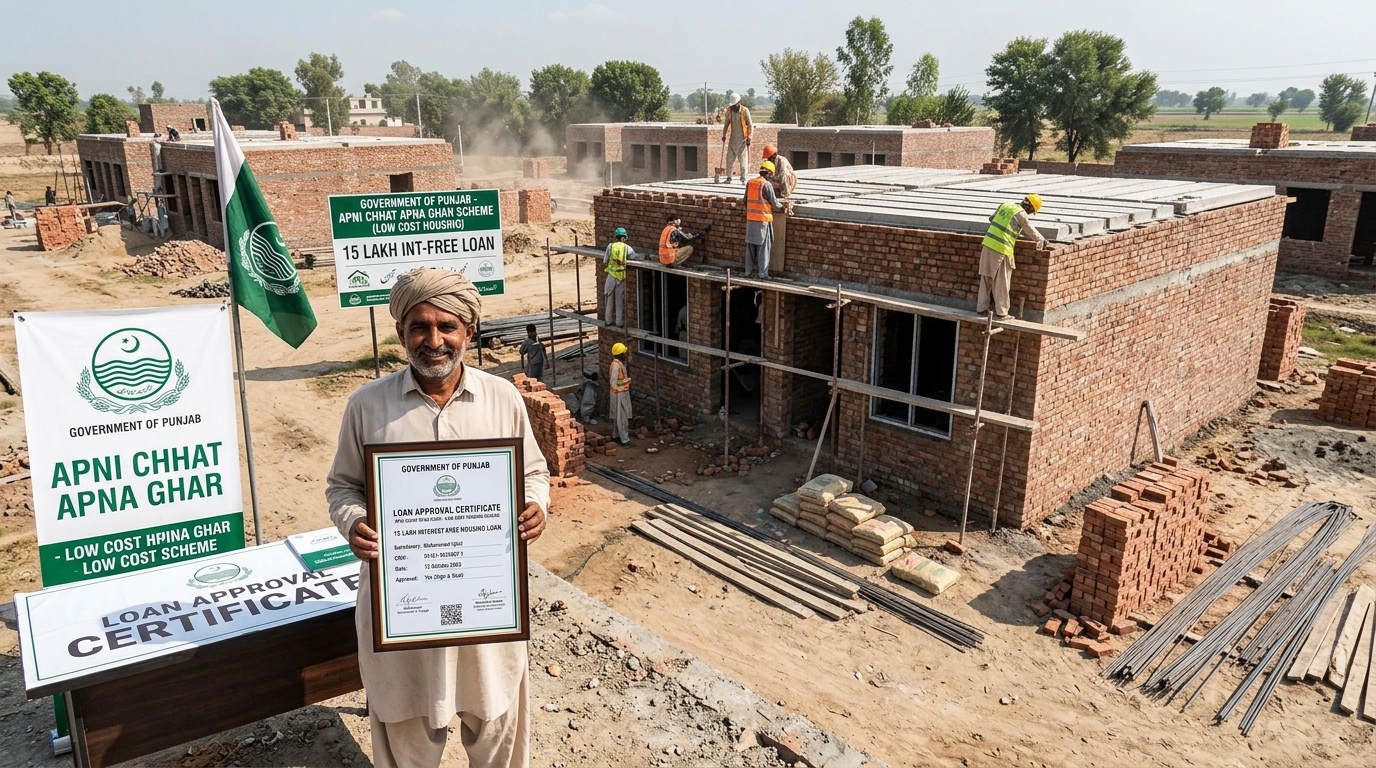
Apni Chhat Apna Ghar Loan: Instant Qist Tracking
PITB portal par 15 lakh bila-sood loan ki approval check karne aur pehli qist (installment) track karne ka mukammal step-by-step tariqa.
Read guide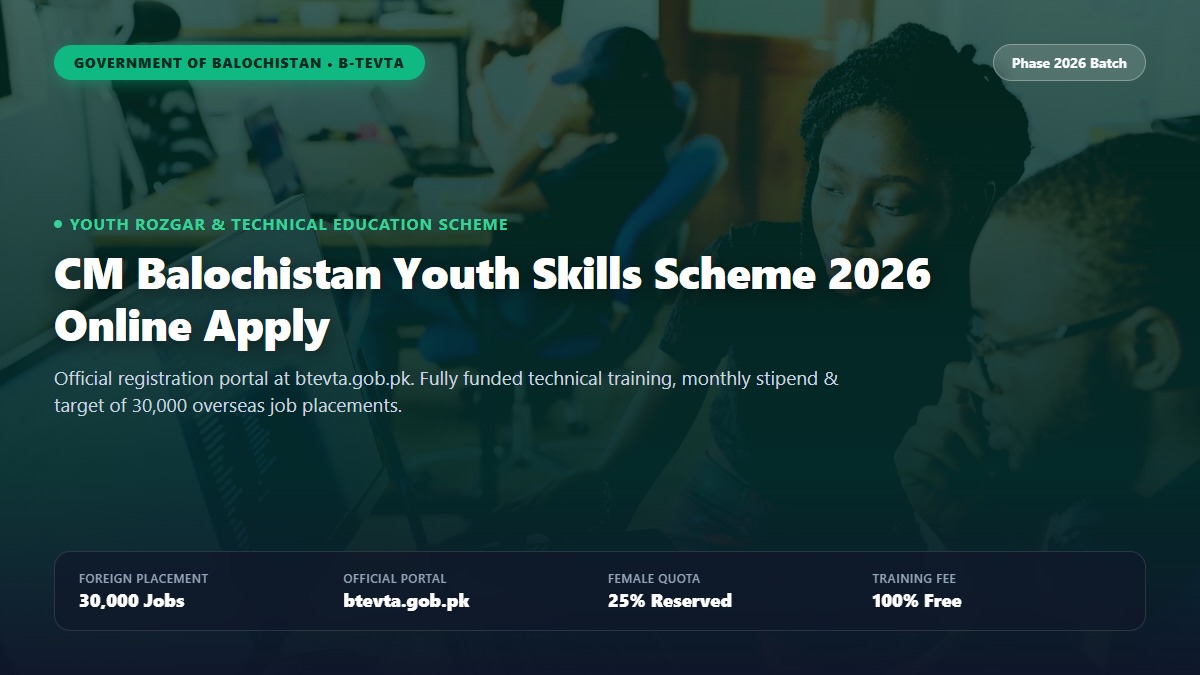
CM Balochistan Youth Skills Scheme 2026 Online Apply & Registration Guide
Apply online for CM Balochistan Youth Skills Scheme 2026. Complete guide to B-TEVTA online registration, courses, monthly stipends, and 30,000 overseas jobs.
Read guide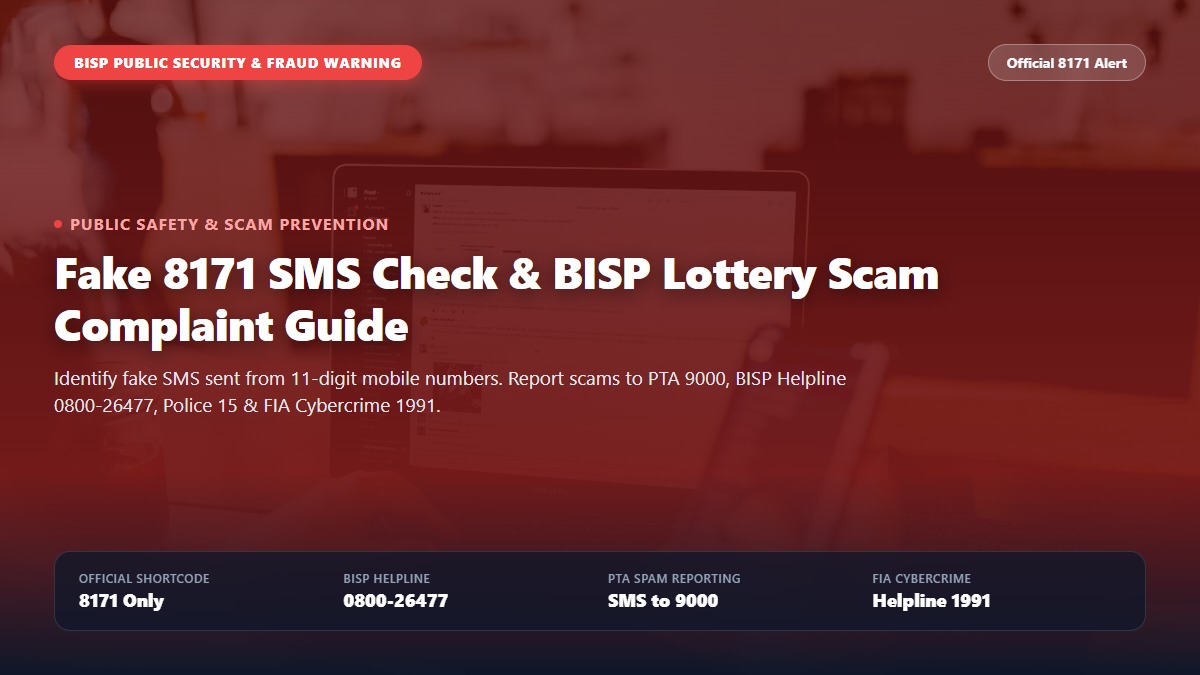
Fake 8171 SMS Check, Complaint & BISP Lottery Fraud Alert Guide
Spot fake 8171 SMS scams and report BISP lottery fraud. Step-by-step guide to reporting scammers on PTA 9000, BISP Helpline 0800-26477, Police 15, and FIA Cybercrime.
Read guide