This article explains public information. It does not determine eligibility or replace an official notice.
What Is the Ramzan Package, and Who Runs It?
The Ramzan Package is commonly reported to be the Prime Minister's Ramzan Relief Package, a seasonal cash-assistance initiative for low-income families during Ramadan, administered by the National Information Technology Board through its own eligibility-check portal. That is a different agency from BISP, even though both draw on the same underlying household data.
NITB is a federal government body under the Ministry of Information Technology and Telecommunication, formed in 2014 from the merger of the Pakistan Computer Bureau and the Electronic Government Directorate, and given autonomous status under the NITB Act of 2022. Its role here is limited to running the digital verification system — it is not the organization that decides who is “deserving,” which is a determination that leans on National Socio-Economic Registry (NSER) data collected separately.
Prime Minister's Package vs a Province's Own Package
Some of what ranks for this search is actually about a province's own Ramadan relief, not the federal package. One page describes a “Ramzan Package KPK 2026” as a separate provincial distribution, and Punjab's variant is described elsewhere as drawing on the Punjab Socio-Economic Registry (PSER) rather than the national NSER. If a result mentions a specific province by name, treat it as that province's own scheme — its criteria, amount, and channel can differ from the federal one even when the CNIC-check step looks identical.
Is It Checked Through 8171, 9999, or Another Number?
The official portal at pmrrp.nitb.gov.pk is built around a web-based CNIC-and-CAPTCHA check, and the majority of sources — plus the domain name of at least one competing guide site — point to SMS code 9999 as the associated short code, not BISP's 8171. That distinction matters because 8171 is BISP's own established number for a different set of services entirely.
Four different short codes show up across the pages ranking for this topic, and they do not all agree with each other:
| Code | What it's branded as | Corroborated by the official NITB-linked portal? |
|---|---|---|
| 9999 | Ramzan Relief Package check | Consistent with the majority of sources and the portal's own domain naming |
| 8171 | BISP's established number, also used by some pages to brand this same check | This is BISP's own code for Benazir Income Support Programme services, not confirmed as the Ramzan package's code |
| 8070 | Cited by one source as “Ramzan Relief Scheme,” and appears in a competing site's own domain name | Unconfirmed against an authoritative source |
| 8123 | Cited by one source as “Ehsaas Rashan Subsidy,” a separate flour/sugar/ghee discount program | A different program entirely, not the cash package |
How Do I Check My Ramzan Package Status by CNIC?
Treat 9999 and the official pmrrp.nitb.gov.pk portal as the safer starting point, and treat any page that flatly equates this check with 8171 with some caution — it may simply be reusing BISP's more recognizable number to rank, not describing the actual program.
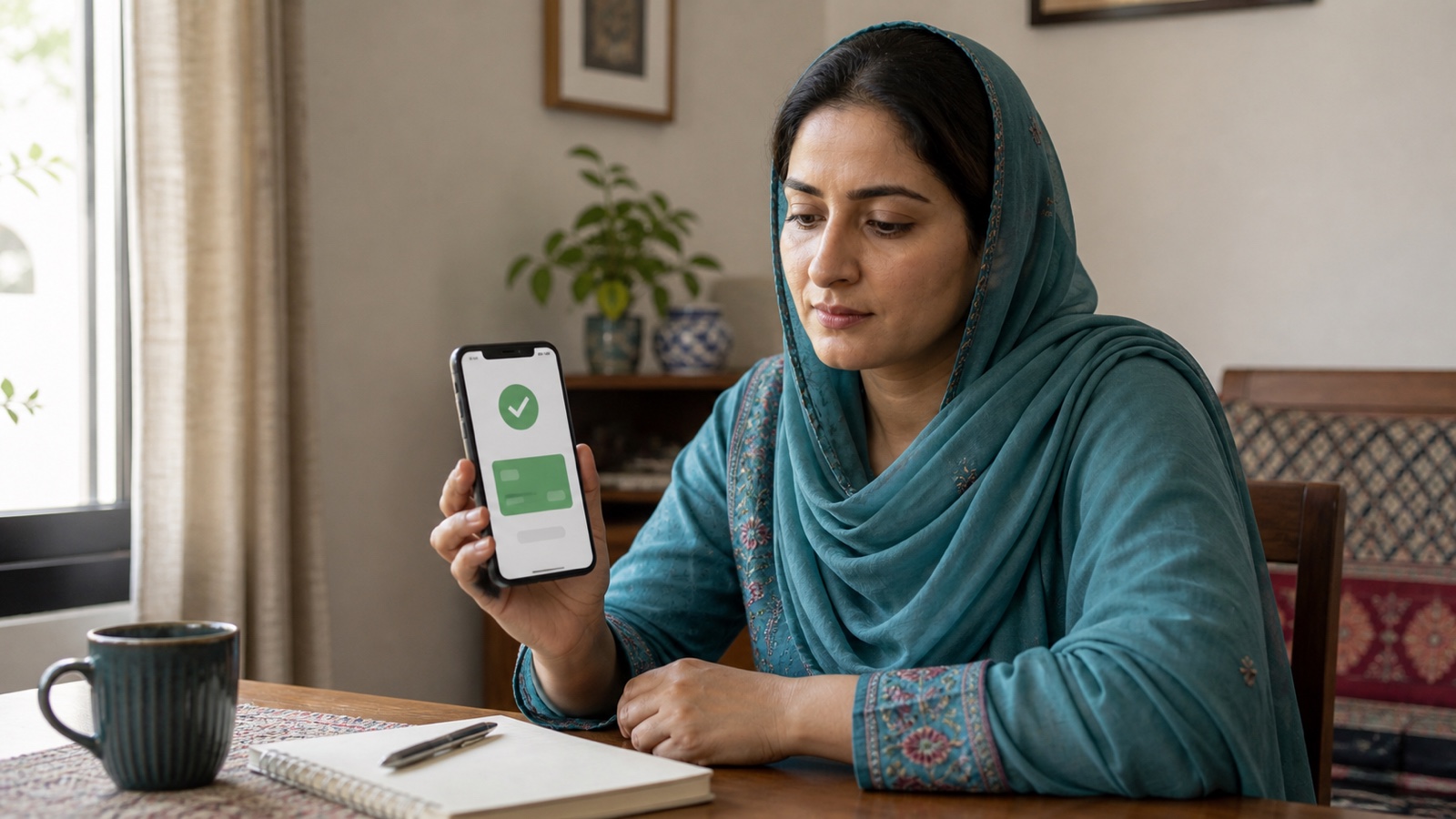
You can check status either by SMS or through the official web portal, and both methods only need your 13-digit CNIC number.
Neither method should ever ask for a fee, an OTP, or your CNIC over a phone call from someone claiming to “process” your application faster.
SMS Method
- Open your phone's messaging app.
- Type your 13-digit CNIC number without dashes.
- Send it to 9999.
- Wait for a reply message confirming your status.
Online Portal Method
- Go to the official portal at pmrrp.nitb.gov.pk.
- Enter your CNIC number.
- Complete the CAPTCHA verification.
- Submit the form to see your result.
What Shows Up After You Check?
The response typically comes back as one of three states: eligible, not eligible, or under verification, reflecting whether your household record in NSER or BISP's database currently matches the programme's criteria. “Under verification” is not a rejection — it usually means your record needs to be checked or updated at a NSER or BISP facilitation point before a final status is issued.
Who Is Eligible for the Ramzan Package?
Eligibility is built around households already identified as low-income through NSER or BISP records — commonly cited groups include daily-wage workers, widows, persons with disabilities, and other households already flagged through a low PMT (Proxy Means Test) score — rather than a fresh, independent application process. Because the underlying data comes from an existing registry, someone who has never registered with BISP or completed an NSER survey may need to do that first rather than expecting the Ramzan check alone to add them.
Reasons People Get Rejected
Two exclusion criteria come up consistently: households where someone is a high-income tax filer, and households with a member in regular government employment. An expired or mismatched CNIC, or outdated NSER data, can also produce a “not eligible” result even for a household that would otherwise qualify — which is a data problem to fix at the source, not something a repeated SMS will resolve.
How Much Does It Pay, and How Is It Sent?
Multiple sources commonly report a one-time Rs 13,000 figure for the federal package and a separate Rs 10,000 figure for provincial/CM-level packages, though neither amount was visible on the official portal excerpt reviewed for this guide — treat both as third-party reported rather than officially confirmed on-page. That is also a different figure from BISP's own Kafaalat payment, which is reported elsewhere as a recurring Rs 13,500 quarterly amount rather than a Ramadan-specific one-time payment — worth keeping separate if you are checking both programmes.
Distribution is reported to run through several channels: direct bank transfer, ATM withdrawal with biometric verification, mobile wallets such as Easypaisa or JazzCash, and designated government cash centers, with CNIC verification required at the point of collection either way.
Why Do 8171, 9999, and 8070 Get Confused With Each Other?
The short answer is that BISP's own 8171 number is already the most widely recognized number in this space, so several content pages reuse it to describe an unrelated seasonal package simply because readers already search for it. None of the four competing guides reviewed for this piece resolve the contradiction directly — two brand the whole topic “8171,” two brand it “9999,” and only one attempts a code-by-program breakdown, which itself is not corroborated against the official NITB-linked source. Until an official, single source clearly lists every valid code side by side, the safest approach is to start from the portal domain itself (pmrrp.nitb.gov.pk) rather than from whichever number a given article happens to lead with.
How Do I Avoid a Fake Ramzan Package Site or Agent?
This is a search space with an unusually high number of unstable pages: while researching this guide, one previously-ranking news domain for this exact topic now redirects to an unrelated video-download site, and several other ranking pages no longer resolve at all. A domain that disappears or changes hands mid-season is a genuine signal to be cautious, not just a broken link.
Stick to the official pmrrp.nitb.gov.pk domain or the 9999 SMS code, never pay anyone claiming to “confirm,” “speed up,” or “unlock” your eligibility, and never share an OTP with someone who calls claiming to be processing your package. If you're unsure whether a message or page is genuine, treat it the same way you'd treat any other unverified BISP-adjacent contact.
What's True Right Now (September 2026)?
Ramadan 2026 ran from roughly 19 February to 21 March 2026 in Pakistan, which means the cycle this guide describes has already closed as of this update. None of the competing pages reviewed acknowledge that the window has passed — they describe the check process as though it's permanently open. A new cycle is not guaranteed to reuse the same amounts or the same short code; expect an announcement closer to the next Ramadan, projected for around February 2027, and treat any page claiming an active “2026” window after that date with the same caution outlined above.
Frequently asked questions
Is the Ramzan Package the same as BISP's 8171 service?
No. BISP is a separate program with its own established 8171 number, even though the Ramzan Package draws on some of the same underlying NSER data. Several pages online conflate the two because 8171 is more widely recognized.
Why do different websites give different numbers for the same check?
Because this program doesn't have one single, universally cited authoritative source that every content site checks against — some default to BISP's more recognizable 8171 number, while others follow the 9999 code that's consistent with the official portal's own domain pattern.
How can I check my eligibility?
Send your 13-digit CNIC to 9999 by SMS, or enter it on the official pmrrp.nitb.gov.pk portal with the CAPTCHA verification.
Is there a registration fee?
No. The eligibility check itself is free; standard network SMS charges from your provider may still apply.
Can I apply without a CNIC?
No — a valid Computerized National Identity Card is required for either check method.
How much financial assistance is given?
Commonly reported figures are Rs 13,000 for the federal package and Rs 10,000 for provincial variants, though these were not visible on the official portal excerpt reviewed for this guide — confirm the current figure before relying on it.
Can I apply online for the Ramzan Package?
Most people don't need to apply separately — eligibility is generally drawn from existing NSER or BISP records. If you've never registered with either, that's the step to complete first.
How long does it take to get a reply?
Most SMS and portal checks return a result within minutes, though delays are reported during high-traffic periods.
Is registration required for everyone?
No. Most applicants are checked automatically against existing NSER or BISP data rather than registering from scratch.
Can I use someone else's CNIC or SIM?
No. Both methods require your own valid CNIC and a SIM registered in your own name.
How will I receive the payment after approval?
Reported channels include bank transfer, ATM withdrawal with biometric verification, mobile wallets, or designated government cash centers — verify the specific method through the official channel once your status shows eligible.
Can government employees apply?
Regular government employees are generally excluded from eligibility, according to the criteria described across the sources reviewed.
Is the Ramzan Package still open in September 2026?
The most recent cycle covered Ramadan 2026 (February–March), which has already ended. A new cycle is expected to be announced closer to the next Ramadan rather than remaining open year-round.
Sources and official links
Check the destination address before entering personal information.
Saad has covered BISP, Ehsaas, and provincial welfare schemes for Live Govt Schemes & Ehsaas Programs since 2024, cross-checking every guide against the current official portal before publication.
Ayesha reviews programme-eligibility and payment content for accuracy against BISP, NADRA NSER, and provincial notices, and flags any guide that needs an update after an official policy change.
Related guides
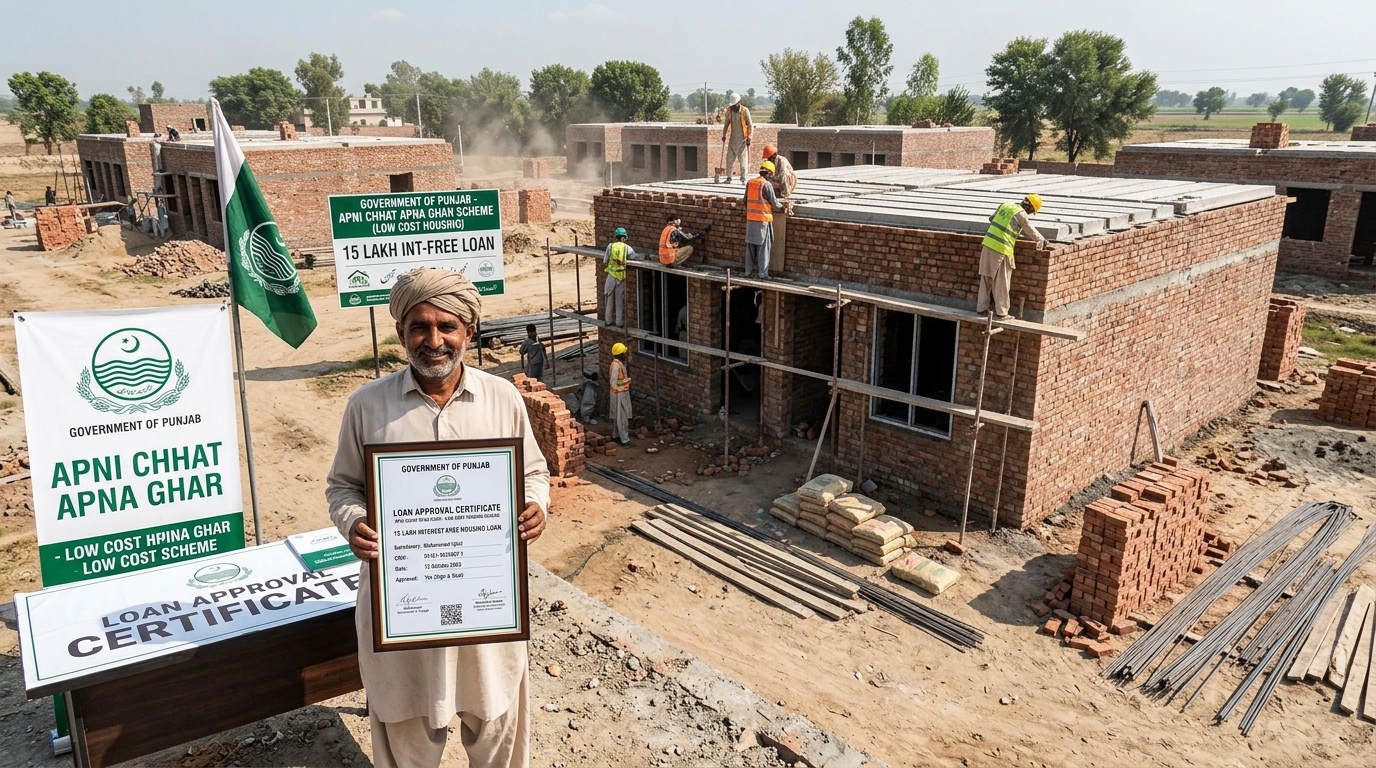
Apni Chhat Apna Ghar Loan: Instant Qist Tracking
PITB portal par 15 lakh bila-sood loan ki approval check karne aur pehli qist (installment) track karne ka mukammal step-by-step tariqa.
Read guide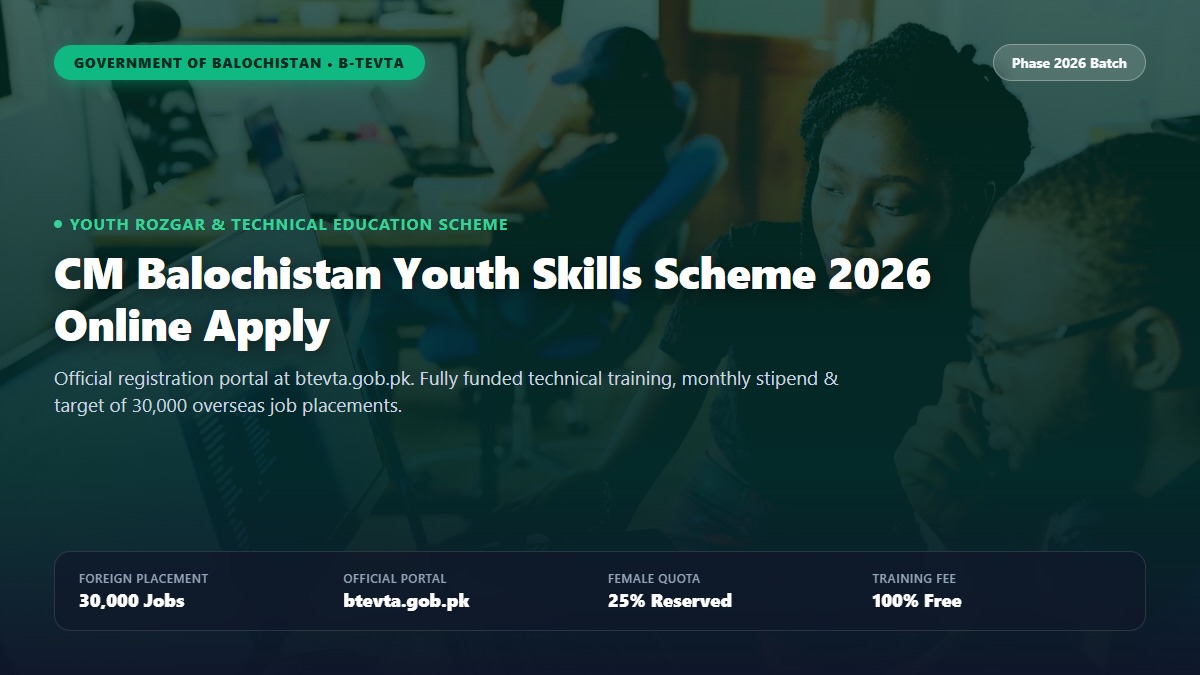
CM Balochistan Youth Skills Scheme 2026 Online Apply & Registration Guide
Apply online for CM Balochistan Youth Skills Scheme 2026. Complete guide to B-TEVTA online registration, courses, monthly stipends, and 30,000 overseas jobs.
Read guide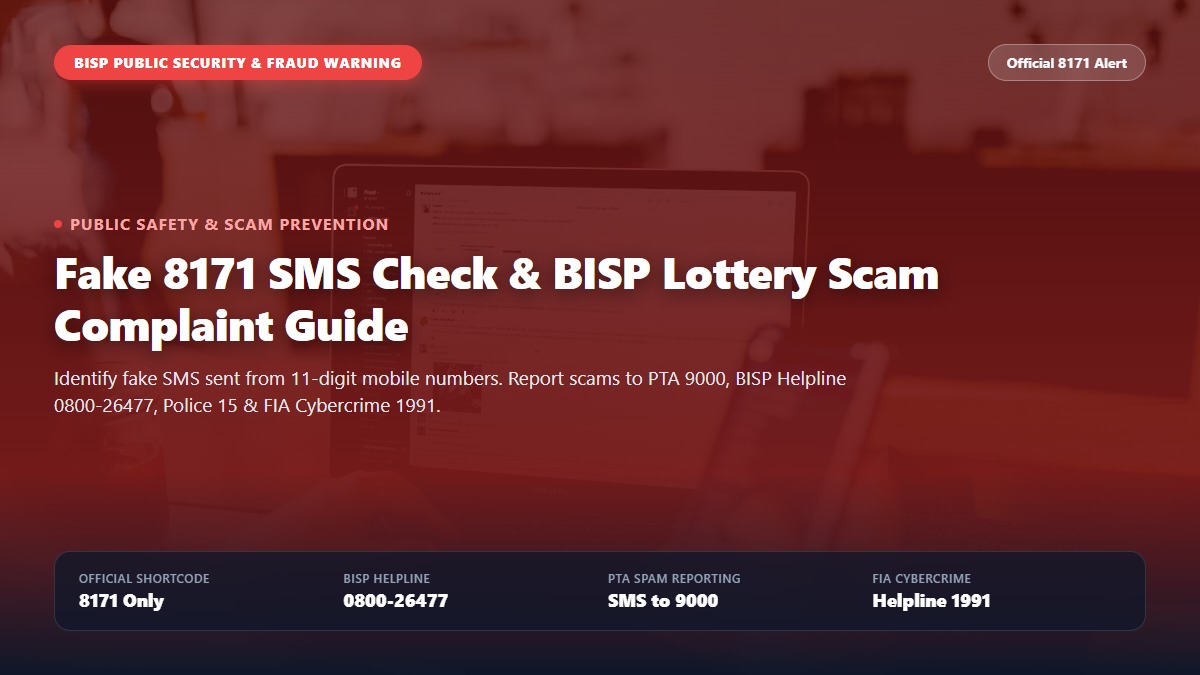
Fake 8171 SMS Check, Complaint & BISP Lottery Fraud Alert Guide
Spot fake 8171 SMS scams and report BISP lottery fraud. Step-by-step guide to reporting scammers on PTA 9000, BISP Helpline 0800-26477, Police 15, and FIA Cybercrime.
Read guide