This article explains public information. It does not determine eligibility or replace an official notice.
What is the CM Punjab Wheat Support Program 2026-27?
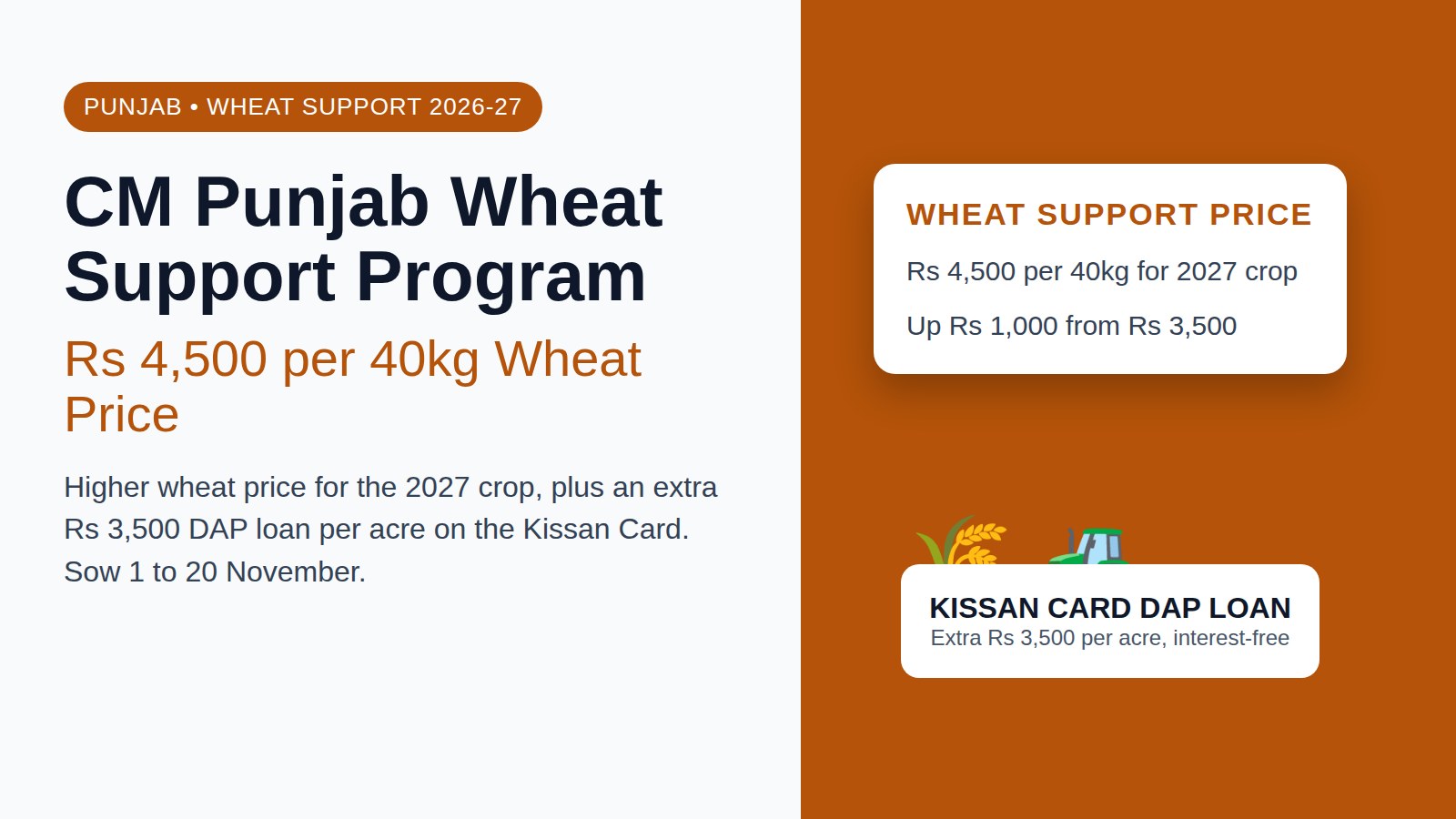
The CM Punjab Wheat Support Program 2026-27 is the Punjab package for the Rabi 2026-27 wheat season. It brings together a price for the crop, credit for fertiliser, and cheaper certified seed. The package sits under Chief Minister Maryam Nawaz Sharif, and it runs through the Punjab Agriculture Department of the Government of Punjab, with the Kissan Card as the main way to get the fertiliser loan. It is not one single payment, and no separate cash grant per acre has been announced for this season, unlike last season. Wheat is Punjab's main winter crop, and the provincial target is 16.5 million acres. The crop will be harvested in April to May 2027, as reported.
What is the wheat support price for 2026-27?
The announced wheat support price is Rs 4,500 per 40kg, which is one maund, for the 2027 crop. That is Rs 112.50 per kg, and Rs 1,000 more than the Rs 3,500 rate for the 2026 harvest. Prime Minister Shehbaz Sharif set the figure on 23 October 2026, after talks with President Asif Ali Zardari, PML-N President Nawaz Sharif, Punjab Chief Minister Maryam Nawaz Sharif, and Sindh Chief Minister Murad Ali Shah. The Nation and Dawn reported the decision on 23 to 24 October 2026.
The wording needs care. The Prime Minister's Office called it an indicative price on 23 October 2026. Minister Ashiq Hussain Kirmani later called it a proposed price, then a set price. On 26 October 2026, Federal Minister Rana Tanveer Hussain announced a National Wheat Policy and called the price fixed at Rs 4,500 per maund, with a strategic reserve of up to six million tonnes. The formal notification, the buying agency, the buying terms, and the funds for procurement were not named in the reports we checked. The Pakistan Kissan Ittehad had asked for Rs 5,000 per 40kg, so the gap is Rs 500 per maund. Provinces handle actual procurement, so Punjab Food Department notices at harvest time will decide how the price works in practice.
How much extra DAP loan do you get on the Kissan Card?
Kissan Card holders get an extra Rs 3,500 per acre, interest-free, to buy DAP fertiliser for wheat. That raises the per-acre limit from Rs 30,000 to Rs 33,500. The change was announced on 28 October 2026 by Chief Minister Maryam Nawaz Sharif, and confirmed by Punjab Agriculture Minister Ashiq Hussain Kirmani through APP on 1 November 2026. For 5 acres the new limit is Rs 167,500, against Rs 150,000 before, so the extra loan is Rs 17,500. For 10 acres it is Rs 335,000, against Rs 300,000 before.
The funding behind the change is Rs 17 billion in interest-free DAP funding for more than one million small farmers. Separately, Rs 150 billion in interest-free Kissan Card loans is planned for the Rabi 2026-27 season. The two figures are different pots of money, so do not add them together. One point is still unclear in the reports. Some reports present Rs 33,500 as the new whole per-acre limit. Others present the Rs 3,500 as a DAP-only addition. No report we checked says whether the per-season cap per farmer changes. Earlier guides report a per-season limit of about Rs 150,000 per farmer, but no announcement says that cap has moved. Confirm your own exact limit with the Bank of Punjab or on 0800-17000.
The loan is interest-free, but it is still a loan. Earlier guides report that it must be repaid within six months, and that a new limit is linked to repayment of the last season's loan. The card works only at registered dealers, and only for approved farm inputs. The department recommends about 1.5 bags of DAP per acre on average irrigated soil. Get a soil test first. A bag of DAP averaged Rs 16,055 in July 2026, in the federal food ministry's latest figure at that time, so use it only as a guide.
When should you sow wheat in Punjab?
Sow irrigated wheat from 1 to 20 November 2026 for the best yield. That is the timely window set by the Punjab Agriculture Department, confirmed by APP on 26 October 2026. Late sowing runs from 21 to 30 November. Some varieties can be sown up to 10 December, but only if you must, and at a higher seed rate. Rainfed, or barani, land has a different window: 15 October to 15 November 2026. Every day of delay after 20 November costs yield, because late wheat takes longer to come up, sends out fewer shoots, and its ears stay short. If March and April turn hot, late wheat suffers most.
The windows and seed rates below come from the department's wheat production plan for 2025-26, the latest plan listed on agripunjab.gov.pk when last checked on 30 September 2026. The 1 to 20 November window was confirmed again by APP on 26 October 2026, so the dates are current, but the seed rates still rest on the 2025-26 plan.
| Land type | Sowing window | Seed per acre |
|---|---|---|
| Irrigated, timely | 1 to 20 November 2026 | 40 kg |
| Irrigated, late | 21 to 30 November 2026 | 45 kg |
| Irrigated, very late | 1 to 10 December 2026 | 50 kg |
| Rainfed (barani) | 15 October to 15 November 2026 | 50 kg |
The seed rates assume germination above 85 per cent. If your seed germinates less well, raise the rate to match. Sow with a drill where you can, and do not burn the last crop's stubble. A 10-day campaign run by the University of Agriculture Faisalabad with the Punjab Agriculture Extension Department, from 30 October to 8 November 2026, pressed the same three points: timely sowing, certified seed, and line sowing. Pick an approved variety for your land and sowing date, such as Akbar-19, Falak-24, Sawera-24, Urooj-22, or Dilkash-20 for irrigated areas, and Shiraz-23 or MA-21 for rainfed areas. Check the list with your district agriculture office before you buy.
What does certified wheat seed cost in 2026-27?
Certified wheat seed from the Punjab Seed Corporation costs Rs 7,000 per 50kg bag after an Rs 800 per-bag subsidy. The bag price before the subsidy is Rs 7,800. The total seed subsidy is reported as Rs 320 million, and the Punjab Seed Corporation sells the seed through its sale points and registered dealers. One source reports a different total: the Asian Mirror, reporting the 31 October 2026 Rawalpindi meeting, puts the seed subsidy at Rs 450 million, while APP and other reports put it at Rs 320 million. The bag price of Rs 7,000 is the same in both reports, so the price is the firm figure and the total is the disputed one. We use Rs 320 million as the main figure because it appears in the APP-based reports.
Buy seed only from Punjab Seed Corporation depots and sale points, FFC Sona centres, or registered dealers. Check the Federal Seed Certification tag on every bag. Field officers have been told to act against hoarding, black marketing, and overcharging. If a dealer asks for more than Rs 7,000 for a subsidised bag, report it or call 0800-17000. Treat the seed before you sow, as the plan recommends, against smut, Karnal bunt, and other seed-borne diseases.
Who can get wheat support in Punjab?
Any wheat grower in Punjab with a valid CNIC and a land record can use the package, but each part has its own test. The wheat price applies to the crop you grow and sell. The DAP loan needs an active Kissan Card, so it covers card holders only. The seed subsidy covers any farmer who buys Punjab Seed Corporation certified seed while stock lasts. For the Kissan Card, earlier guides report that the farmer must hold 1 to 12.5 acres of land, with the land record held by the Punjab Land Records Authority (PLRA). The card is issued by the Bank of Punjab, and registration runs through an SMS to 8070 with the CNIC number.
The Chief Minister has said the scheme will be extended to farmers on leased land, but no detailed rules for tenants had been published in the reports we checked. If you farm leased land, ask the Agriculture Department whether you can already apply. Keep ready before sowing: a valid CNIC with a mobile number in your own name, a PLRA land record, an active Kissan Card with last season's loan repaid, and funds beyond the loan, because the loan may not cover the full bill.
How do you use the Kissan Card for wheat in Rabi 2026-27?
There is no separate registration form for the wheat support programme itself in the reports we checked. You do not apply for the price, and you do not apply for the seed subsidy as a separate scheme. You use the Kissan Card for the DAP loan, and you buy the seed at the subsidised price. The Chief Minister has pledged an online portal to help wheat procurement, but no portal address or launch date for that portal had been published in the reports we checked. Do not pay anyone who claims to register you for the wheat programme.
Follow these steps to use the card for wheat.
- Send your 13-digit CNIC number, without dashes, by SMS to 8070 from a SIM registered in your own name, if you do not yet hold a Kissan Card.
- Wait for the reply from 8070, and follow the instructions it gives for your district.
- Visit the Bank of Punjab or your district agriculture office if the reply asks you to complete verification or collect the card.
- Check your card limit before you go to the dealer, and confirm the extra Rs 3,500 per acre is showing.
- Buy DAP, seed, and pesticide only from registered dealers, and keep every receipt.
- Sow inside the 1 to 20 November window on irrigated land, or inside the rainfed window on barani land.
- Repay the loan within six months, as earlier guides report, so your limit stays open.
If the dealer says the card does not work, check whether the card is active, whether last season's loan is unpaid, and whether the dealer is registered. Call 0800-17000, or visit agripunjab.gov.pk. Do not hand your card or your PIN to a dealer or an agent.
What will wheat cost per acre this season?
This worked example uses only figures sourced in this article. It is an illustration, not a quote for your field. A farmer sowing 5 acres on time has a new Kissan Card limit of Rs 167,500. Seed at Rs 7,000 per 50kg bag, 40 kg per acre, costs Rs 28,000 for 4 bags. DAP at Rs 16,055 per bag, the July 2026 federal figure, costs Rs 120,412.50 for 7.5 bags at 1.5 bags per acre. Seed plus DAP cost Rs 148,412.50, inside the limit, with Rs 19,087.50 left over.
That leftover is not spare cash. It must also cover urea, potash, pesticide, diesel, water, and labour, and we have no current sourced price for urea or potash. The DAP price is also old, so the real bill may be higher. The key point stands: the extra Rs 3,500 per acre helps, but it does not cover the full cost of sowing. The example also treats Rs 33,500 as the whole new per-acre limit, as most reports present it. If the Rs 3,500 turns out to be a DAP-only portion, the numbers change. Confirm your own limit before you buy.
What other support sits alongside the wheat package?
Other schemes touch the same farmers, and each has its own rules, so check each one on its own page before you act. The CM Punjab Green Tractor Scheme gives subsidised tractors, but reports do not give the current phase, subsidy, or closing date in one consistent account. The Punjab Solar Tube Well Scheme helps farmers run tube wells on solar power for Rabi irrigation.
The Punjab Apna Kisan Bank was announced on 28 October 2026, with Rs 17 billion in subsidised agricultural loans for farmers on about five million acres. Reports give different loan tiers for the bank, and the tiers conflict so widely that we do not repeat them here. Its full operating rules, application channel, and start date had not been published in the reports we checked, so treat the bank as announced, not yet open. The CM Punjab Kissan Card itself carries the DAP loan, so it is the most important link on this page. The federal National Wheat Policy, announced on 26 October 2026, adds a strategic reserve of up to six million tonnes of wheat, and reports that more than 1.3 million tonnes have been supplied to the provinces from Pakistan Agricultural Storage and Services Corporation (PASSCO) stocks.
What has changed since last season?
Three things changed for Rabi 2026-27. First, the wheat price rose from Rs 3,500 to Rs 4,500 per 40kg, a rise of Rs 1,000. Second, the Kissan Card limit rose by Rs 3,500 per acre for DAP, from Rs 30,000 to Rs 33,500. Third, certified seed now carries an Rs 800 per-bag subsidy, which brings the bag to Rs 7,000. One thing did not carry over. Last season's CM Punjab Wheat Support Program 2025 paid Rs 5,000 per acre to farmers with up to 12.5 acres. No 2026 version of that per-acre payment has been announced in the reports we checked. Do not expect Rs 5,000 per acre this season unless the government announces it. Guides that still list that payment as current are out of date.
In April 2025 the government had dropped the support price and suspended large-scale procurement. The October 2026 announcements bring a price back, first as an indicative figure and then as a fixed figure under the National Wheat Policy. A price without a buyer is only a signal, so the harvest-time notices will show whether the price holds in practice.
What problems do wheat farmers face this season?
Late sowing is the biggest risk, and it is the one farmers control. Sow after 20 November and the yield falls day by day. If your land is still under cotton or rice, plan the harvest so the wheat goes in on time. Fake seed and overpriced seed are the next risk. Buy only certified seed, check the Federal Seed Certification tag, and pay the approved Rs 7,000 per bag. Fake pesticide and adulterated fertiliser are also a problem, and the department says it follows a zero-tolerance policy on them. Buy from registered dealers and keep the receipt.
Water is tight in some districts. The water regulator has approved a 22 per cent shortage in water availability for this Rabi season in Jhang district, as reported, and canal water theft is a live issue. If your canal turn is short, talk to your irrigation office early. Repayment is the last risk: the loan must be repaid, and a new limit depends on repayment. Use the card only for farm inputs.
How do you stay safe from scams?
No agent can get you the wheat price, raise your Kissan Card limit, or register you for the wheat programme. The only official routes are the 8070 SMS for the Kissan Card, the portal at agripunjab.gov.pk, the helpline on 0800-17000, and the Bank of Punjab for the card itself. Never share your CNIC copy, your card PIN, or any OTP with a dealer, an agent, or a caller who claims to work for the Agriculture Department. Do not pay anyone to guarantee approval, to raise your limit, or to book a tractor or a seed bag. If someone asks for money for approval, it is a scam. Report the contact to 0800-17000 and do not share your banking details. Check every claim against the official portal or the helpline before you pay. The Rs 5,000 per acre payment was last season, not this season, and no new wheat registration portal was found.
Frequently asked questions
What is the CM Punjab Wheat Support Program 2026-27?
It is the Punjab package for the Rabi 2026-27 wheat season: an announced support price of Rs 4,500 per 40kg, an extra Rs 3,500 per acre interest-free DAP loan on the Kissan Card, and certified seed at Rs 7,000 per bag after subsidy.
What is the wheat support price for the 2027 crop?
The announced support price is Rs 4,500 per 40kg, or one maund, set on 23 October 2026. It is Rs 1,000 more than the Rs 3,500 rate for the 2026 harvest, but confirm procurement arrangements before harvest, because early reports called the price indicative.
How much extra DAP loan do I get on the Kissan Card?
You get an extra Rs 3,500 per acre, interest-free, for DAP fertiliser, raising the per-acre limit from Rs 30,000 to Rs 33,500. Confirm your own exact limit with the Bank of Punjab, because reports do not say whether a per-season cap has changed.
When should I sow wheat in Punjab?
Sow irrigated wheat from 1 to 20 November 2026, and finish late sowing by 30 November. Sow rainfed wheat from 15 October to 15 November 2026, using 40 kg of seed per acre for timely irrigated sowing.
How much does certified wheat seed cost?
Certified seed from the Punjab Seed Corporation costs Rs 7,000 per 50kg bag after an Rs 800 per-bag subsidy. Buy it from Punjab Seed Corporation sale points or registered dealers, and check the certification tag on every bag.
Who can get the DAP loan on the Kissan Card?
Active Kissan Card holders can get it. Earlier guides report that the card covers farmers with 1 to 12.5 acres and a land record with the Punjab Land Records Authority, who have repaid last season's loan and buy from registered dealers.
How do I apply for the Kissan Card by SMS?
Send your 13-digit CNIC number, without dashes, by SMS to 8070 from a SIM registered in your own name. Follow the reply you get, or call 0800-17000 for help.
Is there a separate registration for the wheat support programme?
No separate registration was found in the reports we checked. You use the Kissan Card for the DAP loan, and you buy the seed at the subsidised price. Do not pay anyone who claims to register you.
Does the programme pay Rs 5,000 per acre this season?
No, not as announced. The Rs 5,000 per acre payment was last season's programme for 2025, and no 2026 version has been announced. Do not expect it unless the government announces it.
What should I do if a dealer overcharges me for seed or DAP?
Do not pay more than the approved price, and keep the receipt if you already paid. Report the dealer to your district agriculture office, or call 0800-17000.
Sources and official links
Check the destination address before entering personal information.
Related guides
CM Punjab Kisan Card Online Apply 2026: 8070 Registration, Eligibility & BOP Card Activation
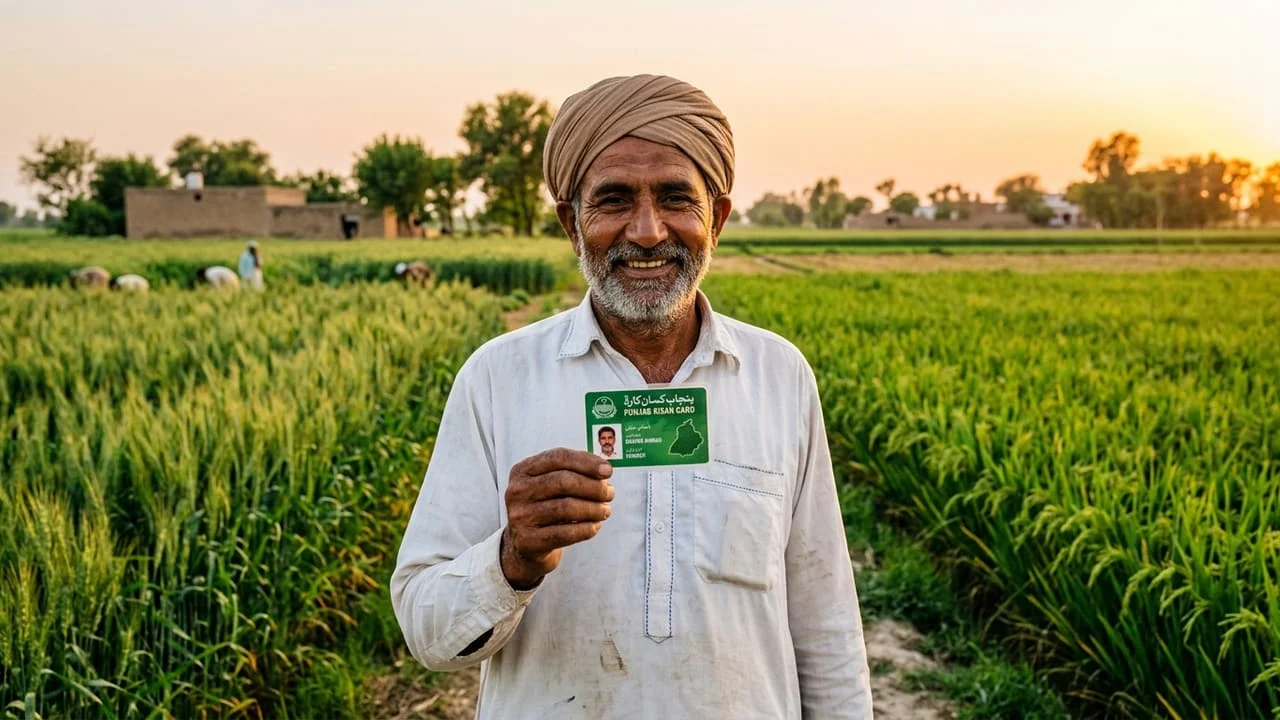
To register for the CM Punjab Kisan Card online and via SMS in 2026, send an SMS with PKC [Space] your 13-digit CNIC to 8070 using a mobile SIM registered in your own name, or submit an application through the Punjab Agriculture Department portal (agripunjab.gov.pk). Eligible farmers holding between 1 to 12.5 acres of land receive an interest-free agricultural production loan of up to Rs. 150,000 per crop season through Bank of Punjab.
Read guide
CM Punjab Green Tractor Scheme 2026 Online Apply: GTS Portal Registration, Eligibility & Balloting Results
To register for the CM Punjab Green Tractor Scheme 2026 online, eligible farmers in Punjab must submit their CNIC and land ownership details through the official GTS portal (gts.punjab.gov.pk). The Punjab government provides a flat subsidy of Rs. 1,000,000 (10 Lakh) on 9,500 modern green tractors for farmers holding between 1 to 50 acres of agricultural land through transparent computerized e-balloting.
Read guide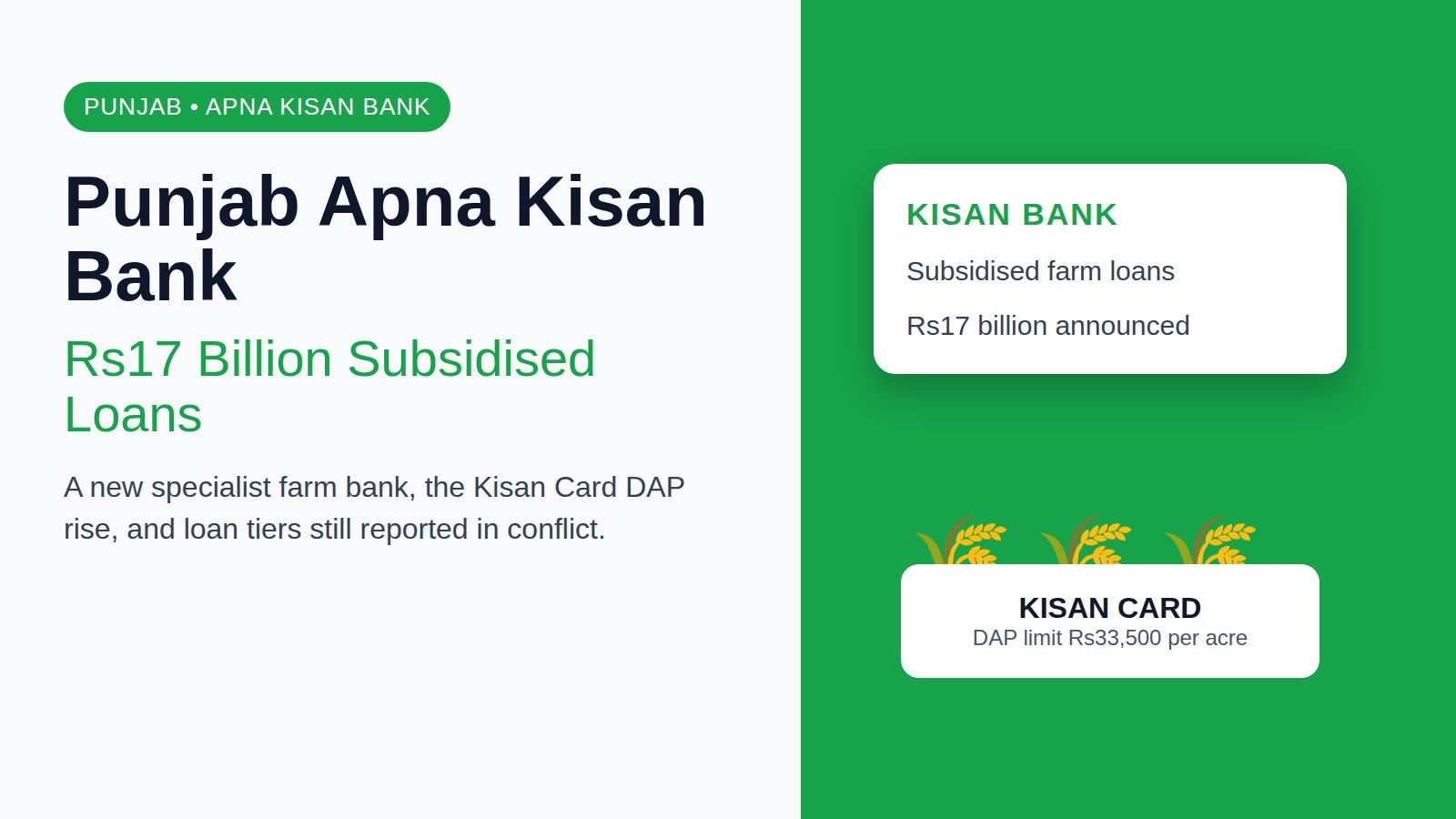
Punjab Apna Kisan Bank: Subsidised Loans for Punjab Farmers
Punjab Apna Kisan Bank is Punjab's first specialist farm bank, announced on 28 October 2026 with Rs17 billion in subsidised agricultural loans. It is not yet open for applications in the published reports, and its loan tiers are still reported in conflict, so farmers should wait for official rules before they act.
Read guide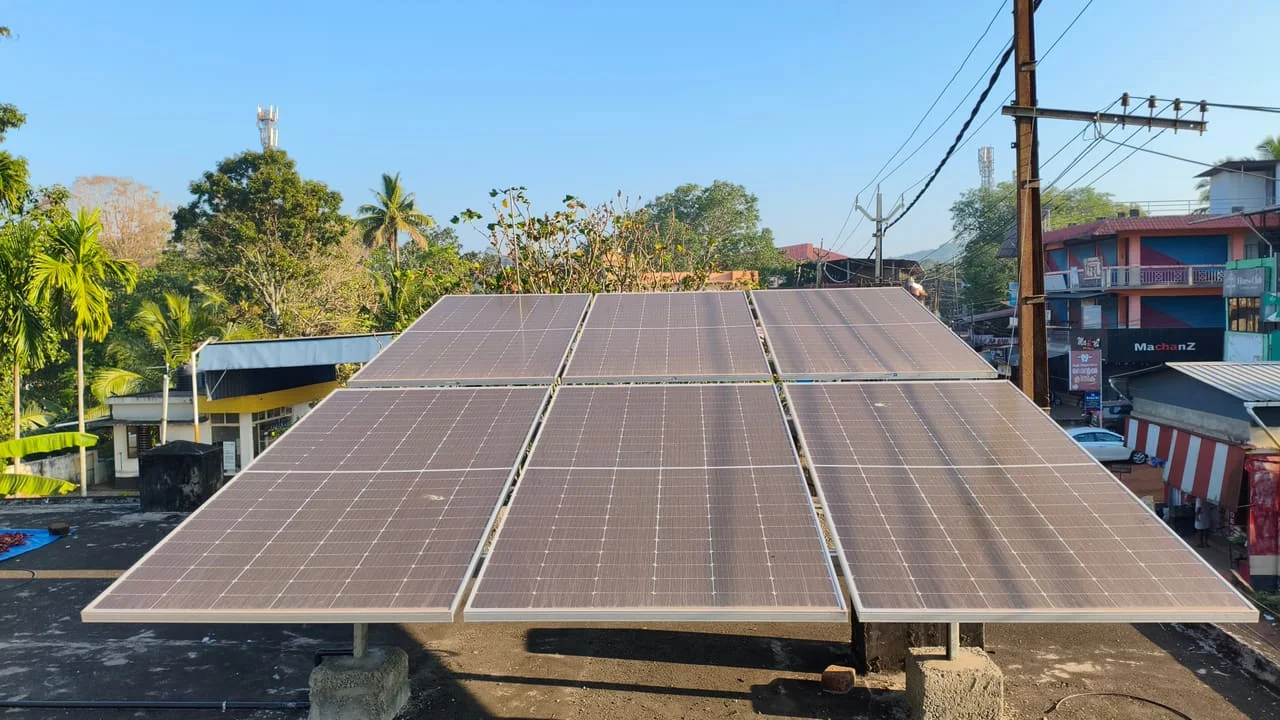
Punjab Solar Tube Well Scheme 2026 Online Apply: Eligibility, Subsidy Rates, Registration Portal & Balloting
To apply for the Punjab Solar Tube Well Scheme 2026 online, eligible farmers in Punjab must submit their CNIC, land ownership verification (Fard), and tube well details through the official portal at cmstp.punjab.gov.pk or via agriculture.punjab.gov.pk. The Punjab government covers up to 67% of the capital cost to convert existing diesel and electric tube wells into solar pumping systems through transparent PITB computerized balloting.
Read guide
Asaan Karobar Card: Punjab's Interest-Free Business Loan
The Asaan Karobar Card is a Punjab government digital card that gives small business owners an interest-free loan of up to Rs 1 million. The Bank of Punjab issues the card, and the Punjab government pays the markup, so the borrower pays 0% interest. You repay over three years after a three-month grace period.
Read guide