This article explains public information. It does not determine eligibility or replace an official notice.
What Is Punjab Apna Kisan Bank?
A first specialist farm bank for Punjab
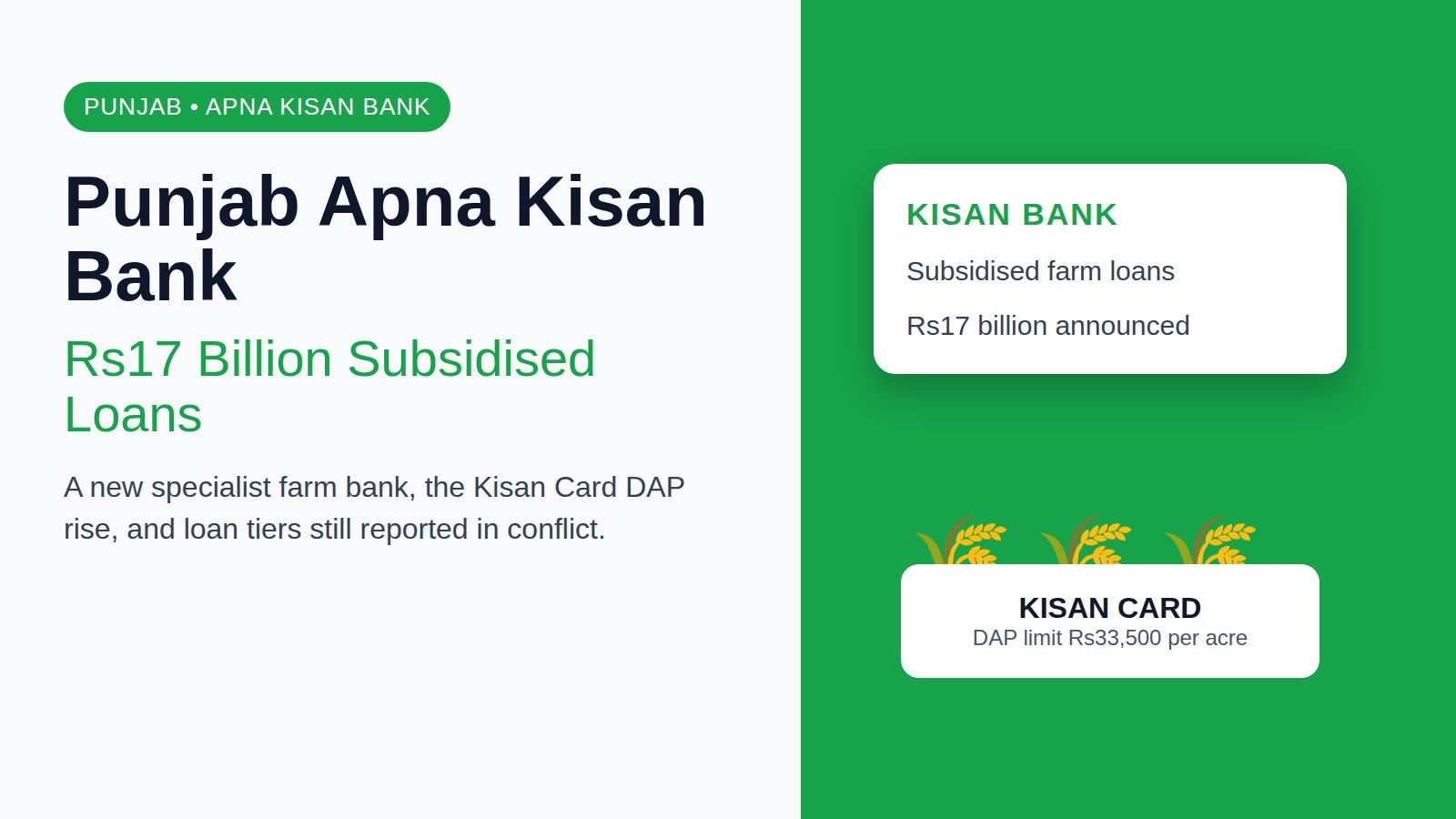
Punjab Apna Kisan Bank is a proposed specialist bank for farmers in Punjab. It is meant to give growers a formal source of farm credit at subsidised rates, instead of leaving them dependent on costly informal borrowing or on middlemen. The Government of Punjab announced it as the province's first bank of this kind, as part of a wider package of 10 initiatives for farmers.
The bank is still at the announcement stage in the reports published so far. That distinction matters, because an announcement is not the same as a launch. No branch list, launch date, or application form was published with the announcement reports, so no farmer can yet apply through this bank on the basis of those reports alone.
The announcement on 28 October 2026
Punjab Chief Minister Maryam Nawaz Sharif announced the bank on 28 October 2026 at a meeting with farmers in Lahore. Reports say small, medium, and large farmers from across Punjab attended, and the Chief Minister dedicated her birthday to the farming community at that meeting. The announcement was reported by the Directorate General Public Relations of the Government of Punjab and by national and regional news outlets on the same day.
The meeting also covered wider farm support, including wheat, machinery, irrigation, and olive cultivation. This guide focuses on the bank and the linked Kisan Card change, because those are the two financing items most readers search for first. Other parts of the package need their own guides once official details are published.
How Much Funding Was Announced?
Rs17 billion for about five million acres
The Government of Punjab said it was providing Rs17 billion in subsidised agricultural loans. Reports say the funding is meant to cover farmers cultivating about five million acres across Punjab. That acreage figure helps explain the scale, but it does not mean every acre automatically qualifies for a loan.
The Rs17 billion figure is the total subsidised loan amount reported in the announcement coverage. It is not a per farmer amount, and it is not the same as a loan limit for one applicant. Readers should not divide the total by the acreage to guess what they will get, because eligibility, land size, and the final rules will decide individual amounts.
More than one million farmers already use Kisan Card
Reports say more than one million farmers already benefit from the Kisan Card. That existing reach is one reason the new bank announcement matters, because a large group of farmers already uses formal farm finance for inputs. The Kisan Card gives eligible farmers financing for approved inputs such as seeds, fertilisers, and pesticides.
The new bank and the Kisan Card are related, but they are not the same programme. The Kisan Card has its own rules and limits, while the bank's full structure, management, and relationship to existing facilities were not fully explained in the announcement reports. Treat them as two linked parts of Punjab's farm support, not as one interchangeable scheme.
What Loan Tiers Were Reported?
Version A: up to Rs10 million at zero markup
One set of reports, including The News and the Directorate General Public Relations based coverage, gives this tier table. It says loans of up to Rs10 million carry zero markup, loans of up to Rs30 million carry a 2 per cent interest rate, and loans of up to Rs50 million carry a 5 per cent interest rate. Some of these reports link the structure to the Punjab Urban Unit.
| Reported loan amount | Reported rate in Version A |
|---|---|
| Up to Rs10 million | Zero markup |
| Up to Rs30 million | 2 per cent |
| Up to Rs50 million | 5 per cent |
This version is widely repeated, but wide repetition is not the same as official confirmation. No single official tier table was published in the announcement reports checked for this guide, so this table must be read as reported, not as final.
Version B: up to Rs100 million at zero markup
A second set of secondary reports gives a much larger tier table. It says loans of up to Rs100 million carry zero markup, loans of up to Rs300 million carry 2 per cent interest, and loans of up to Rs500 million carry 5 per cent interest. The rates match Version A, but every limit is ten times larger.
| Reported loan amount | Reported rate in Version B |
|---|---|
| Up to Rs100 million | Zero markup |
| Up to Rs300 million | 2 per cent |
| Up to Rs500 million | 5 per cent |
The two versions cannot both be the official table, and this guide does not pick one as fact. The conflict itself is the key finding for readers, because anyone who plans borrowing around either table alone could plan around the wrong limit. Wait for the official programme rules before you treat any tier as confirmed.
Why the tier figures are not confirmed yet
The tier figures are not confirmed as a single official table for three plain reasons. First, the announcement reports do not publish one official table with eligibility by tier. Second, secondary reports split into the two versions above, with the same rates but different limits. Third, key details that would settle the question, such as whether rates are annual, how limits apply by land size, and who qualifies for each tier, were not published.
That gap does not mean the bank is false or that no loans will follow. It means the safe position is to treat the announcement as real and the tiers as unconfirmed. A farmer who is offered a loan today in the name of this bank should ask for the written official terms and check them against a government source before signing anything.
What Changed for Kisan Card Holders?
DAP fertiliser limit raised to Rs33,500 per acre
The Kisan Card DAP fertiliser loan limit was raised by Rs3,500 per acre, from Rs30,000 to Rs33,500 per acre. This change was announced at the same meeting as the bank, and it is the clearest confirmed financing change in the package. It applies to the per acre limit for DAP fertiliser purchases, not to every type of farm spending.
The increase is meant to help farmers meet rising fertiliser prices. For a farmer with several acres, the extra Rs3,500 per acre adds up, but the total still depends on verified acreage and on the Kisan Card rules that already apply. Do not assume the new per acre figure is a cash payment, because Kisan Card financing is tied to approved inputs through registered channels.
Who the wider package aims to reach
The package aims to reach small, medium, and large farmers, and reports say steps are being considered to extend Kisan Card access to tenant farmers and farmers on leased land. That point matters, because many people farm land they do not own, and schemes built only around land ownership can leave them out. The extension to tenants was reported as under consideration, not as a completed rule change, so tenants should check the updated eligibility wording when it is published.
For the linked Kisan Card process, see CM Punjab Kisan Card online apply 2026. That guide covers the existing Kisan Card route, which is separate from the new bank. Do not use a Kisan Card application as a substitute for a bank application, because no bank application route was published.
What Is Not Yet Published?
No launch date, branch list, or application process
The bank launch date, branch list, and application process were not published in the announcement reports. No official form, helpline number, or branch address for Punjab Apna Kisan Bank appears in those reports. This guide therefore gives no application steps for the bank, because inventing steps would mislead readers who need a real route.
If a future official notice publishes those details, this guide should be updated with the notice date and the exact route. Until then, the honest advice is to watch for an official Government of Punjab notice and to ignore social media posts that claim an open application link. A genuine launch will be traceable to a government source, not only to a forwarded message.
How to check safely while you wait
You can prepare without sharing sensitive details with unofficial pages. Keep your CNIC and land record details private, and do not upload them to any site that claims to register you for this bank before an official route exists. PakBenefits is an independent guide, not the Punjab government, and it does not collect CNICs or register farmers for any scheme.
Use this short checklist while you wait for official rules:
- Note the announcement date, 28 October 2026, so you can tell old news from a new launch notice.
- Keep the two reported tier versions side by side, and do not act on either one alone.
- Check the existing Kisan Card rules separately, because that route already exists.
- Ask any agent who offers bank registration to show the official notice first.
How Does This Fit Other Punjab Farm Support?
Machinery, wheat, and irrigation in the same package
The same announcement package included a wheat support price of Rs4,500 per maund, machinery support, and irrigation measures. The wheat support price is a price benchmark for producers, not a loan, and its benefit will depend on procurement rules and timely payment. Machinery support matters because tractors and equipment are costly, and the package referred to subsidised tractors and high tech mechanisation.
These items sit alongside the bank, but they do not change the bank's unconfirmed tiers. A farmer may benefit from more than one part of the package, yet each part will have its own rules. Read each scheme on its own terms, and do not assume approval for one scheme means approval for another.
Related Punjab schemes to compare
If you need farm support now, look at schemes that already have a published route. The Green Tractor Scheme covers subsidised tractors, while solar tube well support covers irrigation energy costs. For a separate income route, the Apna Khet Apna Rozgar scheme covers farm based self employment support.
- CM Punjab Green Tractor Scheme 2026 online apply
- Punjab solar tube well scheme 2026 online apply
- Apna Khet Apna Rozgar scheme apply online 2026
Compare the confirmed rules of those schemes with the unconfirmed bank tiers before you decide where to apply first. A confirmed existing scheme with a real application route is a safer first step than waiting for a bank whose route is not yet published.
Frequently asked questions
What is Punjab Apna Kisan Bank?
Punjab Apna Kisan Bank is Punjab's first specialist farm bank, announced by the Government of Punjab on 28 October 2026. It is meant to give farmers subsidised agricultural loans through a formal channel. Its launch date and application process were not published in the announcement reports.
How much funding was announced for Punjab Apna Kisan Bank?
Rs17 billion in subsidised agricultural loans was announced, covering farmers on about five million acres. That total is the programme amount reported in the announcement coverage, not a loan limit for one farmer. Individual amounts will depend on the final official rules.
What are the reported loan tiers for Punjab Apna Kisan Bank?
The tiers are reported in conflict, so no single tier table is confirmed yet. One version says up to Rs10 million at zero markup, up to Rs30 million at 2 per cent, and up to Rs50 million at 5 per cent. The other version says up to Rs100 million at zero markup, up to Rs300 million at 2 per cent, and up to Rs500 million at 5 per cent.
Is the zero markup loan confirmed?
No, the zero markup tier is reported but not confirmed as a final official term. Reports agree that a zero markup tier was announced, but they disagree on its limit. Wait for the official programme rules to confirm the limit, the eligibility, and whether the rate applies annually.
Has Punjab Apna Kisan Bank launched yet?
No launch has been confirmed in the announcement reports checked for this guide. The 28 October 2026 event was an announcement at a meeting with farmers, not a published branch opening or application launch. A future launch notice should be checked against an official Government of Punjab source.
How can farmers apply for Punjab Apna Kisan Bank?
No application process was published in the announcement reports, so this guide gives no application steps for the bank. Do not share your CNIC with unofficial pages that claim to register you. Check for an official notice first, and use existing schemes with published routes in the meantime.
What is the new Kisan Card DAP limit?
The Kisan Card DAP fertiliser loan limit rose by Rs3,500 per acre, from Rs30,000 to Rs33,500 per acre. This change was announced at the same 28 October 2026 meeting as the bank. It covers the per acre DAP limit, not a general cash payment to every farmer.
Are tenant farmers included in the new support?
Reports say steps are being considered to extend Kisan Card access to tenant farmers and farmers on leased land. That extension was reported as under consideration, not as a completed rule. Tenants should check the updated eligibility wording when the official rules are published.
Is PakBenefits part of the Punjab government?
No, PakBenefits is an independent guide and is not the Punjab government. It does not collect CNICs, register farmers, or approve loans for any scheme. Use it to understand announcements and confirmed rules, and use official government channels for any application.
What should farmers do while they wait for official bank rules?
Farmers should keep their documents ready, avoid unofficial registration links, and compare confirmed schemes that already have a published route. Note the two conflicting tier versions, and do not borrow or pay a fee based on either version alone. Recheck for an official notice before you act on the bank.
Sources and official links
Check the destination address before entering personal information.
Related guides
CM Punjab Kisan Card Online Apply 2026: 8070 Registration, Eligibility & BOP Card Activation
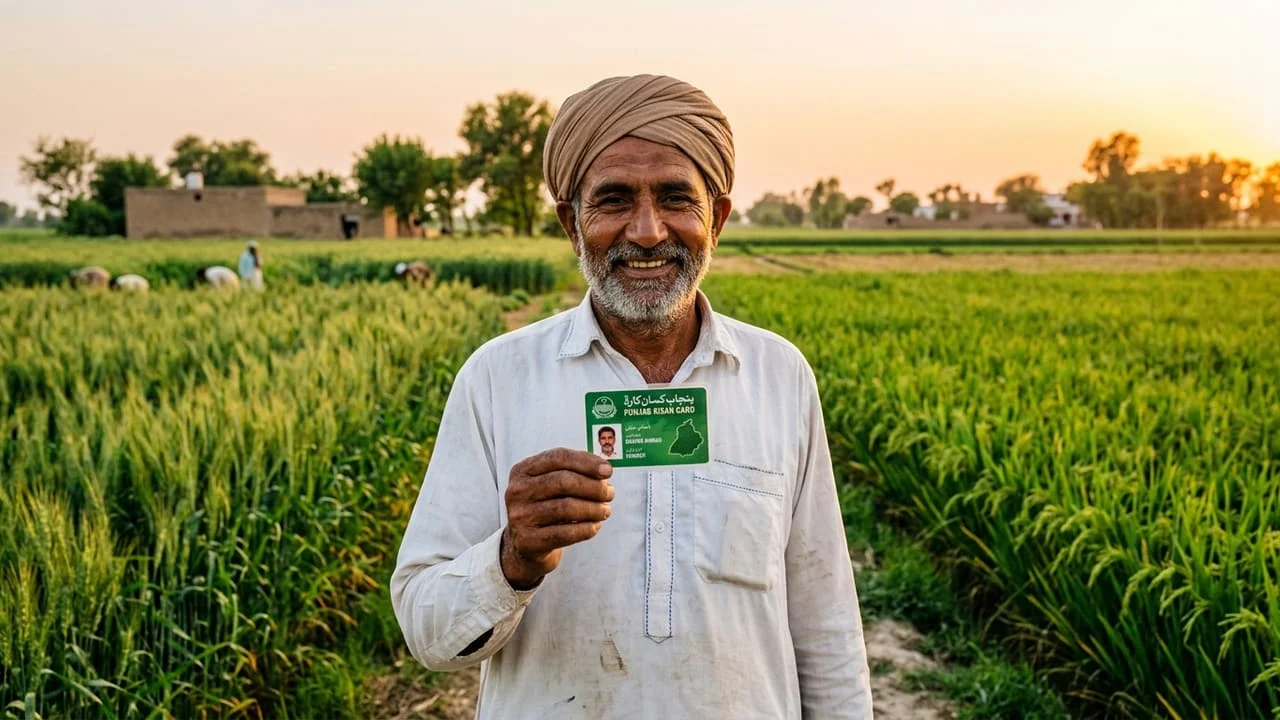
To register for the CM Punjab Kisan Card online and via SMS in 2026, send an SMS with PKC [Space] your 13-digit CNIC to 8070 using a mobile SIM registered in your own name, or submit an application through the Punjab Agriculture Department portal (agripunjab.gov.pk). Eligible farmers holding between 1 to 12.5 acres of land receive an interest-free agricultural production loan of up to Rs. 150,000 per crop season through Bank of Punjab.
Read guide
CM Punjab Green Tractor Scheme 2026 Online Apply: GTS Portal Registration, Eligibility & Balloting Results
To register for the CM Punjab Green Tractor Scheme 2026 online, eligible farmers in Punjab must submit their CNIC and land ownership details through the official GTS portal (gts.punjab.gov.pk). The Punjab government provides a flat subsidy of Rs. 1,000,000 (10 Lakh) on 9,500 modern green tractors for farmers holding between 1 to 50 acres of agricultural land through transparent computerized e-balloting.
Read guide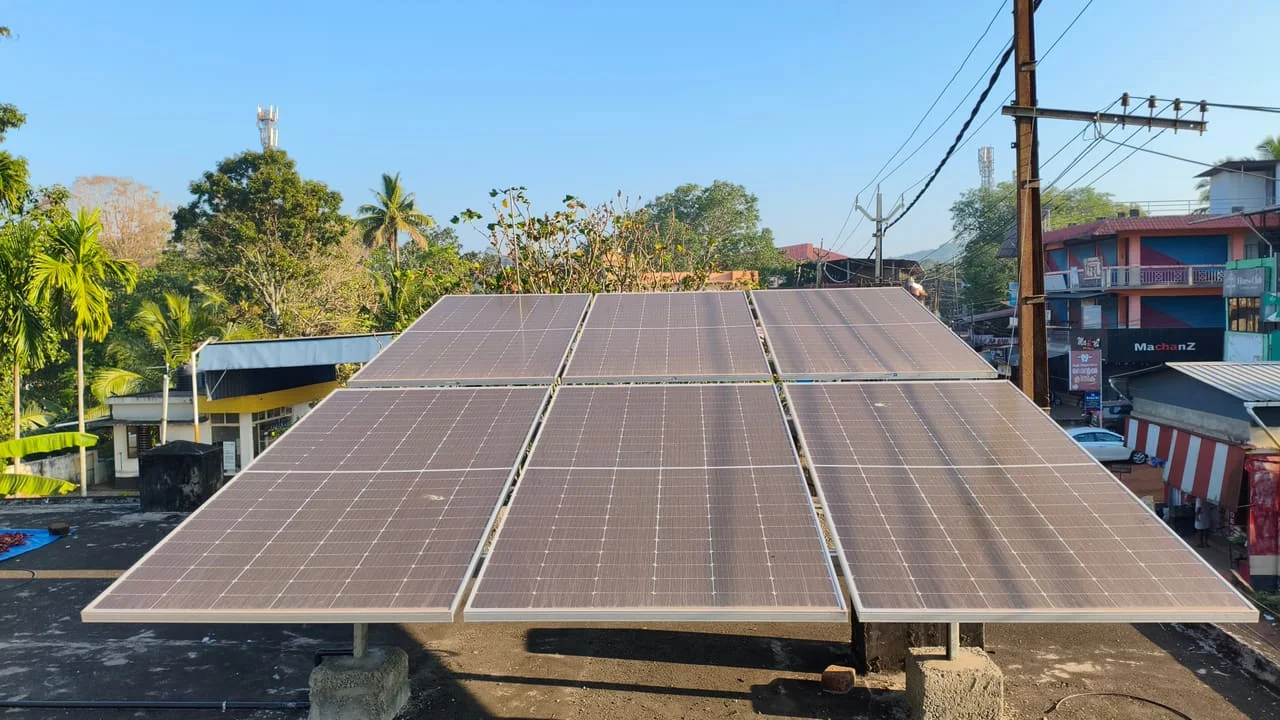
Punjab Solar Tube Well Scheme 2026 Online Apply: Eligibility, Subsidy Rates, Registration Portal & Balloting
To apply for the Punjab Solar Tube Well Scheme 2026 online, eligible farmers in Punjab must submit their CNIC, land ownership verification (Fard), and tube well details through the official portal at cmstp.punjab.gov.pk or via agriculture.punjab.gov.pk. The Punjab government covers up to 67% of the capital cost to convert existing diesel and electric tube wells into solar pumping systems through transparent PITB computerized balloting.
Read guide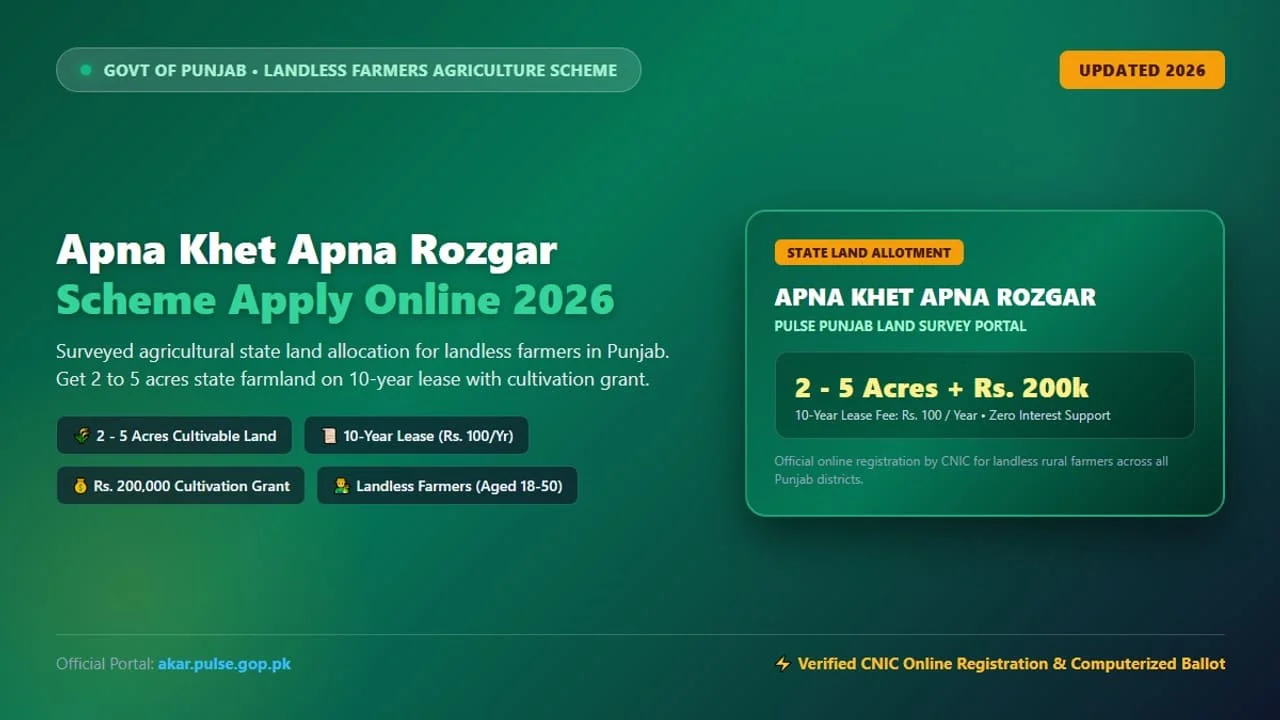
Apna Khet Apna Rozgar Scheme Apply Online 2026: Complete Registration Guide, Eligibility & Balloting Status
The Punjab Apna Khet Apna Rozgar Scheme 2026 provides landless farmers with 2 to 5 acres of cultivable state land on a 10-year lease at a nominal fee of Rs. 100 per year, bundled with a Rs. 200,000 cultivation grant. Eligible citizens aged 18 to 50 can apply online at akar.pulse.gop.pk using their CNIC.
Read guide