This article explains public information. It does not determine eligibility or replace an official notice.
What Is a BISP ID Card Check?
Most people land on this term after their regular BISP check comes back wrong, not before. A BISP ID card check is really a check on whether your CNIC itself — not your eligibility — is the reason your record won't show a payment. It's a narrower question than "am I eligible," and it's worth separating the two before you assume the worst.
This matters because the two problems get fixed in completely different places. An eligibility problem gets resolved through a household survey or poverty-score reassessment. An ID-card problem gets resolved at NADRA, and only afterward does your BISP record catch up.
Why Your ID Card (CNIC) Can Block a BISP Check
BISP has a strict rule baked into how it verifies every beneficiary: your CNIC must be valid. When an identification card expires, NADRA marks the record as lacking valid ID, and BISP's own system automatically suspends payments until that's fixed — the same logic behind Error 933, where a beneficiary's record gets flagged, suspended, or blocked inside the National Socio-Economic Registry (NSER) database. None of this is arbitrary. It exists to prevent fraud and to make sure only people who can currently prove their identity keep collecting funds, which is also why a card that's simply lapsed — not fake, not stolen, just expired — triggers the exact same block as a genuine identity problem would.
Who This Problem Affects Most
This isn't evenly distributed. Elderly women over 60, widows who may be less familiar with renewal steps, people in rural areas with limited NADRA access, and daily wage workers who can't easily afford travel costs to a NADRA office all show up disproportionately in this category. Add to that a wider set of causes — expired CNICs, incomplete biometric verification, a PMT score reassessment, duplicate registrations, mobile number mismatches, legal holds, or even flagged deceased records — and any one of these can trigger a block, with simple lack of awareness of the expiration date often the real root cause rather than anything more serious.
How to Check If Your CNIC Is Blocking Your BISP Record
Start with your phone: send your 13-digit CNIC without dashes by SMS to 8171, or dial 8171 from your registered number and follow the prompt. If the reply comes back as an Error 933 confirmation rather than a normal status, that's your signal — the problem sits with your record, not your eligibility. For more detail than SMS gives you, use the official web portal at bisp.gov.pk, enter your CNIC and the captcha code, and load the eligibility page to see a fuller explanation. In person, visiting your nearest BISP office for counter verification gets you the same answer face to face, and it's worth doing if you'd rather not guess at what an SMS code means on your own.
Step-by-Step: Renewing an Expired CNIC for BISP
If an expired card turns out to be the cause, the fix starts at NADRA, not at BISP. Visit NADRA with your old card, your B-Form, and a passport photo. Standard renewal typically runs around Rs 300 and takes about 30 days; urgent processing costs more (commonly cited around Rs 750) and can be ready in roughly 7 working days — treat these figures as a general guide and confirm the current fee at your NADRA office, since rates do change. Once you have the new CNIC, submit a copy to your BISP Tehsil Office so staff can start reactivation, which several sources put at roughly 15–21 working days, though some cases move faster — allow 7–10 days at minimum before assuming nothing has happened. Keep your phone balance topped up and your SMS alerts active during this window, since that's often how you'll first learn the record has reactivated.
Other ID-Linked Errors Beyond a Simple Expiry
An expired card isn't the only ID-related reason a check can fail. Incomplete biometric verification shows up when your fingerprint scan was never finished or didn't match — visiting an HBL Konnect agent or your Tehsil Office to complete a biometric reverification form with a fresh thumb impression usually clears this within 7–14 working days. A duplicate registration flag needs a written complaint requesting a duplicate record audit, which can take 21–30 working days to resolve once BISP verifies which record is genuine. If your case is actually a PMT score under review rather than an ID problem at all, you may be asked to complete a fresh household survey, with the system cross-checking against FBR data before anything changes. And a mobile number mismatch — checking from a number that isn't your registered one — is fixed with a simple written application for a mobile number update, typically processed in 5–10 working days.
How Long Reactivation Takes, and Whether You Get Back Pay
Processing timelines vary by cause, which is exactly why it's worth knowing which one applies to you before you start counting days. The reassuring part: payments paused are not canceled — funds remain attached to your file rather than disappearing. What isn't guaranteed is a lump-sum catch-up: money due during the suspension period is not automatically paid in a lump sum, and getting anything owed for that window generally means formally requesting a payment arrears review at your Tehsil Office once your record is active again — recovery isn't guaranteed, and decisions tend to be made case by case. One documented case involved a widow whose payment stayed blocked for over a month even after her CNIC was renewed, resolved only after manual intervention at the BISP office; treat that as a real possibility worth planning for, not a fixed timeline you should expect.
ID Card Problem vs. Genuine Eligibility Problem
It's easy to conflate the two, but they're not the same thing. Genuine eligibility depends on holding a valid, non-expired CNIC, belonging to a low-income family under BISP's poverty scoring, and being the primary beneficiary — usually a woman — on the household's record. An ID-card block, by contrast, can hit someone who is otherwise fully eligible and always has been; it's a paperwork and verification issue, not a judgment about whether your household still qualifies. That distinction matters practically too: fixing an ID problem doesn't require re-registration, since existing beneficiaries keep their underlying record — you're reactivating it, not starting over.
How to Prevent This from Happening Again
The easiest fix is avoiding the problem in the first place. Renew your CNIC before it expires — NADRA generally sends SMS reminders around 60 days prior, so don't ignore those texts. Attend any biometric drives announced in your area rather than skipping them, keep your registered mobile number active, and get in the habit of checking your 8171 status monthly rather than only when a payment feels overdue. Households with more than one registration on file should also sort that out proactively, since duplicate household registrations are one of the more time-consuming problems to untangle after the fact.
Where to Complain If Your ID Card Issue Isn't Resolved
If weeks have passed and nothing has moved, escalate rather than keep waiting. Contact the BISP helpline and confirm it's still current before relying on it. You can also use the bisp.gov.pk complaints portal, the Pakistan Citizen's Portal through the PM Pakistan app, or, for cases that genuinely stall past a reasonable point, the Federal Ombudsman's office. Whichever route you take, maintain documentation as you go — note down complaint numbers, officer names, and dates of each visit, since a paper trail is what actually moves a stuck case when you have to request payment-unblock assistance a second or third time.
Frequently asked questions
What does BISP Error 933 mean exactly?
Error 933 means your record in the National Socio-Economic Registry has been flagged, suspended, or blocked — most often because of an expired CNIC, incomplete biometric verification, a duplicate registration, or a mismatched mobile number.
My CNIC expired months ago. Will I lose the payments I missed?
No — payments are paused, not canceled. Once your CNIC is renewed and your BISP record reactivates, the funds remain attached to your file, though a lump-sum catch-up isn't automatic and may need a formal arrears request.
Can someone else renew my CNIC for me?
No. NADRA requires your physical presence for biometric verification during renewal, so you cannot send a family member or agent to do this on your behalf.
Can I still receive a payment while my record shows Error 933?
No. An active Error 933 status means your record is suspended until the underlying cause — usually an ID or verification issue — is resolved and BISP reactivates it.
How do I find out which specific reason caused my error?
The 8171 SMS reply or the official web portal at bisp.gov.pk will usually specify the cause; if it doesn't, a visit to your BISP Tehsil Office for counter verification will confirm exactly what's flagged.
Is there a fee to fix an ID-card-related BISP block?
The fix itself through BISP is free. The only cost involved is NADRA's standard CNIC renewal fee if that's the underlying issue, which is separate from BISP and paid directly to NADRA.
I renewed my CNIC weeks ago but still haven't received payment. What should I do?
Wait at least 7–10 days for the systems to sync, and if nothing changes after that, visit your Tehsil Office directly with your renewed CNIC and ask staff to check your reactivation status rather than continuing to wait.
Can Error 933 appear even if my CNIC is valid and my biometrics are current?
Yes — a duplicate registration flag, a PMT score reassessment, or a mismatched mobile number can all trigger the same error independently of your CNIC's validity.
Is there a way to fix an ID card block without visiting an office?
Some causes, like a mobile number update, can be started with a written application, but most ID-related fixes — CNIC renewal, biometric reverification, duplicate-record disputes — require an in-person visit to NADRA or your BISP Tehsil Office.
What's the difference between an ID card problem and being ruled ineligible?
An ID card problem is a verification or paperwork issue that can affect someone who fully qualifies for BISP. Being ruled ineligible is a separate outcome tied to your household's poverty score, not your CNIC's status.
Do I have to register again if my ID card issue gets fixed?
No. Reactivating an existing record after an ID-related fix does not require re-registration — your original registration stays on file.
What if my complaint isn't resolved after contacting the helpline?
Escalate through the bisp.gov.pk complaints portal or the Pakistan Citizen's Portal, and for cases that remain unresolved well beyond a reasonable period, the Federal Ombudsman's office can review the case.
Sources and official links
Check the destination address before entering personal information.
Saad has covered BISP, Ehsaas, and provincial welfare schemes for Live Govt Schemes & Ehsaas Programs since 2024, cross-checking every guide against the current official portal before publication.
Ayesha reviews programme-eligibility and payment content for accuracy against BISP, NADRA NSER, and provincial notices, and flags any guide that needs an update after an official policy change.
Related guides
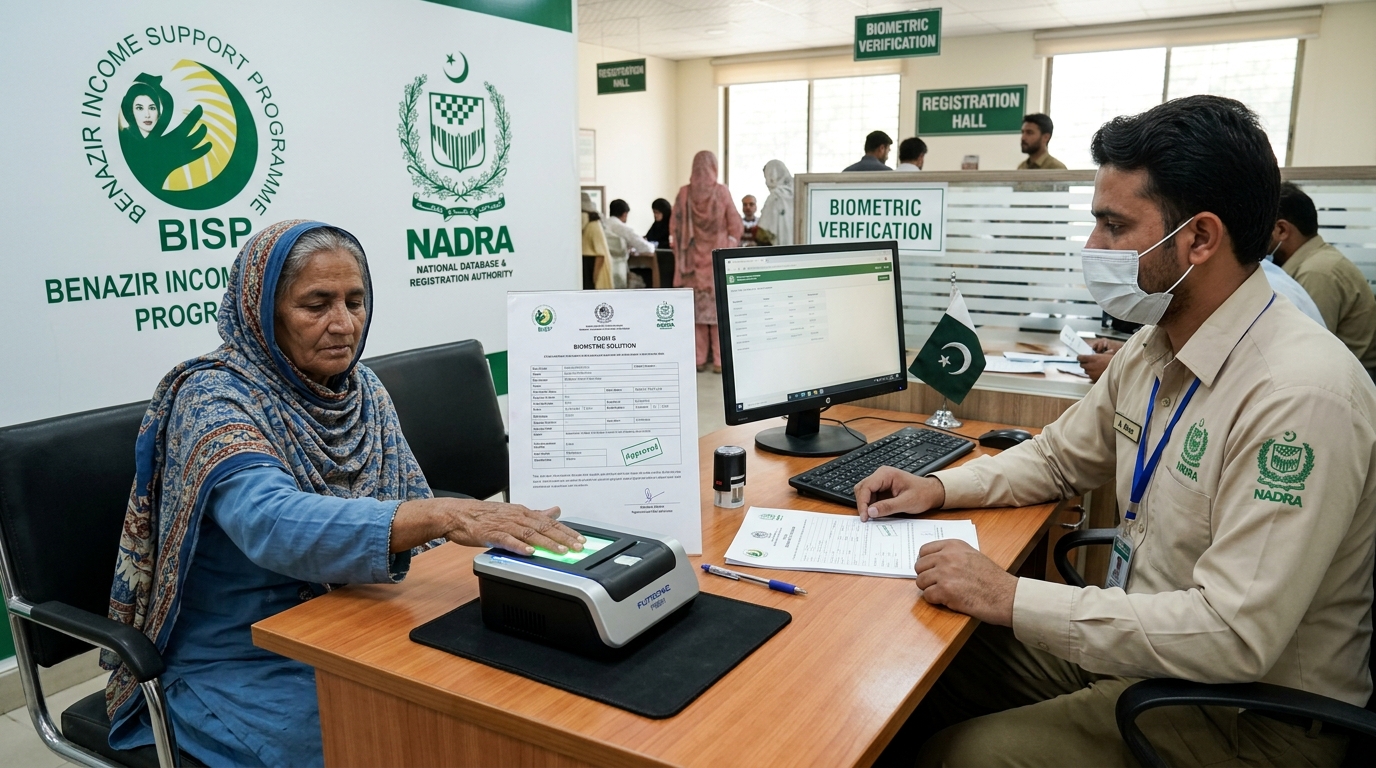
BISP Biometric Failed? Guaranteed Rs 13,500 Fix
POS machine ya ATM par fingerprints match na hone ki surat mein 13,500 Rs ki payment Form B aur NADRA verification ke zariye hasil karne ka mukammal tariqa.
Read guide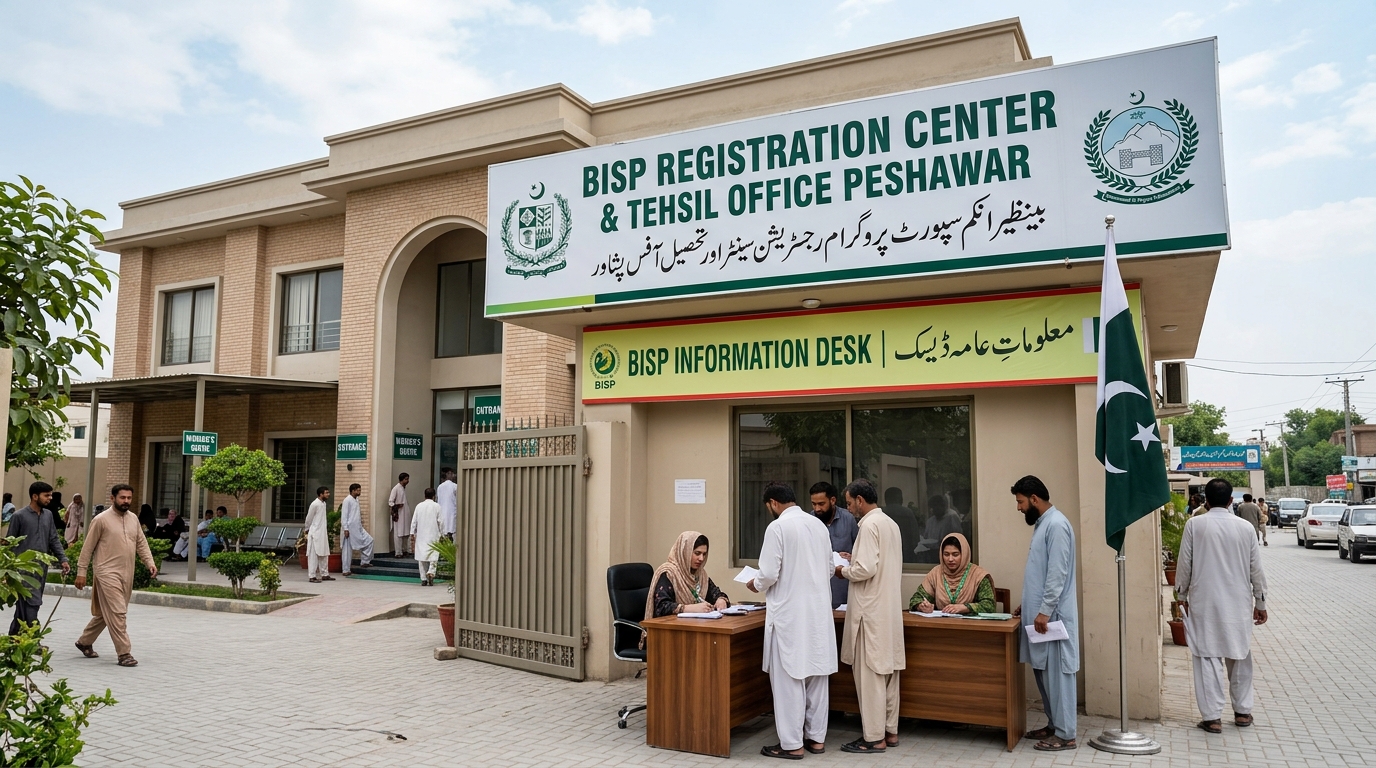
Verified BISP Tehsil Offices KPK & Peshawar List
Peshawar aur KPK ke tamam major districts ke BISP offices ke exact addresses, contact details aur timings ki mukammal master list.
Read guide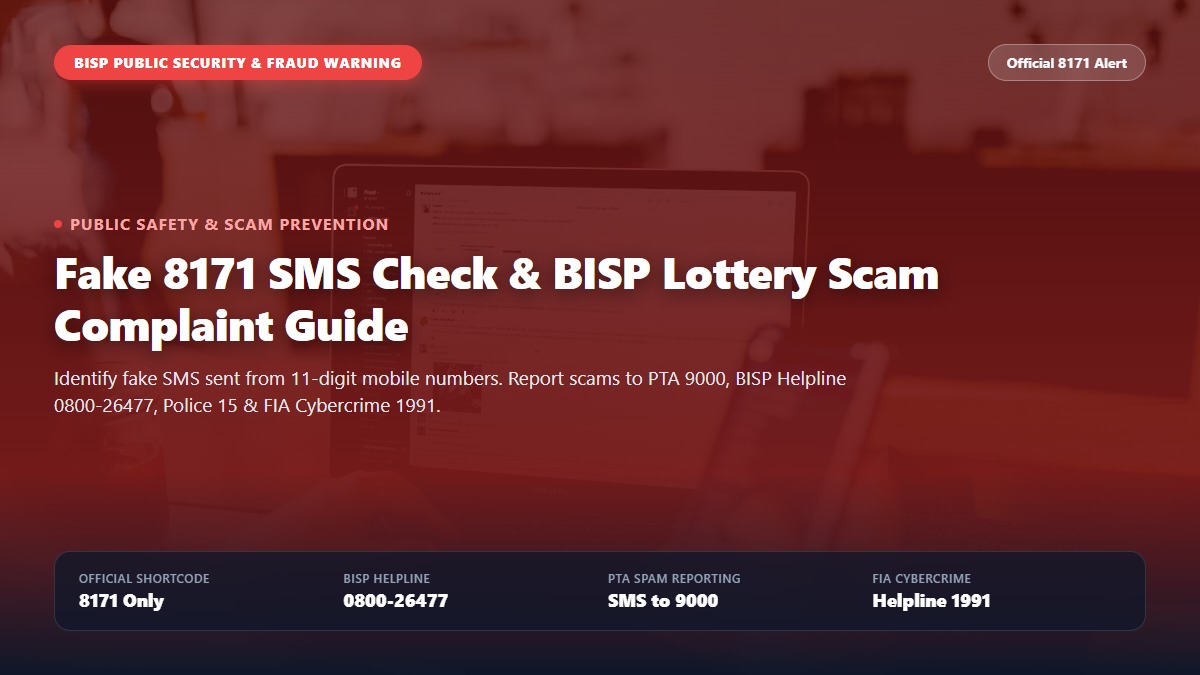
Fake 8171 SMS Check, Complaint & BISP Lottery Fraud Alert Guide
Spot fake 8171 SMS scams and report BISP lottery fraud. Step-by-step guide to reporting scammers on PTA 9000, BISP Helpline 0800-26477, Police 15, and FIA Cybercrime.
Read guide