This article explains public information. It does not determine eligibility or replace an official notice.
What Are Housing & Remittance Initiatives?
Housing & Remittance Initiatives represent policy frameworks designed to channel international migrant transfers directly into fixed property assets, real estate development, and residential mortgages. Spearheaded globally by development agencies and nationally by institutions like the State Bank of Pakistan (SBP), these frameworks convert liquid home remittances into long-term national housing stock while curbing informal currency transfer networks.
Through dedicated banking infrastructure and policy incentives, non-resident workers gain secure mechanisms to acquire, construct, or finance homes in their home countries remotely. By reducing physical presence hurdles and establishing clear legal safeguards, these programs turn routine financial inflows into permanent generational assets for diaspora families.
How Do Remittance Channels Connect with National Housing Finance Systems?
Formal banking channels serve as the central bridge linking international payment corridors to domestic housing finance systems. Through initiatives like the Pakistan Remittance Initiative (PRI), established jointly by the State Bank of Pakistan, the Ministry of Finance, and the Ministry of Overseas Pakistanis, governments incentivize remitters to transmit funds via commercial banks.
By accumulating verified remittance histories within formal banking accounts, non-resident remitters establish documented creditworthiness. This recorded financial flow allows commercial lending institutions to underwrite home loans, issue lower-risk mortgages, and offer concessionary interest rates to diaspora families seeking residential security.
How Does the Roshan Apna Ghar Scheme Work for Overseas Pakistanis?
The Roshan Apna Ghar scheme is a flagship digital housing finance program launched by the State Bank of Pakistan specifically for Non-Resident Pakistanis (NRPs) and Pakistani Origin Card (POC) holders. Operating entirely through the Roshan Digital Account (RDA) architecture, the program allows non-residents to purchase completed housing units, fund land construction, or execute major property renovations remotely without traveling to Pakistan.
What Is the Difference Between Lien-Based and Non-Lien Housing Finance?
Lien-Based Financing and Non-Lien Based Financing represent the two core structural tracks available under remittance-backed housing facilities: (1) Lien-Based Financing: The approved loan is secured directly against the applicant's foreign currency or PKR deposit balances maintained in their Roshan Digital Account or invested in Naya Pakistan Certificates (NPCs). Because the financial institution holds a legal lien over these liquid assets, no physical mortgage on the property is registered. Banks offer up to 99% financing of the property value for purchase or construction, accompanied by accelerated processing times and minimal documentation. (2) Non-Lien Based Financing: This track functions as a conventional housing mortgage where the purchased property itself serves as primary collateral. Banks provide up to 85% financing of the property value for purchase or construction, and up to 30% for property renovation. Execution requires the mortgage of the title deed, requiring either brief physical presence or the nomination of a local representative via a Special Power of Attorney (SPA).
What Property Types Are Eligible Under Remittance-Backed Schemes?
Remittance-backed housing initiatives support four primary residential property categories: (1) Ready-Made Residential Units: Outright purchase of completed houses, townhomes, or apartment units with verified title deeds. (2) Plot Purchase and Construction: Simultaneous acquisition of residential land plots followed by phased construction financing. (3) Construction on Owned Land: Greenfield construction loans for applicants who already possess legally clear land titles. (4) Home Renovation & Expansion: Capital improvement facilities capped at 30% to 40% of property valuation to extend or modernize existing housing structures.
What Role Do Remittance Incentive Programs Play in Housing Capital?
National governments utilize targeted loyalty and financial reward programs to maximize the volume of home remittances flowing into property markets. By converting routine money transfers into tangible financial privileges, these initiatives lower the total borrowing costs associated with acquiring residential real estate.
How Do PRI, Sohni Dharti, and Pasban Schemes Reward Home Remitters?
The Pakistan Remittance Initiative (PRI) coordinates institutional incentives alongside structured reward ecosystems: (1) Sohni Dharti Remittance Program (SDRP): A mobile-based loyalty application where non-resident remitters earn points based on the dollar volume of remittances sent through official banking channels. Accumulated points are directly redeemable for government services, including property registration fees, civic authority dues, and public housing application costs. (2) Pasban Remittance Reward Scheme: Introduced through collaboration between central bank authorities and commercial banking associations, this industry-wide incentive framework offers cash rewards, fee waivers, and prioritized loan processing for high-volume remitters using formal banking systems.
What Are the Key Global Models of Remittance-Backed Housing Programs?
Beyond bilateral country corridors, international financial institutions organize multilateral frameworks to turn global migrant capital into affordable housing solutions across developing economies.
How Do IFAD, World Bank, and Regional Frameworks Leverage Migrant Capital?
The International Fund for Agricultural Development (IFAD) manages the multi-donor Financing Facility for Remittances (FFR), which supports housing microfinance models across Africa, Asia, and Latin America. By partnering with rural credit unions and microfinance institutions, IFAD enables remittance-receiving households to convert monthly family transfers into collateralized micro-mortgages for eco-friendly and climate-resilient home construction. Similarly, regional institutions like the African Development Bank (AfDB) and the World Bank facilitate diaspora housing bonds and cross-border mortgage guarantees. These mechanisms pool overseas worker savings into national housing funds, reducing systemic credit risk for local mortgage lenders while expanding affordable housing supply.
How to Apply for a Remittance-Backed Housing Scheme Step-by-Step?
Applying for a remittance-backed home loan is executed through an end-to-end digital workflow: Step 1: Open a Roshan Digital Account (RDA) — Complete remote identity verification with a participating commercial bank using your original passport, CNIC/NICOP, and proof of overseas employment. Step 2: Select Financing Mode — Choose between Lien-Based Financing (up to 99% cap against RDA/NPC assets) or Non-Lien Based Financing (up to 85% cap against property mortgage). Step 3: Submit Property & Income Documentation — Upload clear property title documents, seller details, job contracts, and bank statements confirming regular foreign income. Step 4: Property Valuation & Legal Search — The bank conducts an independent legal title check and physical valuation through approved panel evaluators. Step 5: Loan Approval & Disbursement — Upon credit committee sanction, funds are directly disbursed to the property seller or builder via cross-cheque or direct bank transfer.
What Documents and Verification Are Required for Non-Resident Applicants?
Applicants must provide a standardized documentation package to verify identity, financial capacity, and legal property standing: Identity Verification: Valid NICOP/POC, copy of foreign passport, visa status, or foreign residency permit. Financial Proof: Last 6 months' foreign bank statements, official salary slips, employment contract, or business registration documents for self-employed remitters. Property Documents: Copy of allotment letter, registered title deed, approved site plan, and seller's clear title affidavit. Legal Proxy (Non-Lien Only): Executed Special Power of Attorney (SPA) attested by the relevant Embassy or Consulate of Pakistan in the applicant's country of residence.
Comparative Matrix: Lien-Based vs. Non-Lien Remittance Housing Options
Understanding the structural parameters of Lien-Based versus Non-Lien housing finance allows overseas borrowers to select the financing model best suited to their asset profile and timeline requirements.
| Feature / Parameter | Lien-Based Financing | Non-Lien Based Financing |
|---|---|---|
| Primary Collateral | RDA Deposit / Naya Pakistan Certificates | Purchased Residential Property Mortgage |
| Maximum Financing Cap | Up to 99% of property value | Up to 85% (Purchase) / 30% (Renovation) |
| Physical Mortgage Required | No | Yes |
| Special Power of Attorney (SPA) | Not Required | Required for non-resident applicants |
| Processing Timeframe | Fast (Typically 3 to 7 business days) | Standard (14 to 21 business days) |
| Repatriability of Funds | 100% Fully Repatriable | 100% Fully Repatriable upon sale |
| Financing Tenure | 3 to 25 Years | 3 to 25 Years |
| Available Modes | Conventional & Shariah-Compliant | Conventional & Shariah-Compliant |
What Are the Risks, Taxation, and Repatriability Rules for Remitter Housing Investments?
A foundational advantage of official Housing & Remittance Initiatives is the absolute legal protection guaranteed for capital repatriability and tax immunity: (1) Full Capital Repatriability: Under State Bank of Pakistan regulations, all funds remitted through Roshan Digital Accounts—including rental income generated by the acquired property and full net sale proceeds upon property liquidation—are 100% freely repatriable back to the account holder's foreign bank account without prior central bank approval. (2) Tax Exemption & Full Protection: Inflow of legitimate home remittances used for property acquisition is protected against un-explained wealth inquiries under national banking provisions. Furthermore, non-resident investors benefit from full tax clarity and structured tax withholding regimes administered digitally through participating banks. (3) Risk Mitigation: To safeguard against real estate fraud, central bank guidelines mandate that participating commercial banks complete rigorous legal title searches and physical property valuations prior to releasing loan proceeds.
Frequently asked questions
What is the primary objective of Housing & Remittance Initiatives?
Housing & Remittance Initiatives are structured government and central bank programs designed to encourage overseas workers to transfer funds through formal banking channels by offering specialized housing finance, mortgage discounts, and property investment frameworks.
Can Non-Resident Pakistanis apply for home financing without visiting Pakistan?
Yes, Non-Resident Pakistanis can complete the entire application, approval, and disbursement process remotely through the Roshan Digital Account portal without needing to physically travel to Pakistan.
What maximum percentage of property value can be financed under Lien-Based options?
Lien-Based financing allows applicants to borrow up to 99% of the property value for purchase or construction when secured against RDA deposits or Naya Pakistan Certificates.
What is the maximum financing limit for Non-Lien housing finance?
Non-Lien housing finance provides up to 85% of the property's valuation for home purchase or construction, and up to 30% for home renovation projects.
What is the tenure range for Roshan Apna Ghar loans?
Roshan Apna Ghar home financing offers flexible repayment tenures ranging from 3 to 25 years in both conventional and Shariah-compliant banking structures.
Are funds invested in Pakistani real estate through RDA repatriable?
Yes, all principal capital, rental yield, and net sale proceeds from property purchased through RDA home remittances are 100% freely repatriable to the buyer's overseas account.
What is the role of Special Power of Attorney (SPA) in Non-Lien financing?
A Special Power of Attorney allows a non-resident applicant to designate a legal proxy in Pakistan to sign mortgage documents and register property deeds on their behalf.
How does the Sohni Dharti Remittance Program reward housing remitters?
The Sohni Dharti program awards loyalty points for every formal remittance transaction, which users can redeem to pay for property transfer taxes, legal fees, and government agency charges.
Can joint applicants apply for remittance-backed housing loans?
Yes, non-resident primary applicants can apply jointly with immediate family members, including spouses, parents, or adult children residing in Pakistan or abroad.
What global agencies support remittance-to-housing conversion?
International organizations such as the International Fund for Agricultural Development (IFAD), the World Bank, and the African Development Bank support remittance-backed housing microfinance and diaspora mortgage facilities worldwide.
Sources and official links
Check the destination address before entering personal information.
Muhammad Salman specializes in Pakistani public sector financing, youth entrepreneurship schemes, and government subsidy programmes, cross-referencing all data against official SBP circulars and ministry directives.
Ayesha reviews programme-eligibility and payment content for accuracy against BISP, NADRA NSER, and provincial notices, and flags any guide that needs an update after an official policy change.
Related guides
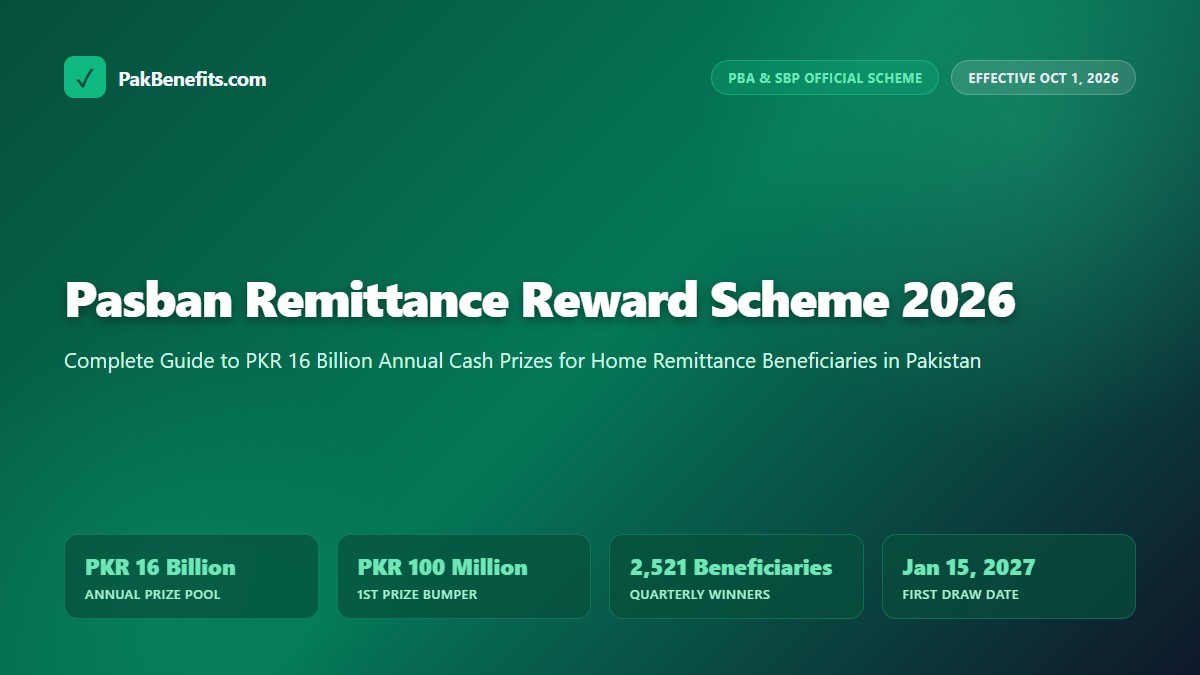
Pasban Remittance Reward Scheme 2026: Eligibility, PKR 16B Prizes & Draw Guide
Complete guide to the Pasban Remittance Reward Scheme (PRRS) launched by PBA & SBP. Learn eligibility requirements, USD 100 monthly threshold, PKR 16 Billion annual cash prize tiers, 1LINK token draws, and official winner check portals.
Read guide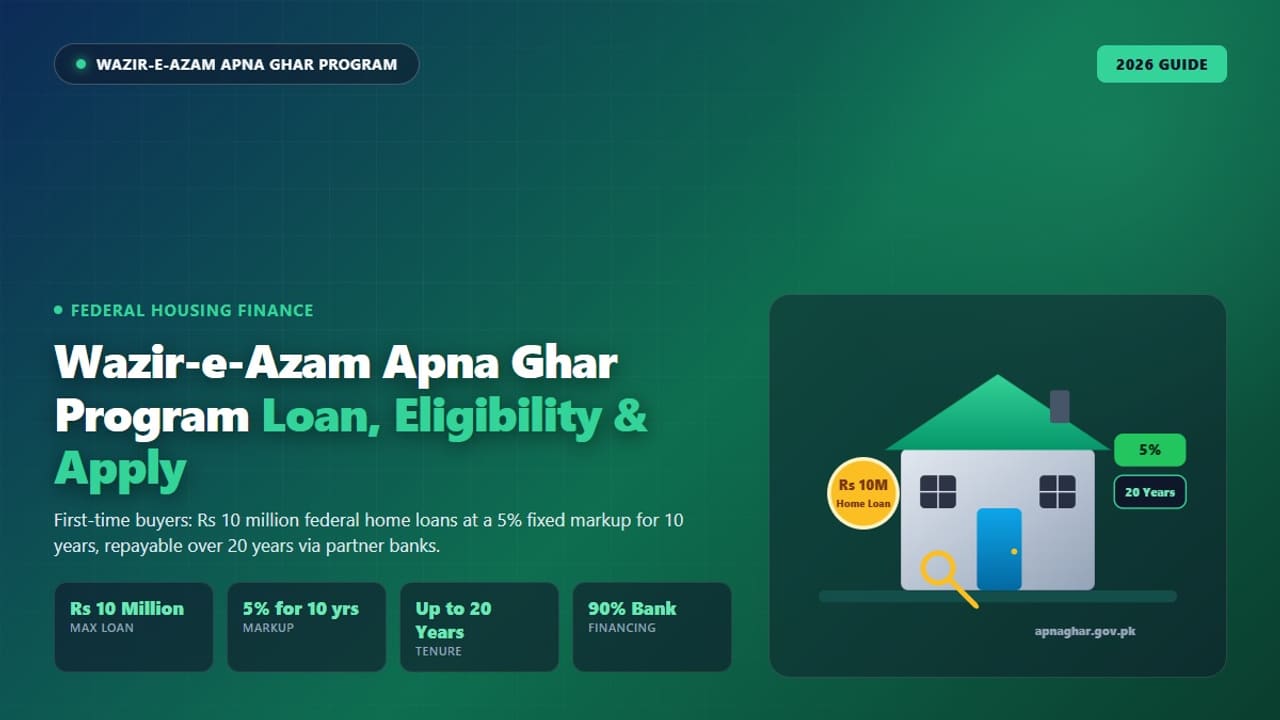
Apna Ghar Housing Scheme 2026: Online Application, Loan Limits & Eligibility Guide
The Apna Ghar Housing Scheme provides first-time Pakistani homeowners with low-cost housing finance up to PKR 10 million at a 5% subsidized markup rate for 10 years, repayable over 20 years. Learn eligibility rules and apply online via apnaghar.gov.pk or participating banks.
Read guide
Apni Chhat Apna Ghar Scheme Online Apply 2026: ACAG Portal Registration, Eligibility & Rs 15 Lakh Loan Guide
To apply online for the CM Punjab Apni Chhat Apna Ghar Scheme in 2026, register on the official government portal at acag.punjab.gov.pk using your 13-digit CNIC and mobile number, upload your land ownership documents (Fard/Registry for up to 5 Marla urban or 10 Marla rural plots), and complete your household socio-economic profile. Eligible citizens receive an interest-free construction loan of up to Rs. 15 Lakh with an installment of ~Rs. 14,000 over 7 years.
Read guide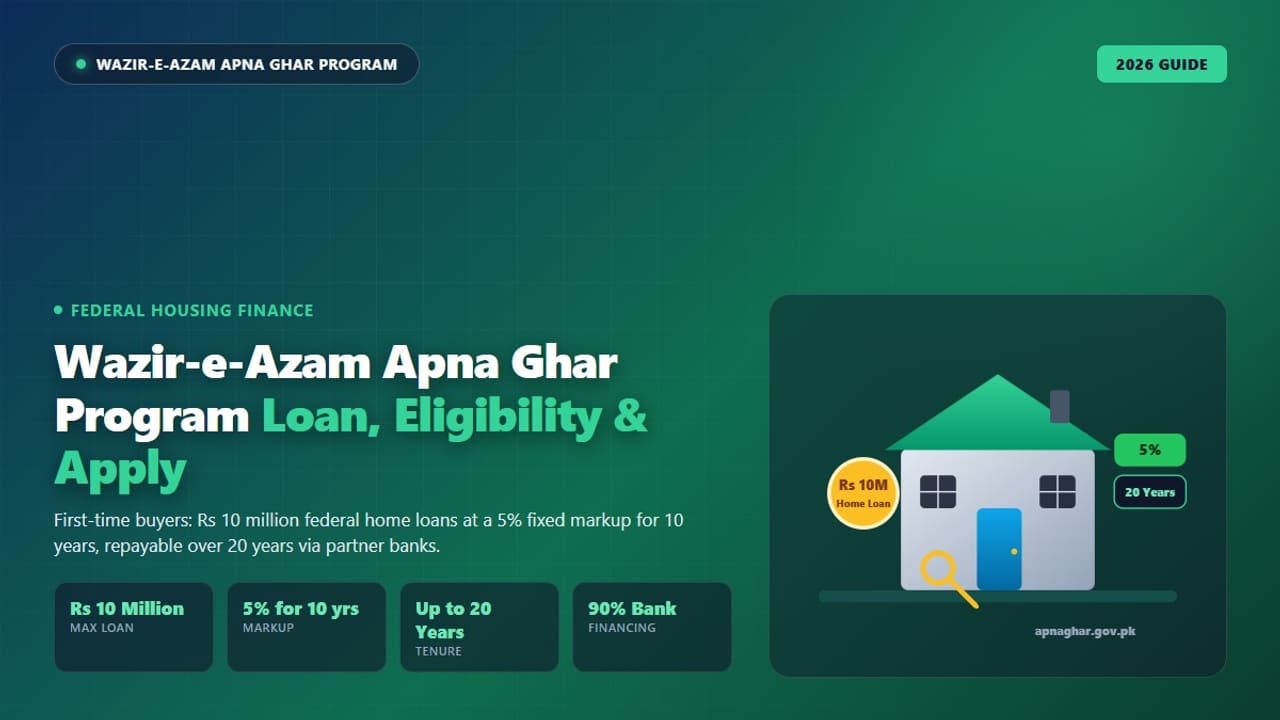
Housing & Welfare Schemes 2026: Complete Guide to Eligibility, Benefits & How to Apply
Housing & Welfare Schemes in 2026 provide low-income households with affordable public housing units, rental assistance vouchers, subsidized mortgage rates, and direct cash welfare transfers. Learn eligibility rules, required documents, and online application steps.
Read guide
Provincial & Regional Schemes: Complete List, Eligibility & Application Guide (2026)
Discover all 2026 Provincial & Regional Schemes across Punjab, Sindh, KP, and Balochistan. Learn eligibility rules, PSER CNIC online verification, and application steps.
Read guide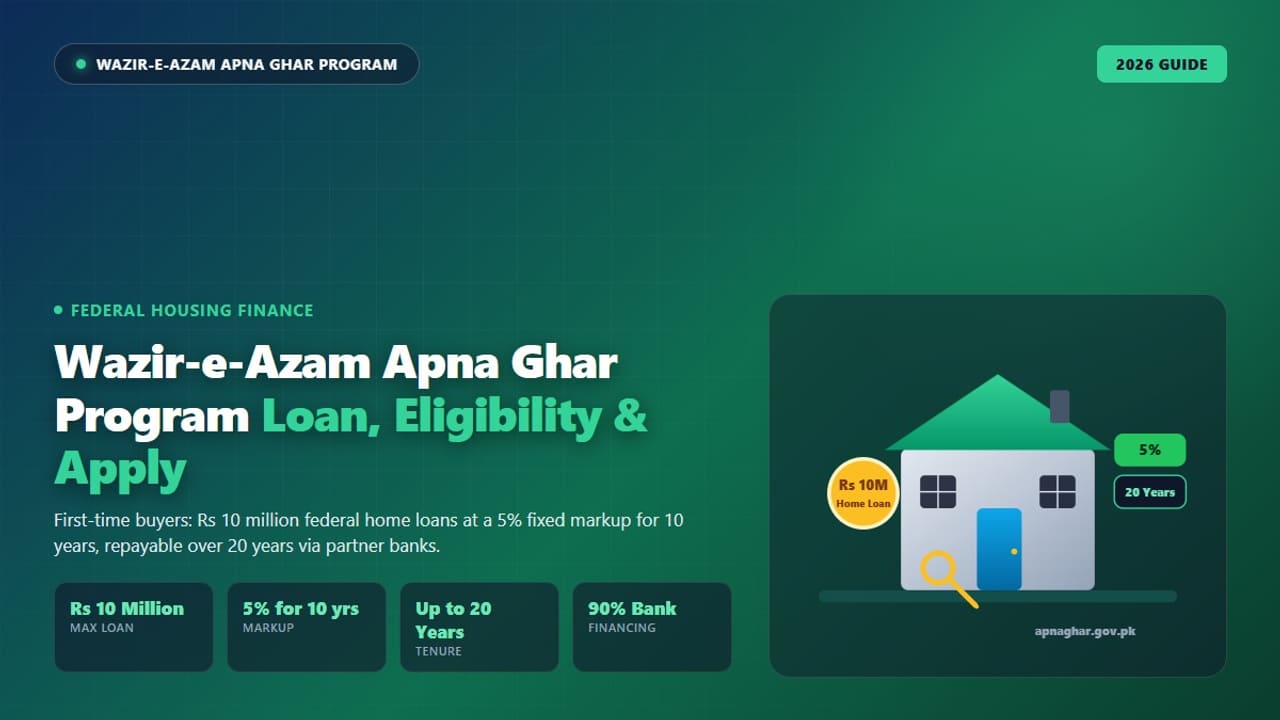
Housing & Social Cards (Punjab) 2026: Complete List, Eligibility & Online Apply Guide
Complete guide to Punjab Housing & Social Cards 2026 (Apni Chhat Apna Ghar, Himmat Card, Kisan Card, Mazdoor Card). Learn eligibility, PSER status check & online apply steps.
Read guide