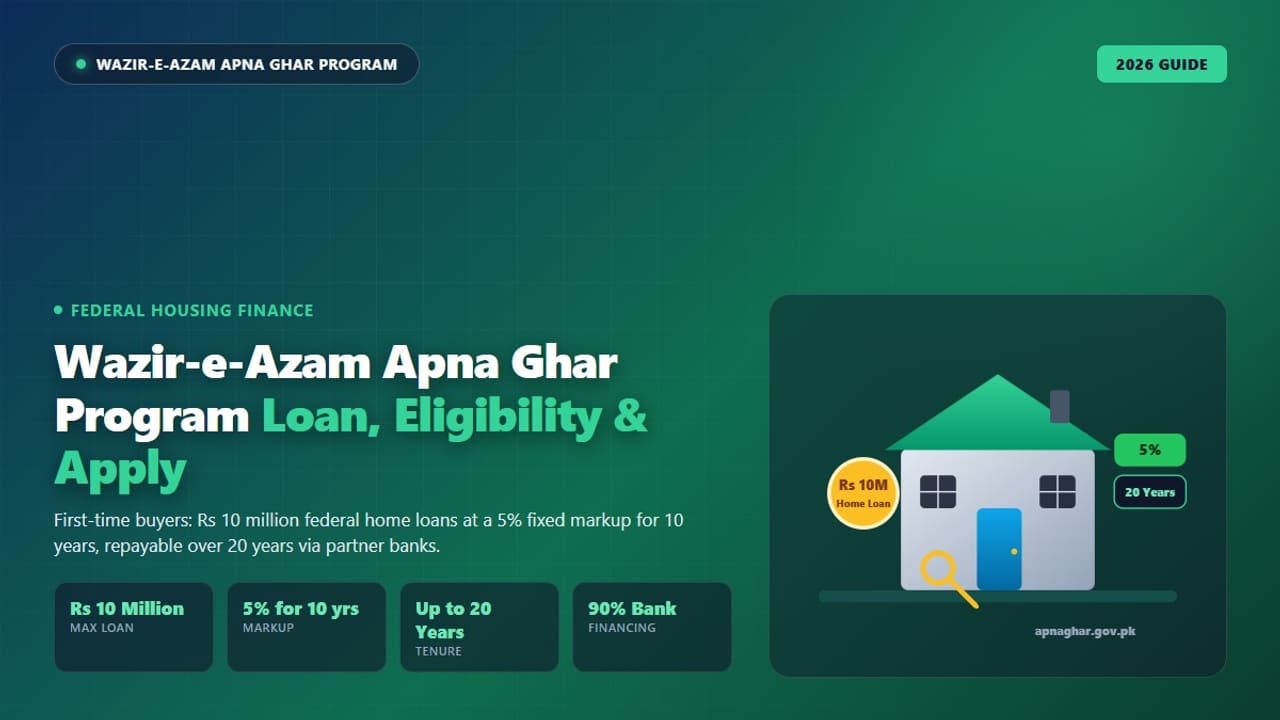
This article explains public information. It does not determine eligibility or replace an official notice.
What Are Housing & Welfare Schemes and How Do They Work?
Housing & Welfare Schemes are government-funded social protection initiatives designed to make safe shelter and essential living resources accessible to low- and middle-income households. In 2026, these initiatives provide financial rental assistance, public housing units, subsidized home loans, and direct cash transfers for eligible citizens whose household income falls below specified regional poverty benchmarks.
Key Differences Between Housing Subsidies and Direct Welfare Support
Housing Subsidies specifically target shelter costs by guaranteeing low-interest mortgage markups, building state-owned Public Housing units, or issuing tenant-based Housing Choice Vouchers. These housing-focused tools reduce monthly out-of-pocket rent and property purchase costs directly through institutional financial channels.
In contrast, general Social Welfare Programs provide direct Cash Transfers and unconditional family allowances to cover broader living expenses such as food, medical care, and child education. Both program models rely on official Income Verification audits to ensure assistance reaches qualifying low-income applicants.
Core Objectives of Government Social Protection Initiatives
Government social protection initiatives operate to eliminate systemic poverty, reduce urban housing deficits, and prevent homelessness among vulnerable demographics. As of 2026, national housing authorities and social safety departments allocate public funds to stabilize real estate markets and provide targeted safety nets.
By establishing clear Eligibility Criteria, public authorities ensure that state funding reduces financial vulnerability while fostering long-term family self-sufficiency.
Who Qualifies for Government Housing & Welfare Schemes in 2026?
Qualification for public welfare and housing relief is governed by strict means testing, household size metrics, and regional poverty indices.
Income Thresholds, Poverty Scores, and Asset Limits
Applicants must undergo rigorous Income Verification checks where gross household earning is measured against official Poverty Threshold / PMT Score standards or regional area median income benchmarks.
In 2026, households earning below designated poverty limits receive top-tier processing priority for subsidized housing allocations and monthly stipend disbursements. Furthermore, applicants must demonstrate that total liquid assets do not exceed statutory program limits.
Priority Qualification for Seniors, Widows, and Vulnerable Groups
Public welfare regulations mandate prioritized housing allocations and expedited financial aid for vulnerable population categories. Senior citizens, single mothers, widows, veterans, and individuals with certified physical disabilities receive special preference points during application scoring.
Welfare departments operate dedicated Facilitation Desks / Local Offices to assist vulnerable applicants in submitting their Required Documentation and accessing specialized relief funds without bureaucratic delay.
Major Types of Government Housing Assistance Programs
Public housing programs encompass a diverse range of financial and structural interventions designed to accommodate different income tiers.
Public Housing Units and Low-Cost Community Construction
Public Housing projects consist of state-owned residential complexes constructed specifically for low-income and working-class families. Local public housing authorities own and maintain these rental units, offering them to qualified residents at heavily reduced rental rates.
Under standard 2026 housing regulations, monthly tenant rent is capped at a fixed percentage—typically 30%—of the household's adjusted gross income, with government funds covering the remaining operational expenditure.
Housing Vouchers and Private Market Rental Subsidies
Housing Choice Vouchers (frequently referred to as Section 8 or tenant-based rent vouchers) permit qualifying low-income families to select and rent private market housing units.
Under this mechanism, the government housing agency pays the rental subsidy directly to the private landlord on behalf of the tenant. The tenant pays the remaining balance, known as the Tenant Contribution, which equals the difference between the actual landlord rent and the state-subsidized voucher amount.
Subsidized Home Loans and First-Time Buyer Mortgage Relief
To encourage homeownership among lower- and middle-income families, governments offer specialized mortgage relief programs featuring state-backed Mortgage Guarantee protections and interest markup subsidies.
Programs like First-Time Homebuyer Support allow eligible applicants to secure long-term home loans at fixed low-markup rates (often 3% to 5%) for up to 20 years. State guarantees minimize bank risk while enabling low-income buyers to purchase or construct homes up to designated square-footage limits.
Key Social Welfare Schemes Offering Direct Financial Support
In addition to shelter assistance, comprehensive social safety nets provide direct financial stipends to maintain household resilience.
Unconditional Cash Transfers and Family Allowance Grants
Unconditional Cash Transfers serve as a foundational pillar within national Social Welfare Programs, delivering direct quarterly or monthly financial stipends directly to eligible head-of-household bank accounts or digital wallets.
These cash grants empower socio-economically disadvantaged families to meet emergency basic needs, buy essential food items, and pay local utility bills without restrictive spending conditions.
Health, Nutrition, and Maternal Welfare Programs
Targeted welfare initiatives provide specialized conditional cash aid tied to specific health and educational achievements.
Maternal health and nutrition schemes disburse extra financial support to pregnant women and mothers of children under two years of age who attend regular medical checkups and receive vaccination services. These integrated health-welfare grants drastically lower infant malnutrition rates and improve maternal survival metrics across rural communities.
How to Apply for Housing & Welfare Schemes Step-by-Step
Prospective applicants must complete identity verification and document submission to enter the official approval queue.
Essential Documents for Identity and Income Verification
Before initiating an application, prospective beneficiaries must assemble a complete file of certified personal records. Obtaining full approval requires submitting all mandatory Required Documentation, including:
1. Valid biometric National Identity Card (CNIC / SSN) for all adult household members. 2. Official proof of income, salary slips, or a certified income declaration affidavit. 3. Utility bills (electricity, gas, or water) verifying current residential address. 4. Household Registration Certificate detailing family structure and dependents. 5. Bank account details (IBAN) for direct electronic transfer of approved stipends.
Navigating Online Portals and Local Facilitation Desks
Applicants can apply through two primary submission channels:
- Digital Registration: Access the official state Application Portal (such as apnaghar.gov.pk, hud.gov, or national welfare portals), create a verified user profile, complete the electronic form, and upload scanned documents. - In-Person Registration: Applicants lacking digital access or reliable internet connections can visit nearby Facilitation Desks / Local Offices. Trained staff perform biometric verification, enter applicant details into the central database, and issue a tracked application reference receipt.
2026 Housing & Welfare Schemes Comparison Matrix
The comparison table below outlines key parameters across primary housing and welfare channels:
| Scheme Category | Primary Benefit Provided | Target Beneficiary Group | 2026 Income / Eligibility Cap | Primary Application Channel |
|---|---|---|---|---|
| Public Housing | Low-rent government housing units | Low-income urban & rural families | Household income below 30-50% median index | Local Housing Authority Office |
| Housing Choice Vouchers | Rent subsidy paid to private landlords | Low-income renters & disabled citizens | Income below 50% regional median | State Housing Application Portal |
| Mortgage Subsidy | Subsidized home loan & markup relief | First-time home buyers & low/middle income | Verified house size & income ceiling | Partner Commercial Banks & Portals |
| Cash Welfare Grants | Direct quarterly financial stipend | Destitute households & widows | Verified Poverty Threshold / PMT Score | Biometric Welfare Centers |
| Maternal Welfare Aid | Conditional health & nutrition cash aid | Pregnant women & mothers of infants | Registered low-income welfare recipients | Local Public Health Centers |
How to Check Application Status and Resolve Common Disqualification Issues
Monitoring application status and rectifying data errors prevents unnecessary rejection.
Tracking Portal Status Updates and Appeal Procedures
Following submission, applicants can track their file progress online by logging into the designated state Application Portal and entering their national ID reference number. Application status displays as Under Verification, Approved, or Action Required.
If an application is rejected due to incomplete paperwork or incorrect data entry, applicants have a statutory 30-day window to file an official appeal or supply corrected documentation.
Rectifying Portal Errors and Updating Verification Data
Disqualifications frequently stem from outdated national ID records or unverified household income changes. To resolve data mismatches:
- Visit a local registration center to update expired biometric data or marital status changes. - Submit a fresh income re-evaluation request if household earning dropped below the eligible Poverty Threshold / PMT Score threshold. - Ensure that the registered mobile phone number matches the primary applicant's national ID to receive automated SMS verification alerts.
Frequently asked questions
What are Housing & Welfare Schemes?
Housing & Welfare Schemes are official government programs that provide low-income households with affordable rental housing, subsidized home financing, and direct cash assistance to support basic living needs.
Who qualifies for government housing assistance in 2026?
Eligibility depends primarily on total household income, family size, and asset ownership. Qualifying applicants must meet defined Eligibility Criteria and fall below regional poverty lines or median income thresholds.
How does a Housing Choice Voucher (Section 8) work?
A Housing Choice Voucher allows an eligible tenant to rent a private apartment while the government housing agency pays a major portion of the monthly rent directly to the landlord.
Can first-time home buyers get government mortgage subsidies?
Yes, programs offering First-Time Homebuyer Support provide state-backed interest rate markup subsidies, allowing eligible buyers to secure affordable long-term loans for purchasing or building a home.
How is household income verified for welfare schemes?
Government agencies perform automated Income Verification by checking applicant tax records, bank statements, social security files, and biometric database registries.
What documents are required when applying for housing schemes?
Applicants must provide their biometric national ID card, certified proof of income, recent utility bills, family registration certificates, and active bank account details.
How long does it take to get an application approved?
Online portal processing typically takes between 30 to 60 business days, depending on document verification speed and regional applicant volume.
What should I do if my housing scheme application is rejected?
If rejected, log into the official portal to review the specific denial reason, update any incorrect data, and file a formal appeal within 30 days.
Are there processing fees for government housing applications?
No, official government housing and welfare application processes are completely free of charge. Applicants should never pay private agents or unauthorized fee demands.
Where can I check my welfare application status online?
You can track your status by logging into the official state housing or social protection web portal using your registered national ID number.
Sources and official links
Check the destination address before entering personal information.
Muhammad Salman specializes in Pakistani public sector financing, youth entrepreneurship schemes, and government subsidy programmes, cross-referencing all data against official SBP circulars and ministry directives.
Related guides
Apna Ghar Housing Scheme 2026: Online Application, Loan Limits & Eligibility Guide
The Apna Ghar Housing Scheme provides first-time Pakistani homeowners with low-cost housing finance up to PKR 10 million at a 5% subsidized markup rate for 10 years, repayable over 20 years. Learn eligibility rules and apply online via apnaghar.gov.pk or participating banks.
Read guide
Wazir-e-Azam Apna Ghar Program 2026: Loan, Eligibility & How to Apply
The Wazir-e-Azam Apna Ghar Program (Ghar Ho Tu Apna) gives first-time buyers federal home loans up to Rs 10 million at a 5% fixed markup for the first 10 years, repayable over 20 years through partner banks. Apply online at apnaghar.gov.pk.
Read guide
Apni Chhat Apna Ghar Scheme Online Apply 2026: ACAG Portal Registration, Eligibility & Rs 15 Lakh Loan Guide
To apply online for the CM Punjab Apni Chhat Apna Ghar Scheme in 2026, register on the official government portal at acag.punjab.gov.pk using your 13-digit CNIC and mobile number, upload your land ownership documents (Fard/Registry for up to 5 Marla urban or 10 Marla rural plots), and complete your household socio-economic profile. Eligible citizens receive an interest-free construction loan of up to Rs. 15 Lakh with an installment of ~Rs. 14,000 over 7 years.
Read guide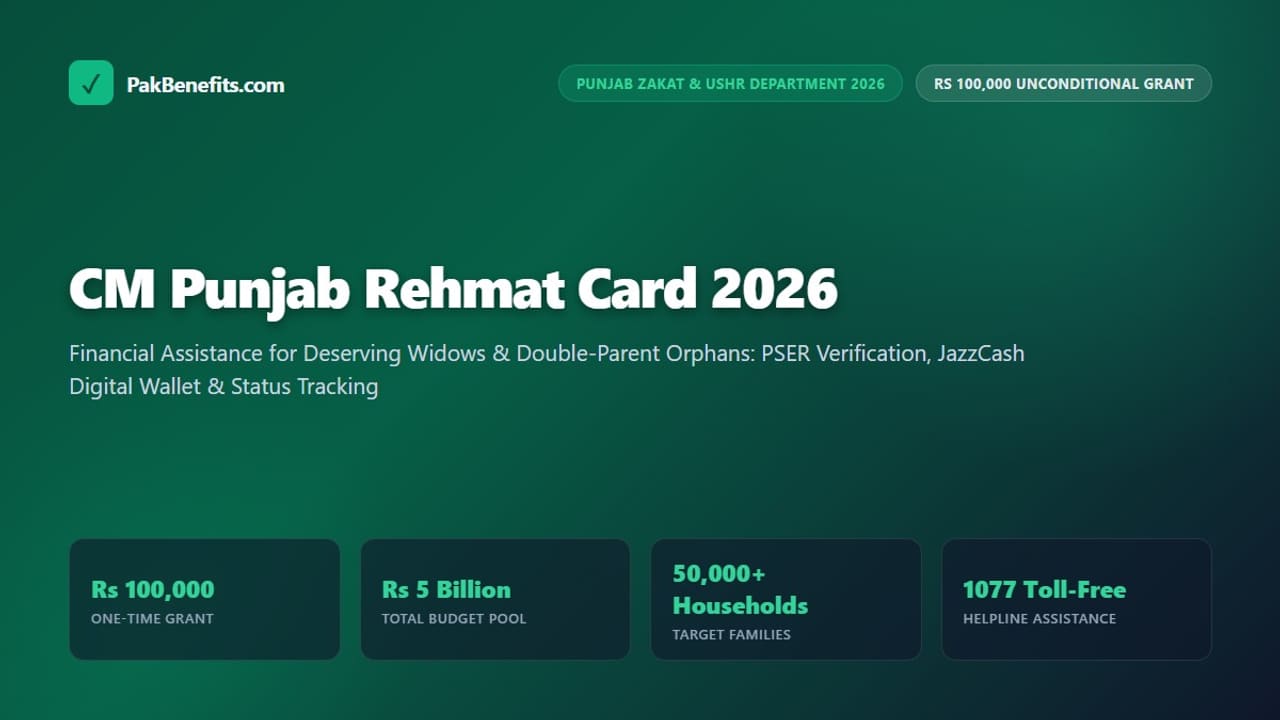
CM Punjab Rehmat Card 2026: Online Registration, Eligibility & Status Check
The CM Punjab Rehmat Card 2026 provides Rs. 100,000 financial aid to eligible widows and parentless orphans across Punjab. Learn eligibility criteria, required documents, online application steps at rahmatcard.punjab.gov.pk, and status tracking via CNIC or 1077 helpline.
Read guide
Provincial & Regional Schemes: Complete List, Eligibility & Application Guide (2026)
Discover all 2026 Provincial & Regional Schemes across Punjab, Sindh, KP, and Balochistan. Learn eligibility rules, PSER CNIC online verification, and application steps.
Read guide