This article explains public information. It does not determine eligibility or replace an official notice.
What Are the Latest BISP and PSER Updates for 2026?
Significant operational updates have taken effect across Pakistan's federal and provincial social safety net infrastructure in 2026. The Benazir Income Support Programme (BISP) officially adjusted its quarterly Kafaalat cash transfer from Rs 10,500 to Rs 13,500 per eligible household. This payment increase addresses rising living expenses for vulnerable families across all four provinces, Azad Jammu & Kashmir, and Gilgit-Baltistan.
Simultaneously, the Government of Punjab, under the direction of Chief Minister Maryam Nawaz Sharif, expanded the Punjab Socio-Economic Registry (PSER). Developed by the Punjab Information Technology Board (PITB), PSER acts as a single-window digital database that logs detailed household socio-economic profiles. Unlike one-off registration forms, PSER data now serves as the mandatory screening criterion for all major Punjab provincial welfare programs, ranging from agricultural input subsidies to clean energy initiatives.
To ensure uninterrupted financial aid, households must maintain active status in both registries. While BISP relies on the National Socio-Economic Registry (NSER) Dynamic Survey managed at local Tehsil registration offices, PSER allows self-service online registration via pser.punjab.gov.pk.
What Is the Punjab Socio-Economic Registry (PSER) and How Does It Connect to BISP?
The Punjab Socio-Economic Registry (PSER) is a provincial digital repository established to record the income, assets, housing conditions, and family composition of households across Punjab. Operated by PITB in coordination with district administrative authorities, PSER eliminates duplicate welfare applicants and ensures targeted subsidy distribution.
Although PSER functions as a Punjab-specific database and BISP operates as a federal cash transfer program, the two systems cross-validate citizen records using the National Database and Registration Authority (NADRA) database. Both registries rely on 13-digit Computerized National Identity Card (CNIC) numbers and Form-B child registration records to determine household vulnerability.
| System Feature | Benazir Income Support Programme (BISP) | Punjab Socio-Economic Registry (PSER) |
|---|---|---|
| Jurisdiction & Scope | Federal (All Provinces & Territories) | Provincial (Punjab Residents Only) |
| Primary Portal | 8171.bisp.gov.pk / SMS 8171 | pser.punjab.gov.pk |
| Managing Authority | BISP Board & Federal Ministry of Poverty Alleviation | Government of Punjab & PITB |
| Primary Stipend / Benefit | Rs 13,500 Unconditional Quarterly Cash Grant | Targeted Provincial Subsidies & Loans |
| Survey Mechanism | In-Person NSER Dynamic Survey at Tehsil Offices | Online Self-Registration & e-Khidmat Centers |
| Key Qualifying Indicator | PMT Score Cutoff ≤ 32 | Verified Household Socio-Economic Profile |
How to Complete PSER Online Registration on pser.punjab.gov.pk?
Citizens residing in Punjab can complete their PSER socio-economic profiling online without visiting government offices. The self-registration portal is accessible through desktop computers and mobile browsers.
Step 1: Account Creation & Mobile OTP Verification
Visit the official portal at pser.punjab.gov.pk and select Register New Account. Enter the full legal name of the household head, valid 13-digit Computerized National Identity Card (CNIC) number, active mobile phone number, and district of residence. The system generates a one-time password (OTP) via SMS to verify ownership of the mobile number. Upon successful verification, log in using your CNIC and secure password.
Step 2: Entering Household, Monthly Income, and Utility Details
Once logged in, fill out the comprehensive socio-economic survey form divided into family profile, housing facilities, utility consumption, and income/asset declaration.
- Family Profile: Enter CNIC numbers of adult family members and NADRA Form-B numbers for minor children.
- Housing & Facilities: Record housing ownership (owned, rented, shared), structural type, and water supply sources.
- Utility Consumption: Input electricity consumer reference ID and monthly gas bill account details.
- Income & Agricultural Assets: Declare total monthly income, employment status, land holding acreage, and registered vehicles.
Step 3: Document Upload and Final Submission
Upload clear scanned copies or photographs of essential documents, including the applicant's CNIC (front and back), recent electricity or gas bills, and agricultural land title documents (if applicable). Review all entered details for accuracy, accept the legal declaration confirming data truthfulness, and submit the application. The system provides a unique PSER Registration Tracking ID via SMS for future query tracking.
How to Check BISP 8171 Payment Status Online by CNIC?
Beneficiaries expecting the quarterly BISP Kafaalat payment can check their payment status online using the official 8171 web portal. This eliminates the need to stand in long queues at bank distribution sites or retail partner counters.
Checking BISP Kafaalat Rs 13,500 Disbursement Online
To check your account balance and payment release status: navigate to 8171.bisp.gov.pk, enter your 13-digit CNIC number, type the 4-digit security captcha code, and click Submit to view your payment status.
SMS 8171 Verification vs. Online Web Portal Inspection
In addition to the web portal, BISP operates an official 8171 SMS service. Citizens can send their 13-digit CNIC number via SMS to 8171 from their registered mobile SIM. The automated gateway replies with eligibility details and payment status within minutes.
Note that sending an SMS incurs standard cellular carrier charges, whereas checking via 8171.bisp.gov.pk is completely free. Beware of fraudulent SMS messages originating from private 11-digit mobile numbers; BISP sends official updates exclusively through shortcode 8171.
Who Is Eligible for BISP and PSER Welfare Schemes in 2026?
Eligibility across both federal cash programs and provincial welfare schemes is strictly determined by objective socio-economic thresholds rather than manual discretionary approvals.
PMT Score Thresholds and Income Cutoffs
The National Socio-Economic Registry (NSER) calculates a Proxy Means Test (PMT) score ranging from 0 to 100 for every surveyed household.
BISP Kafaalat requires a verified household PMT score of 32 or lower. Households earning a cumulative monthly income exceeding Rs 45,000, government employees, tax filers, or individuals possessing foreign travel histories are automatically excluded.
Key Punjab Government Schemes Linked Directly to PSER
Registration in the Punjab Socio-Economic Registry (PSER) is a mandatory prerequisite for accessing Punjab state initiatives:
- CM Punjab Solar Panel Scheme: Distributes complete off-grid solar systems to low-consumption electricity consumers.
- Kisan Card Program: Provides interest-free agricultural production loans up to Rs 150,000 per crop season.
- Himmat Card Scheme: Grants quarterly stipends of Rs 10,500 to certified Persons with Disabilities (PWDs).
- Honhaar Scholarship Program: Covers full tuition fees for high-achieving undergraduate students from low-income families.
- Apni Chhat Apna Ghar Housing Loan: Provides interest-free housing construction loans up to Rs 1.5 million.
BISP NSER Dynamic Survey vs. Punjab PSER Registration: Key Differences
To help citizens navigate federal and provincial registration processes, the table below highlights the operational differences between the BISP NSER Dynamic Survey and the Punjab PSER Registration system.
| Operational Feature | BISP NSER Dynamic Survey | Punjab PSER Registration |
|---|---|---|
| Primary Objective | Identify low-income families for federal cash stipends (Rs 13,500) | Profile Punjab citizens for multi-sector provincial welfare programs |
| Registration Channel | Physical visit to BISP Tehsil Offices | Online portal (pser.punjab.gov.pk) or e-Khidmat Markaz |
| Target Beneficiary | Female head of the household | Head of household (Male or Female resident of Punjab) |
| Required Verification | Live biometric capture & NADRA family tree audit | CNIC, Form-B, and uploaded utility bill verification |
| Validity Period | Valid for 3 years (dynamic re-survey required after 36 months) | Continuous profile update as financial conditions change |
| Disbursal Method | Biometric bank retail agents (HBL / Bank Alfalah) | Direct bank transfer, specialized portal cards, or physical assets |
How to Update BISP Dynamic Survey at Local Tehsil Offices?
If your BISP account is marked as invalid, expired, or if your PMT score requires re-assessment, you must complete an in-person Dynamic Survey. BISP operates dedicated registration centers across every Tehsil in Pakistan.
- Gather Documentation: Bring your original valid CNIC, original NADRA Form-B for minor children, and recent utility bills.
- Visit BISP Tehsil Center: Arrive during working hours (Monday through Friday, 8:00 AM to 3:00 PM).
- Token Issuance: Obtain a survey entry token at the reception desk.
- Data Entry & Survey Interview: Present your documents to the data entry operator.
- Biometric & SMS Confirmation: Provide live fingerprint scans and confirm your registered mobile number.
Troubleshooting BISP & PSER Registration Errors
Applicants frequently encounter technical glitches or portal errors when attempting to verify status or collect payments.
Resolving 'NSER / PSER Record Not Found' Status
Receiving an 'Information Not Found' notice indicates that your household has never undergone an NSER/PSER survey or that your previous record has expired after 3 years. Visit the nearest BISP Tehsil Office with your original CNIC and family Form-B to complete a fresh Dynamic Survey.
Fixing Biometric Fingerprint Verification Failures at Cash Points
Biometric mismatch is a frequent issue faced by elderly beneficiaries and manual laborers at HBL E-Connect or Bank Alfalah retail agents. Clean your fingers thoroughly before placing them on the scanner. If persistent, visit a NADRA Registration Center to update your biometric profile or submit a formal Biometric Exemption Application at the BISP Tehsil Office.
Frequently asked questions
What is the updated BISP Kafaalat payment amount for 2026?
The updated BISP Kafaalat payment amount for 2026 is Rs 13,500 per quarter. This updated stipend is disbursed to eligible female beneficiaries who meet the PMT score criteria of 32 or lower through designated partner bank retail counters.
How can I check my PSER online registration status by CNIC?
You can check your PSER online registration status by logging into the official Punjab Socio-Economic Registry portal at pser.punjab.gov.pk using your registered CNIC and password. The dashboard displays your application submission status, verification stage, and eligibility for Punjab welfare schemes.
Is PSER registration mandatory for Punjab residents?
Yes, PSER registration is mandatory for Punjab residents who wish to apply for provincial government subsidy programs and welfare initiatives. Initiatives such as the CM Solar Panel Scheme, Kisan Card, Himmat Card, and Honhaar Scholarship select beneficiaries strictly from verified PSER database records.
What is the official website for checking BISP eligibility?
The official website for checking BISP eligibility and payment status is 8171.bisp.gov.pk. Users can enter their 13-digit CNIC number and captcha code to view real-time payment release records and eligibility status without any fees.
How much does it cost to register for PSER or BISP Dynamic Survey?
Registration for both PSER and BISP Dynamic Survey is completely free of charge. Neither the federal government nor the Punjab provincial government charges any fees for account creation, dynamic survey interviews, or payment verification. Report any agent demanding money to the BISP helpline at 0800-26477.
What documents are required for PSER online registration?
The documents required for PSER online registration include the original CNIC of the household head, NADRA Form-B numbers for minor children, recent electricity and gas utility bills, and proof of agricultural land holding (if applicable). Clear digital copies or photos of these documents must be uploaded during registration.
Can a household receive both BISP and Punjab PSER benefits?
Yes, a household can receive both BISP cash stipends and Punjab PSER benefits provided they meet the eligibility criteria for each program. BISP provides federal cash assistance based on NSER PMT scores, while PSER enables access to Punjab provincial asset subsidies and specialized credit cards.
What should I do if my BISP payment is blocked or on hold?
If your BISP payment is blocked or put on hold, visit your local BISP Tehsil Office to update your household Dynamic Survey. Payments are typically paused when household records exceed 3 years without re-verification, or when NADRA updates reveal changes in family marital or financial status.
How long does it take to process PSER registration applications?
PSER registration applications are typically processed within 15 to 30 working days following online submission. The Punjab Information Technology Board (PITB) cross-verifies submitted utility and asset data against NADRA and utility company databases before approving eligibility.
What is the PMT score limit for BISP Kafaalat eligibility in 2026?
The PMT score limit for BISP Kafaalat eligibility in 2026 is 32. Households with a Proxy Means Test score equal to or less than 32 qualify for the quarterly cash stipend of Rs 13,500, while special quotas for disabled citizens permit scores up to 37.
Sources and official links
Check the destination address before entering personal information.
Muhammad Salman specializes in Pakistani public sector financing, youth entrepreneurship schemes, and government subsidy programmes, cross-referencing all data against official SBP circulars and ministry directives.
Related guides
BISP Benazir Kafaalat 2026: 8171 Online CNIC Check & Complete Eligibility Guide
Complete 2026 step-by-step guide to check BISP Benazir Kafaalat payment status online by CNIC via the 8171 web portal. Learn PMT score cutoffs, NSER dynamic survey registration, Rs 13,500 quarterly stipend updates, and digital wallet payment methods.
Read guide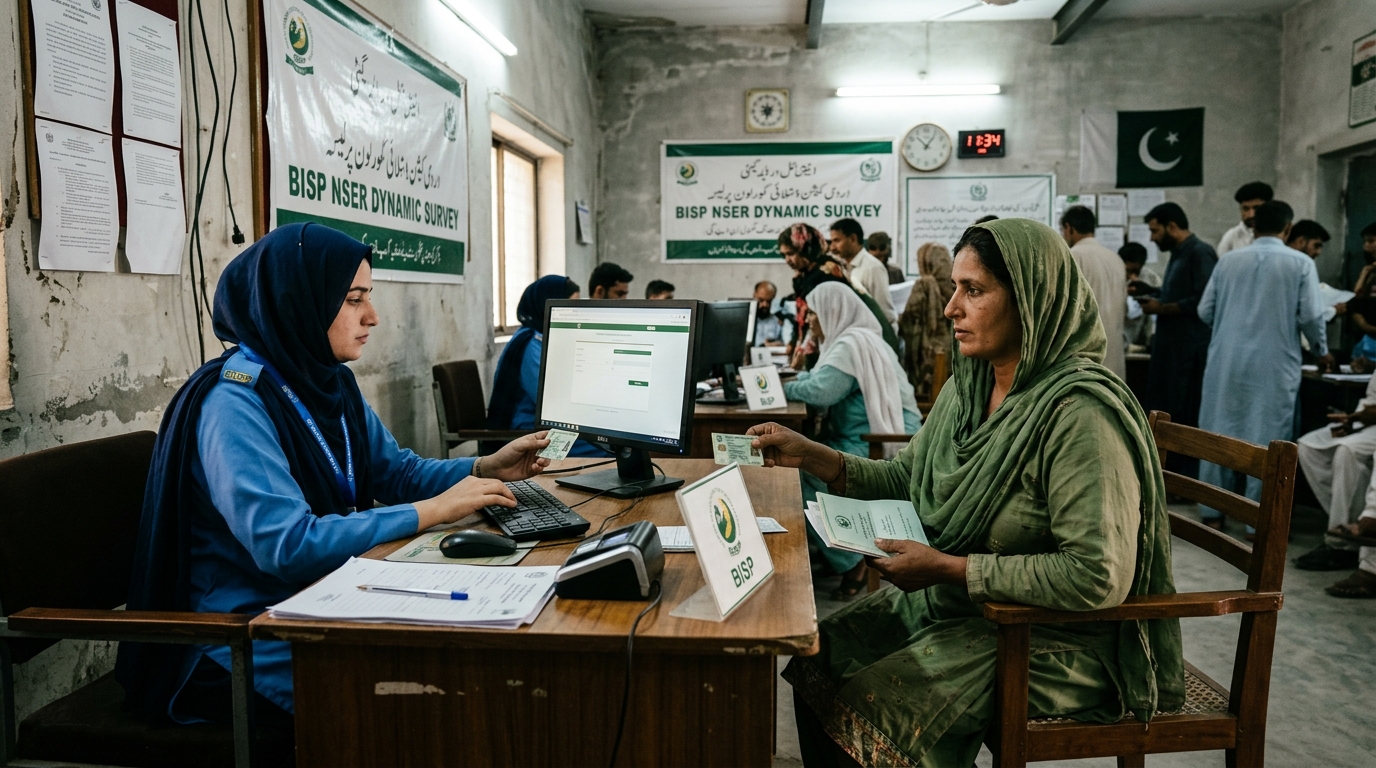
PMT Score Above 32 BISP Re-Survey Guide: Official Procedure to Challenge Poverty Score and Re-Register (2026)
If your BISP PMT score is above 32, your household is classified as financially ineligible for Benazir Kafaalat cash transfers. While you cannot manually edit the score number online, you can legally trigger an NSER dynamic re-survey at your local BISP Tehsil Office if your financial circumstances worsened or your household survey is over two years old.
Read guide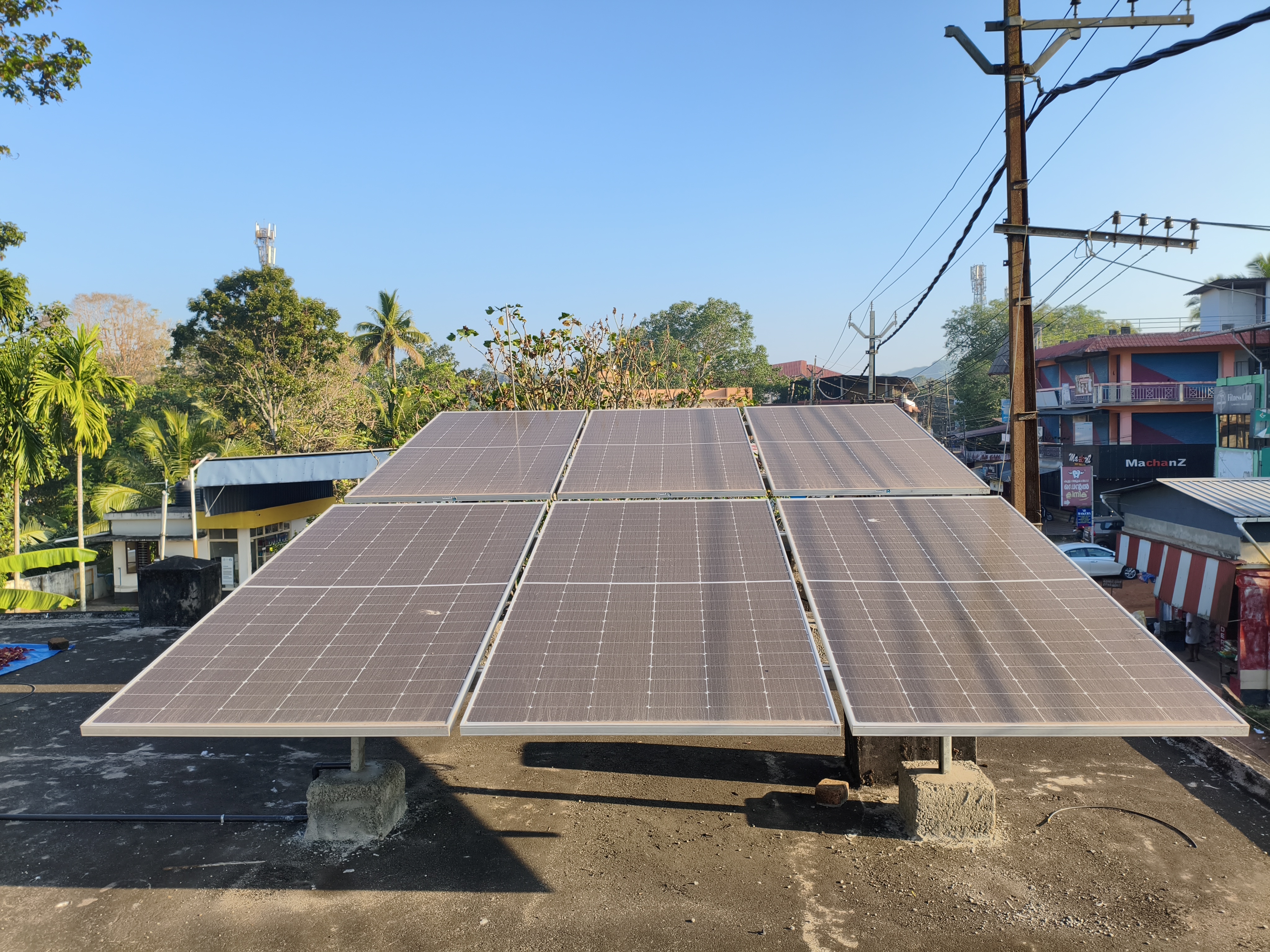
CM Punjab Solar Panel Scheme 2026 Online Apply: Roshan Gharana Registration, 8800 SMS & Balloting List
To apply for the CM Punjab Solar Panel Scheme 2026 online, protected electricity consumers in Punjab must submit their 14-digit bill reference number and CNIC via the official portal (cmsolarscheme.punjab.gov.pk) or by sending an SMS to 8800. The Punjab government provides 100% free complete solar kits (550W to 1,100W) to households consuming under 200 monthly units through transparent PITB computerized e-balloting.
Read guide