This article explains public information. It does not determine eligibility or replace an official notice.
What Is the Total Outlay and Structure of PSDP 2026–27?
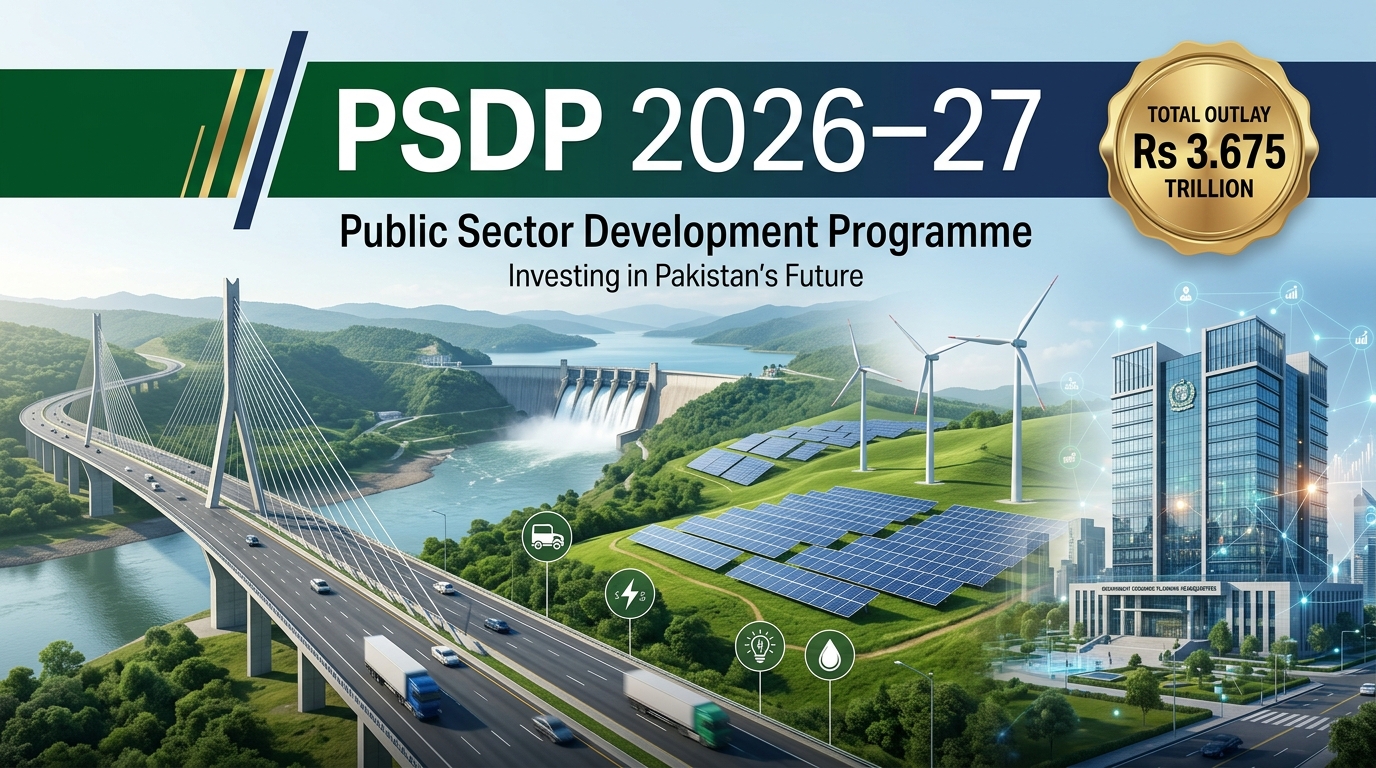
The National Economic Council (NEC) approved a total National Development Outlay of Rs 3,675 billion for Fiscal Year 2026–27 to drive national infrastructure, economic stabilization, and regional development across Pakistan.
Within the Rs 1,000 billion Federal PSDP allocation, Rs 682.485 billion funds federal ministries and divisions, while Rs 312.515 billion supports major state-owned corporate entities like the National Highway Authority (NHA) and power utilities. An additional Rs 4 billion covers project liabilities, and Rs 1 billion initiates special CPEC 2.0 projects.
To inspect official document releases, citizens can reference the published schedules on the Ministry of Planning, Development and Special Initiatives portal.
| Budget Development Component | Approved Outlay (FY 2026–27) | Share of Total Outlay (%) | Primary Operational Focus |
|---|---|---|---|
| Federal PSDP | Rs 1,000 billion | 27.2% | Federal ministries, strategic infrastructure & CPEC 2.0 |
| Provincial ADPs | Rs 2,224 billion | 60.5% | Provincial public works, healthcare, education & local roads |
| State-Owned Enterprises (SOEs) | Rs 451 billion | 12.3% | Off-budget self-financed corporate utility projects |
| Total National Outlay | Rs 3,675 billion | 100.0% | Comprehensive national capital investment program |
How Does PSDP 2026–27 Align with the 5Es Strategy and URAAN Pakistan?
The PSDP 2026–27 framework directly operationalizes the government’s URAAN Pakistan economic transformation blueprint and the 13th Five Year Plan through the targeted 5Es strategy.
The 5Es framework establishes five strategic pillars designed to solve structural economic bottlenecks while maintaining strict fiscal discipline:
By aligning every project approval with these five pillars, the Planning Commission ensures public capital spending creates measurable economic returns rather than unviable fiscal assets.
- Exports: Accelerating industrial productivity, export processing zones, and technological competitiveness.
- E-Pakistan: Digitizing public services, expanding IT infrastructure, and enhancing youth tech skills.
- Environment: Funding climate-resilient water storage, flood mitigation, and clean energy transitions.
- Energy & Infrastructure: Building power transmission lines and expanding multi-modal transport highways.
- Equity & Empowerment: Investing in human capital development, special geographic regions (AJK and Gilgit-Baltistan), and targeted social protection.
Which Sectors and Ministries Received the Highest PSDP Allocations?
The transport infrastructure and water management sectors secured the largest funding allocations under the Federal PSDP 2026–27 to address critical energy and logistics constraints.
These allocations ensure that strategic physical assets receive sustained funding, preserving trade logistics across northern and southern corridors.
- National Highway Authority (NHA): Received the single largest corporate allocation of Rs 224.5 billion to complete motorways, national highways, and trade corridors.
- Water Resources Division: Earmarked Rs 103 billion overall, with Rs 74.92 billion specifically dedicated to 35 core water conservation, dam construction, and flood protection projects.
- Gwadar Infrastructure Projects: Allocated over Rs 14.2 billion for the M-8 corridor (Hoshab–Awaran–Khuzdar), New Gwadar International Airport operationalization, and municipal water infrastructure.
- Karakoram Highway (KKH) Relocation: Designated Rs 5 billion for the 102-km Thakot–Raikot section relocation to safeguard vital international trade arteries.
- Cabinet Division & Special Areas: Granted Rs 30 billion for local community schemes alongside Rs 22.15 billion for Azad Jammu & Kashmir (AJK) and Gilgit-Baltistan (GB).
Why Did the Government Prioritize Ongoing Schemes Over New Projects?
The federal government imposed strict caps on new development schemes during FY 2026–27 to prevent the accumulation of unsustainable throw-forward project liabilities.
Faced with ministerial demands exceeding Rs 4.1 trillion against a capped Rs 1,000 billion federal budget, the Ministry of Planning established clear entry criteria for new proposals:
This disciplined approach reduces project gestation periods and prevents cost overruns caused by delayed fund dispersion across thousands of underfunded schemes.
- Ongoing Project Priority: More than 85% of total PSDP funds are reserved for near-completion projects to ensure fast completion.
- Restriction on Unapproved Schemes: Unapproved local projects without secured funding lines were excluded from the main development portfolio.
- Exceptions for Critical Needs: New project inclusions were strictly restricted to national security initiatives, emergency disaster recovery, and foreign-funded commitments.
What Is the First Quarter (Q1) Fund Release and Utilization Status?
During the first quarter (July–September 2026) of FY 2026–27, the federal government authorized Rs 220.72 billion in development funds, representing approximately 22% of the annual Federal PSDP allocation.
The low early utilization rate reflects initial procurement and verification cycles standard in public sector execution, with spending expected to accelerate sharply in Q2 and Q3.
- Total Funds Authorized: Rs 220.721 billion authorized by the Planning Commission (Rs 187.5 billion for ministries, Rs 33.216 billion for corporations).
- Actual Q1 Utilization: Total actual expenditure reached Rs 61.320 billion (6.13% of the total annual budget).
- Top Authorized Ministry: The Water Resources Division received the largest Q1 authorization of Rs 86.517 billion to maintain summer construction momentum on major dams.
PSDP 2026–27 vs Previous Fiscal Cycles: Key Shifts & Information-Gain Matrix
The FY 2026–27 PSDP shifts national development strategy from broad political scheme expansion toward focused asset completion and climate resilience.
This comparative matrix highlights Pakistan's policy pivot toward completing mega-infrastructure and water security assets before launching new unbudgeted initiatives.
| Strategic Metric | FY 2025–26 Cycle | FY 2026–27 Cycle | Key Structural Shift |
|---|---|---|---|
| Federal PSDP Cap | Rs 1,100 billion | Rs 1,000 billion | Strategic consolidation to control fiscal deficits |
| Provincial ADPs | Rs 2,095 billion | Rs 2,224 billion | Increased provincial share under 18th Amendment framework |
| SOE Self-Financed Outlay | Rs 380 billion | Rs 451 billion | Greater reliance on corporate off-budget capital expansion |
| New Project Inclusion Rule | Broad discretionary entries | Restricted to defense & foreign funding | Elimination of unfunded project throw-forward backlog |
| Strategic Policy Anchor | General Economic Framework | URAAN Pakistan & 5Es Strategy | Strict alignment with measurable sector benchmark targets |
Frequently asked questions
What is the total federal PSDP allocation for FY 2026–27?
The total federal PSDP allocation for Fiscal Year 2026–27 is Rs 1,000 billion. This forms part of the broader Rs 3,675 billion National Development Outlay approved by the National Economic Council.
Who approves the Public Sector Development Programme in Pakistan?
The National Economic Council (NEC), chaired by the Prime Minister of Pakistan and comprising provincial Chief Ministers and federal ministers, formally approves the PSDP.
Which sector received the highest corporate funding in PSDP 2026–27?
The National Highway Authority (NHA) received the highest corporate allocation of Rs 224.5 billion under the corporate development budget block for road and motorway networks.
What are the 5Es included in the PSDP 2026–27 strategic framework?
The 5Es framework consists of Exports, E-Pakistan, Environment, Energy & Infrastructure, and Equity & Empowerment.
How much money was authorized during Q1 (July–September 2026) of PSDP 2026–27?
The Planning Commission authorized Rs 220.721 billion (22% of the federal allocation) during the first quarter of FY 2026–27.
Why are new development projects limited in the PSDP 2026–27 budget?
New projects are restricted to prevent cost overruns and curb throw-forward liabilities, ensuring ongoing high-priority projects receive adequate funding to reach completion.
How much budget is allocated for provincial development programs (ADPs) in 2026–27?
Provincial Annual Development Programs (ADPs) have been allocated a total outlay of Rs 2,224 billion across all four provinces for local public development.
What is the role of the Planning Commission in PSDP fund releases?
The Planning Commission, under the Ministry of Planning, authorizes quarterly releases, monitors project execution, and conducts performance audits on public spending.
Are foreign-funded development projects included in PSDP 2026–27?
Yes, foreign-funded development projects are prioritized and granted exceptions under the new project entry criteria to ensure international commitment compliance.
Where can citizens download the official PSDP 2026–27 budget document?
Citizens can view and download the complete PSDP 2026–27 allocation document on the official website of the Ministry of Planning, Development and Special Initiatives (pc.gov.pk).
Sources and official links
Check the destination address before entering personal information.
Muhammad Salman specializes in Pakistani public sector financing, youth entrepreneurship schemes, and government subsidy programmes, cross-referencing all data against official SBP circulars and ministry directives.
Ayesha reviews programme-eligibility and payment content for accuracy against BISP, NADRA NSER, and provincial notices, and flags any guide that needs an update after an official policy change.
Related guides
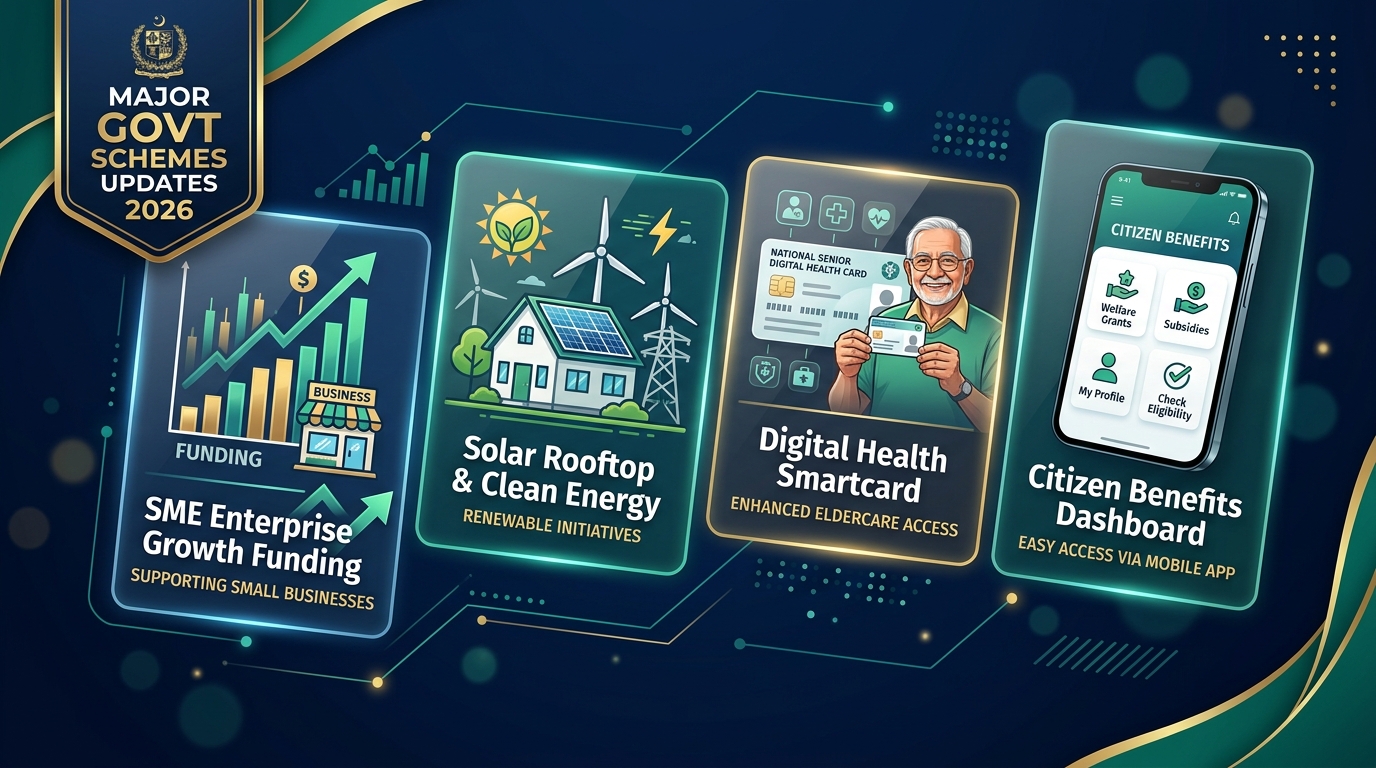
Major Government Schemes Updates (September/October 2026): Key Policy Changes, New Funds & Beneficiary Guidelines
Discover major government scheme updates for September/October 2026, including the ₹10,000 Cr SME Growth Fund, Ayushman Bharat 70+ Vay Vandana Card, BHAVYA Rasayan guidelines, PM-Kisan & PM Surya Ghar.
Read guide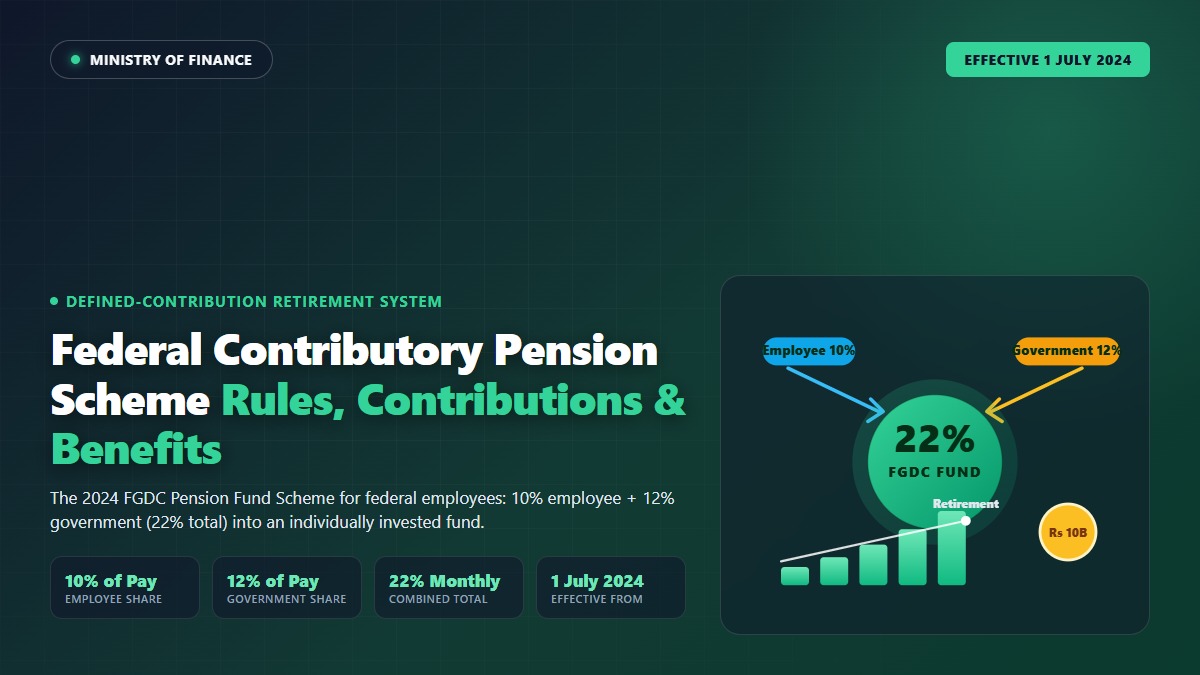
Federal Contributory Pension Scheme: FGDC Rules, Contributions & Benefits
Pakistan's Federal Contributory Pension Scheme (FGDC) covers federal employees hired after 1 July 2024. The employee contributes 10% and the government 12% (22% total) into an individually invested fund managed by licensed pension fund managers.
Read guide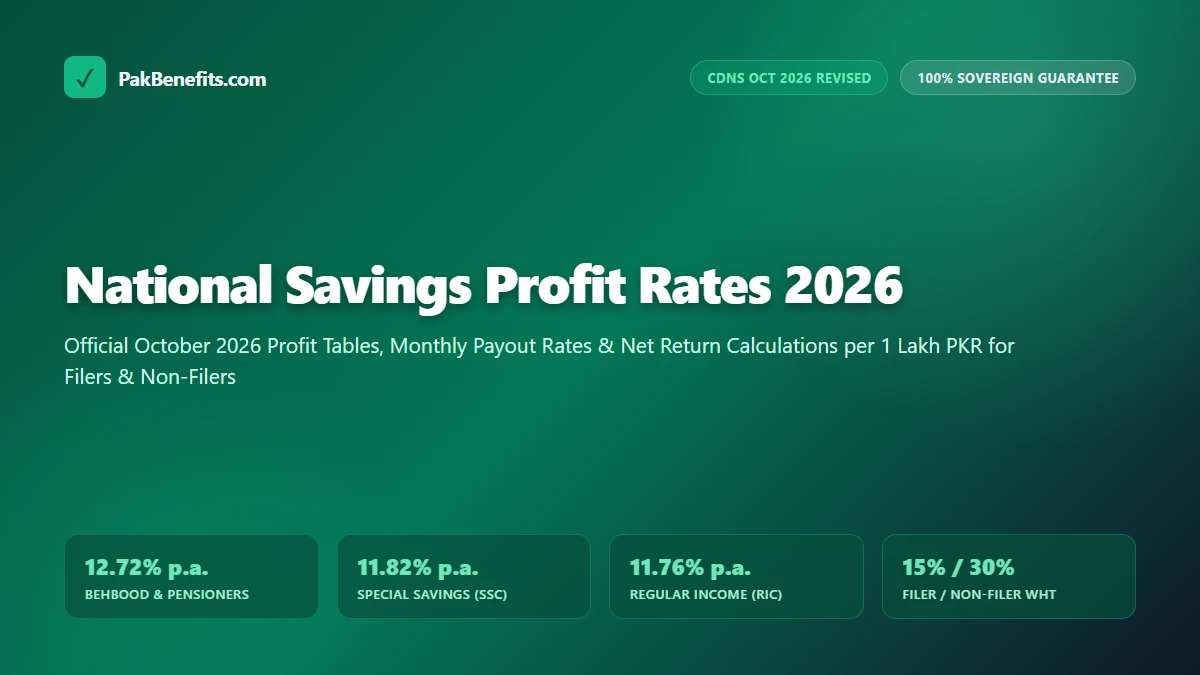
National Savings Profit Rates (Updated Oct 2026): Complete Profit Table, Tax Rates & Calculator
Check the latest National Savings profit rates effective Oct 1, 2026. View revised profit tables for Behbood, RIC, SSC, Defence & Sarwa Islamic schemes with net profit calculations for filers vs non-filers.
Read guide
BISP Benazir Kafaalat 2026: 8171 Online CNIC Check & Complete Eligibility Guide
Complete 2026 step-by-step guide to check BISP Benazir Kafaalat payment status online by CNIC via the 8171 web portal. Learn PMT score cutoffs, NSER dynamic survey registration, Rs 13,500 quarterly stipend updates, and digital wallet payment methods.
Read guide
Other Active Financial Support: Complete Grant Disclosure & Compliance Guide
Other active financial support refers to all financial, physical, and personnel resources—whether domestic or foreign, direct cash grants, in-kind contributions, or outside consulting—currently available to research personnel. Federal agencies like NIH and NSF require full disclosure of active support to prevent scientific overlap, double-budgeting, and effort overcommitment.
Read guide