This article explains public information. It does not determine eligibility or replace an official notice.
What is the Apna Ghar Social Welfare Initiative?
Apna Ghar social welfare represents a unified ecosystem of charitable facilities and public welfare programs designed to eliminate homelessness, protect destitute individuals, and expand affordable housing access. As of 2026, these initiatives operate across multiple tiers, combining non-governmental social work with institutional Social Welfare Department safety nets to deliver comprehensive social protection.
It is important to distinguish between non-profit humanitarian shelter homes and government-backed housing finance schemes. While non-profit welfare societies offer immediate residential care, food, and medical rehabilitation, government projects like the Wazir-e-Azam Apna Ghar Program and provincial loan schemes provide financial pathways to permanent homeownership.
How Private Welfare Organizations Power Apna Ghar Projects
Private foundations and registered welfare societies form the frontline of Apna Ghar destitute care. Organizations such as the Apna Ghar Social Welfare Society (AGSWS) and Apna Ghar Ashram operate residential facilities that rescue abandoned individuals, provide immediate medical treatment, and deliver free primary education to underprivileged children.
These non-profit entities rely on donor support, volunteer networks, and community partnerships to deliver full-scope rehabilitation without charging beneficiaries.
The Role of Government Social Welfare Departments
Provincial Social Welfare Departments regulate social care standards while managing state-funded shelter facilities and protection centers. Government departments oversee specialized institutions including Dar-ul-Aman for women in distress and Gehwara for abandoned infants.
Furthermore, state welfare boards collaborate with public housing agencies to monitor eligibility compliance, issue official identity verification, and connect low-income families with government welfare benefits.
What Services Are Provided by Apna Ghar & Social Welfare Programs?
Apna Ghar and social welfare programs deliver structured relief tailored to specific vulnerable demographics. Services range from immediate crisis intervention and emergency medical stabilization to long-term skill acquisition and family integration.
Residential Shelter & Medical Care for Homeless Destitute Individuals
Rescued residents receive 24-hour residential care, nutrition, clothing, and specialized medical treatment. Facilities such as Apna Ghar Ashram cater specifically to mentally ill or physically incapacitated homeless individuals, offering psychiatric evaluation, daily nursing care, and physical therapy.
Once health is restored, dedicated social workers initiate biometric tracing and family reunification procedures to return residents to their home communities.
Protection & Legal Support for Vulnerable Women and Children
Specialized Apna Ghar crisis centers and state-run Dar-ul-Aman centers provide safe havens for women fleeing domestic violence, legal disputes, or extreme poverty. These centers offer secure temporary housing, professional psychological counseling, and free legal aid to help residents navigate court proceedings.
Admitted mothers are permitted to keep their young children, ensuring family unity while access to safe childcare and formal schooling is maintained.
Education, Food Justice & Vocational Skill Development
Empowerment programs form a core component of long-term social welfare assistance. Underprivileged children attending Apna Ghar community centers receive formal schooling, books, and daily nutritious meals to prevent malnutrition.
Concurrently, vocational training units equip women and young adults with marketable skills in tailoring, computer literacy, and handicrafts, fostering financial self-reliance within 6 to 12 months.
How Do Government Housing Schemes Support Low-Income Families?
In addition to humanitarian shelter homes, government housing welfare schemes operate under the 'Apna Ghar' banner to promote permanent home ownership for low-income citizens. Programs such as the Wazir-e-Azam Apna Ghar Program and Punjab's Apni Chhat Apna Ghar initiative bridge the gap between emergency shelter and permanent residence.
Features of Interest-Free Housing Assistance & Micro-Loans
Government housing welfare projects provide interest-free loans and subsidized financing structures designed for first-time homebuyers. Beneficiaries can access loans ranging from Rs. 1.5 million to Rs. 10 million with repayment tenures of up to 20 years.
Key terms include a zero-markup structure for micro-loans under public housing agencies, a 90:10 loan-to-value ratio, and transparent monthly installment schedules processed through partner financial institutions.
Who Qualifies for Provincial and Federal Housing Support?
Eligibility for government housing schemes requires applicants to meet specific poverty threshold and property criteria. Applicants must hold a valid National Identity Card (CNIC), prove a household monthly income below established program thresholds (typically under Rs. 60,000 per month), and own no prior residential property.
Dedicated application desks at local Deputy Commissioner offices and online portals streamline verification.
Comparative Overview: Apna Ghar Welfare Facilities vs. Housing Schemes
Understanding the distinctions between humanitarian shelter facilities and government housing initiatives helps applicants select the appropriate welfare resource.
| Program Type | Target Beneficiaries | Core Services Provided | Financial Cost | Primary Access Channel |
|---|---|---|---|---|
| Apna Ghar Social Welfare Society | Underprivileged children, widows, elderly | Free education, vocational training, meals | 100% Free | Local NGO centers / Society portal |
| Apna Ghar Ashram | Homeless, destitute, mentally ill persons | 24/7 shelter, medical care, reunification | 100% Free | Emergency helpline / Ashram network |
| Dar-ul-Aman (Social Welfare Dept) | Women in distress, domestic abuse victims | Crisis lodging, legal advocacy, counseling | 100% Free | District Social Welfare Office |
| Apni Chhat Apna Ghar Scheme | Low-income families, first-time buyers | Interest-free construction loans | Micro-repayment (0% interest) | PHATA Portal / DC Office Desks |
| Wazir-e-azam Apna Ghar Program | First-time homeowners across Pakistan | Subsidized home loans up to Rs 10M at 5% markup | 5% Fixed Markup (Subsidized) | Partner Commercial Banks / apnaghar.gov.pk |
How to Apply or Access Help from Apna Ghar Facilities?
Accessing assistance through Apna Ghar social welfare channels follows a standardized four-step procedure designed to ensure rapid intake and proper record-keeping.
1. Identify the Required Service Category: Determine whether the applicant needs immediate crisis shelter (Dar-ul-Aman/Ashram), community education/welfare support (Apna Ghar Society), or financial housing loans (Apni Chhat Apna Ghar / Wazir-e-Azam Apna Ghar).
2. Gather Necessary Identification Documents: Collect a valid National Identity Card (CNIC), proof of monthly household income, medical history (for destitute care), or land records (for housing construction loans).
3. Submit Application via Official Channels: Visit the nearest district Social Welfare Department office, contact the respective NGO emergency helpline, or register online through designated government housing portals.
4. Undergo Verification & Intake Assessment: Complete a brief social background interview with welfare officers or medical intake personnel to finalize facility admission or loan disbursement.
Frequently asked questions
What is Apna Ghar Social Welfare?
Apna Ghar Social Welfare refers to a collection of non-governmental organizations, charity foundations, and government initiatives that provide free residential shelter, healthcare, education, and affordable housing assistance to destitute, homeless, and low-income individuals.
Who qualifies for admission to an Apna Ghar shelter home?
Eligibility typically extends to homeless destitute persons, abandoned orphans, elderly individuals without family support, and victims of domestic abuse requiring immediate shelter and rehabilitation.
Are services at Apna Ghar welfare homes completely free of charge?
Yes, charitable Apna Ghar welfare homes and government crisis centers provide 100% free lodging, meals, clothing, medical treatment, and vocational education for admitted beneficiaries.
How does Apna Ghar differ from government housing schemes like Apni Chhat Apna Ghar?
Apna Ghar shelter homes offer immediate, non-profit residential care and rehabilitation to destitute individuals, whereas schemes like Apni Chhat Apna Ghar provide government-backed interest-free loans to help low-income families build their own permanent houses.
What role does the Social Welfare Department play in shelter home management?
The Social Welfare Department operates state-run facilities like Dar-ul-Aman and Gehwara while regulating, registering, and monitoring private welfare societies to maintain safety and service standards.
Can victims of domestic violence seek refuge in an Apna Ghar shelter?
Yes, specialized Apna Ghar units and government Dar-ul-Aman shelters offer secure emergency lodging, psychological counseling, legal aid, and protective services for women and children fleeing abuse.
What medical services are available at Apna Ghar Ashram facilities?
Apna Ghar Ashrams provide full medical checkups, psychiatric care, nursing support, physical rehabilitation, and pharmacy services to restored homeless and mentally ill individuals.
How are lost or destitute residents reunited with their families?
Social workers trace families through local administration, biometric verification, public announcements, and police coordination to safely reunite recovered residents with their relatives.
What documents are required to apply for Apna Ghar housing schemes?
Applicants generally require a valid CNIC, proof of monthly income, land ownership documents (if applying for home construction loans), and an active contact number.
How can citizens support or volunteer at Apna Ghar welfare societies?
Citizens can contribute through financial donations, sponsoring child education, donating food and medical supplies, or volunteering in vocational and healthcare programs.
Sources and official links
Check the destination address before entering personal information.
Muhammad Salman specializes in Pakistani public sector financing, youth entrepreneurship schemes, and government subsidy programmes, cross-referencing all data against official SBP circulars and ministry directives.
Related guides
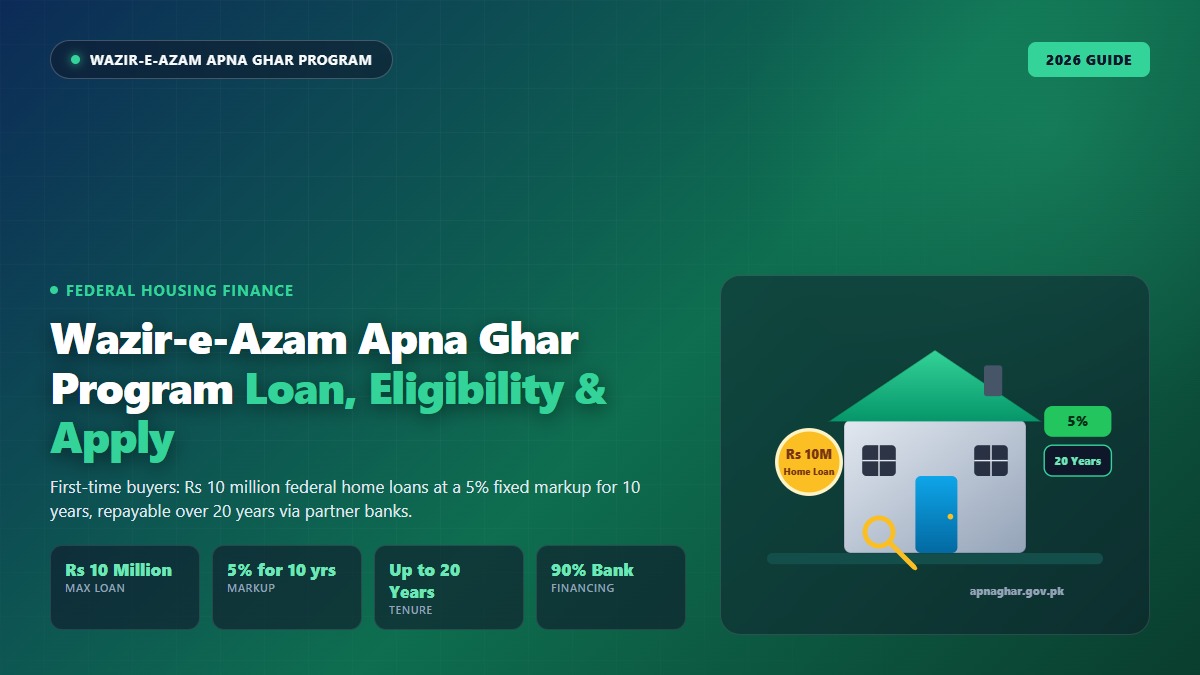
Wazir-e-Azam Apna Ghar Program 2026: Loan, Eligibility & How to Apply
The Wazir-e-Azam Apna Ghar Program (Ghar Ho Tu Apna) gives first-time buyers federal home loans up to Rs 10 million at a 5% fixed markup for the first 10 years, repayable over 20 years through partner banks. Apply online at apnaghar.gov.pk.
Read guide
Apni Chhat Apna Ghar Scheme Online Apply 2026: ACAG Portal Registration, Eligibility & Rs 15 Lakh Loan Guide
To apply online for the CM Punjab Apni Chhat Apna Ghar Scheme in 2026, register on the official government portal at acag.punjab.gov.pk using your 13-digit CNIC and mobile number, upload your land ownership documents (Fard/Registry for up to 5 Marla urban or 10 Marla rural plots), and complete your household socio-economic profile. Eligible citizens receive an interest-free construction loan of up to Rs. 15 Lakh with an installment of ~Rs. 14,000 over 7 years.
Read guide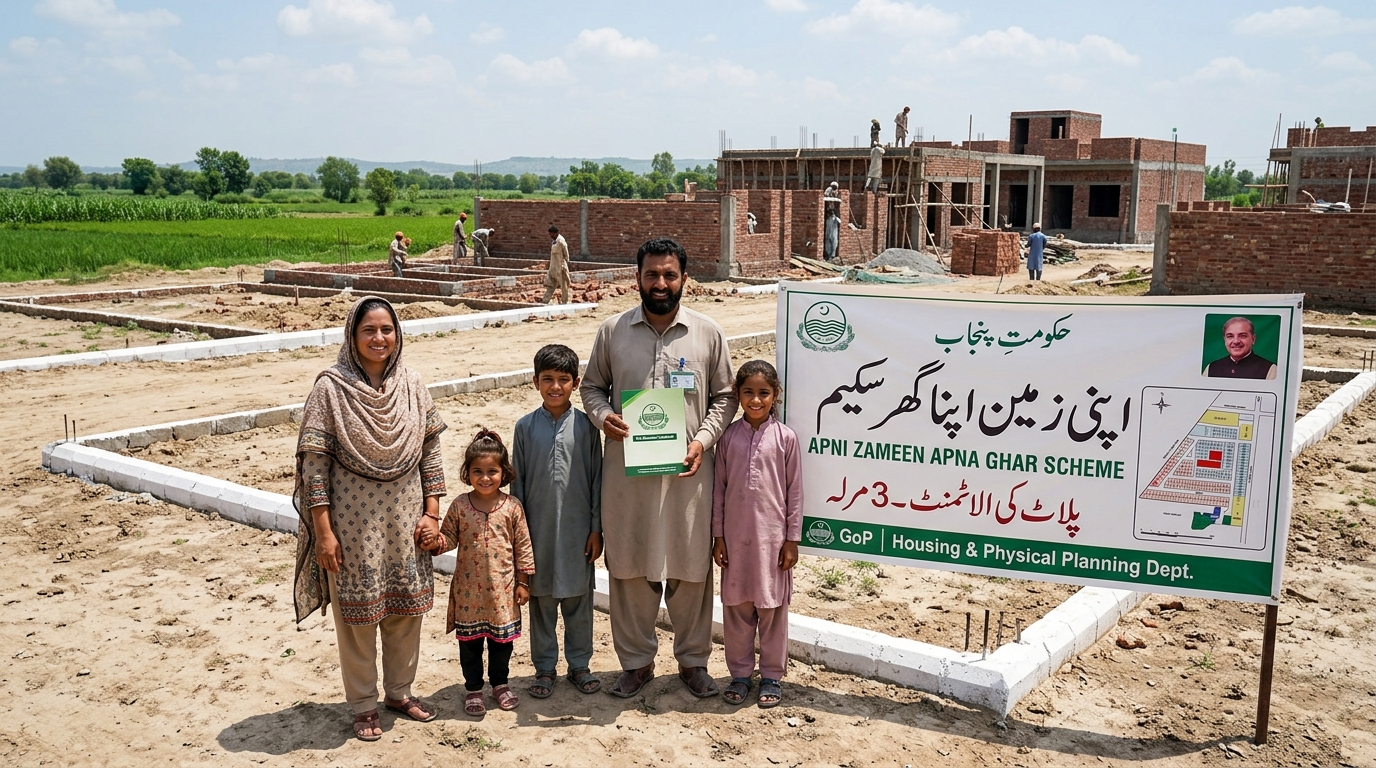
Apni Zameen Apna Ghar Balloting Result 2026: How to Check CNIC Status & Plot Rules
Check the Apni Zameen Apna Ghar balloting result 2026 online by CNIC. Guide on Phase 1 winner status, 3-marla plot allocation, and rules after selection.
Read guide